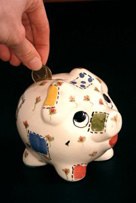
 Still don't have too much time at the moment, but trying to produce content if possible, in a quick and (hopefully) digestible format. Some qualities of entrepreneurs that I'm thinking about:
- Perseverance: This is a tough, tough issue. I consider myself a person that bites into a project and doesn't let go; at the same time there are times when you have to or should abandon an idea. Even so, a start-up is an 80 hour a week job (let's say), it has stakeholders—investors, partners, employees—and it may take some time to go into the black. Perseverance is probably the most important quality to possess, but I'd love for it to be simpler to know when to persevere and when to abandon.
- Instinct: it's a funny thing, this one. There is of course good and bad instinct (e.g. bravery vs. fear), but sometimes a "bad" instinct is a good one too (fear > jump > evade car). And even if you try to follow your instinct, your rational self—your experiences, education, arrogance, other emotions—will want to interfere with it. The reason to follow instinct is because it's quicker and a more natural way to be (and my theory is that natural = confidence = charisma and all that good stuff). Still a tough one.
- Inside-knowledge: in an industry, sure saves you a lot of time finding contacts and focussing on the right stuff.
- The numbers: are important in a numbers-business. And every business is ultimately a numbers business, maybe not at the beginning when there's lots of growth, but certainly at that point when either your wallet begins to look empty or a competitor is moving in next door.
- Money: is kind of nice. The more you have, the less you need to give away in equity. Of course, rich parents help, but so does having an investment-portfolio. Investing in your industry means that you keep track of the latest trends, of your competition, and if you make money from that, that's a qualifier that your instincts are correct. And, ultimately, giving away equity to the right people, means having a smaller piece, perhaps, but of a bigger pie.
The picture is courtesy of fairinvestment.co.uk
Interlude: From medical to space-tech - How technology affects incubation-strategies
0 comments Posted by Unknown at 8:48 AM High-tech… My never-ending hobby! Read about it on Tech IT Easy!
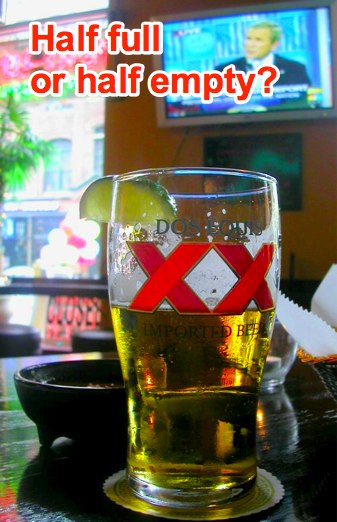 Normally, you would say that alcohol & money don't mix. But in the world of beer, at least in the Netherlands, there is tangled web that has been woven between financiers and the horeca-industry, which is difficult to unwind, and, some people argue, shouldn't be unwound.
First of all, what is investing all about?
It's all about profit, obviously, but it's also about minimising the risk for investors. Two big risks facing investors are informational.
One the one hand, there's moral hazard—the risk that entrepreneurs take their new assets (money) and misuse it in some way; On the other hand, there's adverse selection—the risk that entrepreneurs are not as capable as they claim to be.
Either of these situations requires a different response and a different type of investor. For moral hazard, the typical response is for investors to mingle in the affairs of their investee's operations and strategy and take equity; the so-called active investor, which includes business angels and venture capitalists.
For adverse selection, the typical response is to restrict the entrepreneurs movement through collateral, restrictive, covenants, and and short maturities, to minimise risk-engaging behaviour. This is the realm of the passive investor, which includes banks.
Financial beer-tactics
When looking at these two investors, you see some differences; Active investors take equity—become part owner of the firm—and they do this because they can't do much else to influence the use of their money. Passive investors prefer to use measures like lend against collateral, e.g. real estate or other tangible assets, which they can claim if the investment were to go wrong.
In the case of horeca-owners, you typically do have some kind of physical asset. You occupy a venue, you have machinery, and inventory. This is much more the realm for passive investors, who can relatively safely lend some money against the existing collateral.
There is one complication, however; Horeca is typically known for high failure-rates. I'm not sure why this is so. I guess that the leisure industry is largely sensitive to seasonal differences and economic downturns. And perhaps, the barriers to entry are low; there could be a lot of low-skilled entrepreneurs out there, who are not as capable of running & growing a business as they think. And finally, growth in itself could be a problem, if the capital requirements are significant.
The way investors get around it in the Netherlands is actually not to invest. Instead, they leave it up to breweries, who, against a right of exclusivity, lend a certain sum to the business, or give it a discount, and provided it with the necessary materials, branded of course.
What's the problem?
From my angle, there isn't one really. If horeca is such a risky business, and other investors are unwilling to invest, then I don't think an entrepreneur should complain about a simple exclusivity-contract. And particularly so, because of three factors.
For one, exclusivity is only valid if the brewery has less than 30% market-share. In the case of someone like Heineken, who also owns a number of other beer-brands, and has more than 30% market-share, you can quit such a contract after two months. Then again, Heineken does its best to provide other value-added services to make sure that this doesn't happen.
And second, there's a lot of consolidation in the alcohol-business. And just because a company has a certain exclusivity, it may have such a large portfolio of brands that there isn't any shortage of choice for customers; neither do I think these exclusivity-contracts are 100% bullet-proof.
The third factor seems to be a problem. By not giving customers a choice, they have learned not to care about brand so much when they enter a pub. They just ask for a beer. So for them, unless they're a beer-fanatic, it doesn't matter much. For producers, on the other hand, their brand has become a commodity, at least where nightlife is concerned.
Who cares, right?
Heineken seems to care, and is all for the liberalisation of Dutch pubs. Ignoring that a. this would disrupt a pretty good funding situation for Dutch pubs, and b. that Heineken owns more than 30% of the beer-market, making their exclusivity-deals vulnerable anyway, I do kind of see their point.
By turning a brand into a commodity, you take away marketing-potential. If you can position your beer-brand above that of regular beer, then you can reap higher profits. That makes 100% sense to me, from the brewery's perspective.
And, from what I understand, British pubs don't actually have such exclusive deals with breweries. The question is then, how they get funded, or whether the failure rate is perhaps lower in the UK? That, for now, is a question unanswered to me, but I'll do my best to find out.
(You can always give it to me in the comments.)
Part of this topic was inspired by a good article (unfortunately not online) in Dutch Marketing Tribune, still my favourite Dutch mag.
How being in the right place at the right time translates to entrepreneurship
0 comments Posted by Unknown at 12:53 PM If there's one I thing I learned from my thesis it's that everything is part of a system. Most often, this system's purpose is to shift resources from and to various interconnected, yet diverse and complementary parties.
In regards to entrepreneurship, and pretty much everything else, I have a philosophy: everything happens for a reason, usually related to how you respond to opportunities. And to bring it back to that interconnected system, being in the right spot, where you can intercept flows of ideas, people, and resources, tremendously increases the chances of you finding the right business to be in.
Two examples
Two people that are fairly close to me are perfect examples of that phenomenon. They shall remain nameless, for obvious reasons. They are both pretty bright, but what contributed to their lives most, is being where it mattered.
One of my friends did a very smart thing. We studied together and when he moved back to his Eastern-European country, he noticed that a lot of traffic was coming in from the European Union, in terms of regional funds aimed at bringing the country up to par for future integration.
So he started a consultancy with some friends, to advise companies on how to apply for those funds. Initially, he thought it might just be a hobby. But what actually happened was that a lot of traffic was coming in terms of companies—start-ups, looking for funding. And it allowed him to find a business to buy into, which was well-postioned to fill a current need, and had the capabilities, but not the business expertise to succeed.
A second friend of mine was also someone who I knew would always start his own business. But he did the smart thing when he graduated (actually he did several smart things before too). He got a job at a corporation counselling start-ups on how to deploy that corporation's technology. So, just like my other friend, he got a lot of traffic in terms of ideas and people, and all he had to wait for is the right idea that would fulfil a niche in the market. And bingo. I'm not sure if he planned it that way, but he's now the founder of a start-up, filling up a need.
Underlying principles
Right places matter, but so does mentality and a number of other factors. It's not enough to just be there. The reason you are there is because you are of value to whatever network you are part of. Following are I think some factors to consider:
- Be open to opportunities
- Make strategic choices about your initial placement
- Be of value to the network you are a part of - that means being an authority, which means you have to have some schooling
- Make strategic choices about the start-ups that you encounter - are they filling a gap in the market, can you fill a gap in their organisation?
- Go back to your initial network - analyse whether all the elements necessary for success are there—smart people, funding, exit-options, technology—and can be carried over.
- If yes: launch and succeed.
I always knew I wanted to start a business. Plenty of people at plenty of times, have counselled me to just jump in and do it. I didn't, because I felt the alignment wasn't there—between me, a business, and a need.
The way I'm visualising my path into this industry is among similar lines. Become a valuable resource myself. Find & build a network, where I can contribute value too. And then decide, based on timing, technology/idea, people, market-niche, and other elements needed for it to be a success.
Note to the reader: I'm still processing a lot of material I want to write about. Most of it is food and/or retail related, I promise. Expect at least two posts related to IKEA this week, on economics, design, branding, and customer-retention schemes.
Hi all, let's face it. This blog is on hiatus until beginning of 2008 and as such I can only post the occasional link.
Exhibit 1: 11 Myths of the Small Business Entrepreneur, by Susan Dunn, describes 11 misnomers about entrepreneurship, such as being the boss, being free, independence, etc. All of which are all somewhat incorrect. I already knew most of them, but a good reality-check, nevertheless.Why am I thinking about a framework? With blogging there is a constant trade-off between providing content and linking to content. Well, trade-off is a big word, it would suggest that there is an opportunity cost. Since the only cost of blogging is time, there really is no trade-off in my mind—if someone can phrase words better than you (which comes from having done more research, usually), than you're better off linking to them.
Exhibit 2: Why early stage venture investments fail, by Fred Wilson, outlines two primary reasons why an investment may fail—a dumb and/or misdirected idea—and gave me a cool quote, which made the whole bookmark worthwhile: "the art of a successful deal is figuring out dead ends quickly and trying another and another until you find the one paved with gold (source: Dick Costello)"I am also thinking about the nature of links because it's the 10-year anniversary of blogging, and I read a guide to blogs by one of the first bloggers on the net.
Exhibit 3: Top 10 Tips for New Bloggers From Original Blogger Jorn Barger, by Jorn Blogger, is a list of tips that really made me think. For instance: "if you have more original posts than links, you probably need to learn some humility." Or: "Being truly yourself is always hipper than suppressing a link just because it's not trendy enough." Or: "Always include some adjective describing your own reaction to the linked page (great, useful, imaginative, clever, etc.)." Yes, really an, ahum, insightful guide to being a link-blogger.I don't consider myself a linkblogger, not like Jason Kottke or Robert Scoble at least, both whom I think excel in their craft. And, of course, if everyone were to become a linkblogger—and the rise of link-blogging platforms like Tumblr and del.icio.us would certainly suggest it—then it would lead to a fall in content.
But I feel that I need a framework for what links I post and what links I don't, as the latter are links that I plan to incorporate in my own "original" content (sorry for the lack of humility, Jorn).
I think it's as follows. When I read a cool story, which I think is well-researched and adds some general value to coming up with new ideas, or which falls out of my core-competencies, then I'll link it.
Exhibit 4: The Advertising Slogan Hall of Fame lists some noteworthy slogans between the years 2000-2003, such as: "All the news that's fit to print (NY Times)," or "Let your fingers do the walking (Yellow Pages)," as well as offers a—somewhat spammy—guide to developing your own slogan.Any original content, which I plan to start producing again beginning of 2008, will be in the form of a brainstorm, where I write about what matters to doing business in the food & retail-space. Sometimes these will be somewhat long posts, at other times, they will be short bursts. But whatever happens, I hope it adds just as much value to your life as it does mine, and that it does the legacy of blogs proud.
Another thing I'm thinking about is whether I should be more or less specific about my links. For instance, I link a lot more to stuff about entrepreneurship, innovation, and design, than I do about e.g. food.
Exhibit 5: A bookreview of "Starbucked", by P. J. O’Rourke, NY Times, discusses what the rise of Starbucks may have had on the general coffee-culture in the US, competition, and the fair-use of coffee. I find it pretty balanced, and interesting that between 1989-2007, the number of coffeeshops in the US has grown from 585 to 24,000—57% of which are "mom & pop". And that Starbucks only sources 2% of the global coffee-supply and does not have as much an effect on "fair conditions in coffee" as people may think.It's links like these that a reader of a food & retail blog will perhaps prefer to read.
But the framework should be, I think, one that is based on balance. Content, which i think is already well-produced, and for which the only value I can add, is a link with a well-phrased description, should just be just that: a link. Content, where I think I need to do more research for my own self-development, and where it helps that I write a good piece of text about it, should be written by myself.
Stuff on this blog, for the rest of 2007, will be limited. I plan to produce a list of perhaps my favourite albums of 2007, as music, I think, has a great influence on how people feel in environments that I want to create. After Xmas, I think. And next year, I'll start with an overview of what I've written so far, to continue with a clean slate.
Heh, a good way to present 5 links, I think. For more like these, check out my bookmarks or the Link-tag on this blog.
The picture is part of the Reuters pictures of the year 2007 collection (hope they don't sue me).

Normally, I would review a book in pieces, but since I read the book some 4-5 months ago, I'll instead try to summarise the key points I got from the book.
Where you are from matters to where you are going: I notice this over and over again. Pierre Omidyar, eBay's founder, is a Libertarian, which rougly translates to letting people solve their own problems, with as little interference as possible. You can see this play out in eBay's largely decentralised shopping-model. The lesson here is not, I think, that everyone should be like eBay, but that whatever you do, should in some way reflect what you believe in.
Be professional quickly: I don't think eBay would be where it was today, if Pierre hadn't immediately tried to attract talent, starting with Jeff Skoll, an acquaintance and Stanford MBA, all the way up to Meg Whitman, who was instrumental in handling the IPO and is still eBay's CEO today. Many entrepreneurs are in the game because they want to be independent. Opinions may vary, but a smaller piece of a bigger pie is usually better than a small pie all to yourself.
Venture capital is not just money: eBay was consistently profitable from day one, so they actually didn't need financing. But there was one important reason for going to a venture capitalist: professionalisation. eBay needed to send a signal to the world, that it was an important player on the market. It needed to attract talent, and form a growth strategy. All of which happened after it took on venture capital.
Community matters: eBay's key to success was not only her low capital costs (no stock, little overhead), but also her close ties with the users of the site. At the beginning, little in features was introduced on the site without consulting the users first. Because of this and ultimately the high switching costs, eBay benefited from what is known as the Network Effect. That said, as a company grows, community-involvement cannot be as strong, and new mechanisms must be put in place to place to stay in touch with your core-users. eBay had a lot of problems in this area.
IPO's can be traumatic: Somewhat related to the point about communities and change, when Ebay went public, it created a rift between the core-values of her original workforce and users, and the values of the financial community and the media. There's not much to say about this, except that just as it takes a particular type of people to start a company, the same applies for people taking a company public, and as a founder (and start-up-employee), you must learn to let go.
Make your IT-infrastructure scaleable: this is the only tech-advice in this post, but Pierre had no idea how quickly eBay would take off, and the company was plagued by technical issues from the start. Only some years later, when Meg Whitman became the new CEO, did proper staff get hired and was the infrastructure upgraded for scale.
That's about it. I'm sure, I forgot some key-points, and would appreciate comments on this, if you have read the book. I do remember thinking that "The Perfect Store" was the absolute best book I ever read on starting a company, interacting with community and stakeholders, and the effects of an IPO. So, highly recommended for this reason alone, and also to gain a good insight into eBay as a business until 2001-2.
(This review is mirror-posted on Tech IT Easy.)
 So I watched this movie yesterday, I think it illustrates the concept of shareholders and investors, and what businesses really stand for, quite well. In part, you have a responsibility towards your employees today. In part, and that's where investors come in, you have a responsibility towards the future. In a sense, if both stakeholders were to communicate, the world would be a better world…
For me, it's a pretty safe bet that if I want to start a business, I'll need investors. And people starting a business in the world of food/retail venues, will definitely need a team also. Both will be depending on getting paid; the employees depending on today's cash flow, and the investors betting on a future value. That is life and the way this resource-intensive industry works.
The fact is that venture-backed firms—firms that have external and usually active investors, which hold a share in the business—are usually more successful that firms that are not. The reason for this is that active investors, while sometimes appearing cruel, actually make a business more efficient through various mechanisms such "fat-"trimming and performance-based investing, and also through their know-how and contacts in the industry.
This of course depends on the type of investors you have. On Tech IT Easy, I wrote about the four types of business angels, namely:
- Operational Expertise Business Angels: These have been or are major executives in the industry they are again investing in and are instrumental in growing the company through providing both financing, expertise, and contacts to suppliers, partners, and customers. Venture capitalists highly value these types of early-stage investors.
- Financial Returns Business Angels: These are high-worth individuals, but characterised by a passive involvement in the companies they invest in, except for maybe some business-advice. Too many of these types has a negative effect on attracting venture capitalists, as it does not grow the financial pie.
- Guardian Business Angels: These are probably the most active types, provide a lot of support, take seats on the board of directors, help find venture capitalists, and are highly valued by them. Since entrepreneurship is a highly people-chemical business, this makes sense.
- Professional Entrepreneur Business Angels: These are investors with the personal experience of having set up their own firms. Also the most well-know type, I think. They may sometimes invest outside of their expertise, which can be a problem, but have a lot of experience in and provide support with market-research, building up the company, meeting milestones, and other business-building activities. They are also highly valued by venture capitalists.
Garbage-in-garbage-out
When dealing with investors, it's important to find out what their expectations are. On what basis are they valuing your business. If it's garbage, there is no point in continuing with an investor. I'm not going to define garbage extensively, but if an investor is only after personal profit, then that's a sign of garbage. If he or she is after maximising profit for the business, that is better.. to the degree that the core-values of the business don't get minimised.
That's why it's better to deal with investors that have at least two qualities*, preferably three. One: he or she has to know the industry, or else how can they accurately calculate the value—taking into account stuff that can't be entered in formulas; Two: depending on the stage of the business, he or she will have to be in it for several years, at least 7 when it concerns a start-ups, I would think. And three, he or she has to be what is called a Mensch.
(*: feel free to correct me on any of those).
In terms of employees, you also need a certain profile of people. They need to be dedicated to the business, not necessarily their pay-check; They need to understand business-concerns, and for that to happen, be involved with the business beyond their job-function. They need to understand and share similar values, which again requires two-way communication.
The implication for management is fairly clear, I think. When trying to reconcile both parties, you need to understand you're dealing with someone beyond their job-description. Employees, active investors, shareholders, customers, all have something in common. They are human, they can have vision, they can learn, grow, adapt, change, do. This is important during the selection stage—which employees will I hire, who will I ask to invest in me?—and the co-operative stage—how will I find the middle-ground between these people's concerns?
Other people's money? Get rid of the "other," get rid of the dissonance, and you're on the right track.

 The
The 


