A VC: From Messes To Successes:
"The prescription for turning these messes into successes is really pretty straightforward. You need to build the team and bring in people who excel at the blocking and tackling and the PLANNING that most startups don't have the time or inclination to do. And you need to gradually change the culture of the business from one that is all about the product to one that is about the entire company. Sometimes, often times, that means changing the people around. And that's never easy. And it's even harder to change the people around when it was the initial team that made the product so popular in the first place. So you have to somehow find a way to add the 'operational' people without drowning out the 'product' people."
Eggbeater: Chef Owners Who Work The Line
I'm starting to think people should take a test before they open a restaurant. It will be like a triathlon: you must work the line, well, if not stellar. You must understand and be able to explain one P&L statement. You must understand why raw fish and cooked meat cannot share the same bin in the walk-in. You must understand how to make cookies, one dessert with chocolate that's not a molten chocolate cake and it would be great if you knew the difference between panna cotta and creme brulee. The test would list a series of questions and you would be graded on how much responsibility you took for your own actions or the actions of those you hired. For bonus points you might have to research why all the restaurants in your location before yours failed, or cooking in and creating a menu for a kitchen with no Latinos (or your State/ Country picks for easy-to-exploit-able peoples.)
Freakonomics: The Consequences of Being Green
There should be a rule: before helping the environment in one market, we should be required to think through the impacts on other markets.
 I've been planning to write about cinemas again for some time now, but that's going to be a long piece and will have to wait for disposable time and inspiration. Here's some films, I've enjoyed these last months, however.
- Starting with a lecture by Robert J. Sawyer, regarding the difference between Star Trek & Star Wars. I had no idea that the phrase "A long-long time ago, in a place far-far away" makes such a big difference. Essentially, while science fiction was originally a commentary on issues in our own society, that phrase gave George Lucas the license to not-comment, or rather to accept things like racism (towards robots), slavery (robots again), and countless of other stuff. Really a good lecture to listen to, if you're into sci-fi.
- On a related note, I recently (re-)watched Star Trek 1-6. You really notice the shift from slow cinematics in Star Trek 1 and 2 (a la Kubrik's 2001, which I'm not a fan of), followed by more intense action-scenes in the later ones. I think I recorded the social values more on a sub-conscious level. Numbers 4-6 were my favourite, regarding nature (transporting whales through time); the search for God; and retirement. But I have to say, Kirk was at his strongest in the first two movies. Also, something else I didn't know: Leonard Lemoy (Spock) is a multi-talented individual: writer for several films, producer, and of course actor.
- My favourite adventure movie these last few months: Lawrence of Arabia.
- My favourite cartoon: The girl that leapt through time.
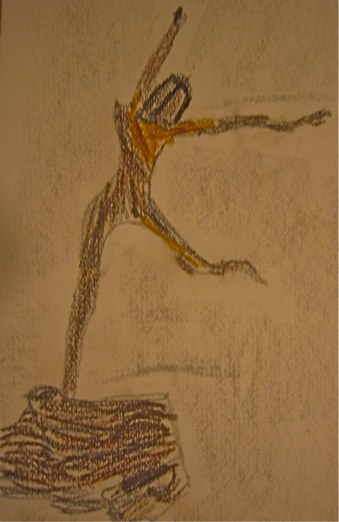
- My favourite fantasy: Pan's Labyrinth (picture is my interpretation of Pan)
- A film, which is taking me a long time to watch, but which I will finish because it's good: Francis Ford Coppola's Youth without Youth.
- Excellent commercial, but not mainstream, movies: Into the Wild; There will be blood; No Country for Old Men (the last three, somewhat depressing too); and Juno.
- An excellent series that recently finished and everyone should watch: The Wire. Seasons 1-4 especially.
- An series with potential that will hopefully not be cancelled: The Sarah Connor Chronicles.
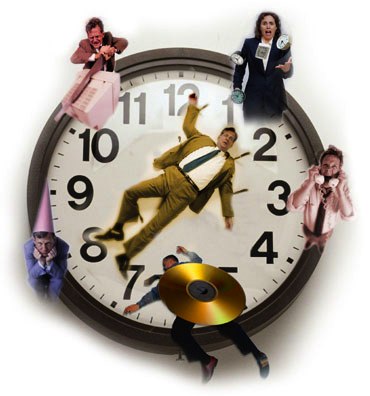 Hey, a little busy at the moment, but here's some links, I've enjoyed recently.
- Jim Donald's, former Starbucks' CEO, month by Patricia Sellers (Fortune): After listening to an interview with Frank Addante on Venture Voice, where he said "Time is a finite asset!", I looked up "time-management CEO" on Google, and this is the first thing I found. Some good tips on meetings, getting up at 6, and generally managing your time.
- Monocle design-notes by Dan Hill: I printed this 32-page (!) document out this morning, and it will probably take me a few days to digest it, but I'm already enjoying the first few pages, where he writes about the vision behind Monocle as a mag. and as an internet-publication and how the multi-disciplinary team reflected this.
- 10 Ways to Improve Your Programming Productivity by Matt Moore: I love productivity-stuff, and think most of these tips apply to any activity really.
- The 7th Deadly Claim — “Best Value” by Jeff Sexton (Future Now): "The problem for most companies is that they don’t do BOTH well: Either they don’t do enough to persuade customers of the product’s value, or they price their high-quality item even higher than what they’ve been able to substantiate to the market."
- How Facebook Is Like Ikea by Tim Harford (Slate): Considering I wrote about something related a few months ago…
5 links: the obvious one, brand-logic, happy places, e-toys, neuroscience
0 comments Posted by Unknown at 11:02 AM It's Sunday again, and I have a nice big collection of links today: on running a cheap yet effective start-up; on why brands exist; on creating happy places for yourself and employees; on the business of children; and finally on a whole load of neuroscience. The aesthetically pleasing picture of Marilyn links to a particularly disgusting image of a "healthy" burger—my initial choice of illustration. You have been warned.
Previous link-discussions can be found here.
Link 1: the obvious one - Seriously, unless you actually used this weekend to, eh, have a life, you'll have noticed the firestorm started by Jason Calicanis, continued with Duncan Riley, tempered by Jason Fried, and the final words of wisdom by Micheal Arrington. Crazy, how opinionated these entrepreneurs/bloggers are, right? Yeah, right. A good read if you're (thinking about) running your own business, with like lazy employees and expensive tables.
Link 2: A brief history of brands - well actually a blurb about a book. I like:
"Branding became necessary when large-scale economies started mass-producing commodities such as alcoholic drinks, cosmetics and textiles. Ancient societies not only imposed strict forms of quality control over these commodities, but as today they needed to convey value to the consumer. Wengrow finds that commodities in any complex, large society needs to pass through a "nexus of authenticity.""
Link 3: the architecture of happiness -
"There are three concepts central to the “yoga of the home”…. The first rule is to align your schedule with universal schedules by getting up and going to bed with the sun. “We try to keep lightweight and low furnishings in the north and east — to create an openness — so that we can draw in the healthy early morning sun,” says Cox. Heavier, taller furniture goes in the south and west. Second is bringing nature indoors — plants, natural fibers, no synthetics. “Vastu is the first intentionally green science,” Cox says. And last, vastu asks us to “celebrate who we are and what we love” by surrounding ourselves with things that have meaning. “When someone enters our living room and we’re not in the room yet, we want this guest to get a sense of who we are,” she says. “The room speaks of us.”"I've been thinking about this topic and the general issue of creating happy places for a while. A worthwhile read is also Frank Addante, a serial entrepreneur, on choosing the office-space for his start-up: link 1 and 2.
Link 4: building a toy e-commerce store - since I linked to Lego last time this seemed appropriate. In all seriousness however, I think the subscription-model + children is a cash-cow; kids always want more stuff and have old stuff to get rid off. Applicable not just for toys, but clothing and furniture as well.
Link 5: Some neuroscientific stuff - ignorant shoppers are blissful, though information that stimulates the imagination still works (as do quality-labels as they allow you to charge a premium); body-language works for consumers, in other words an in-store-television-advert or one of those annoyingly friendly taster-people in supermarkets, should cause people to buy more food. A little bird tells me this applies more to the US than the French; 15% of women don't like perfume, which is interesting I think as I'm not a big fan either; and Art-adverts work, enough said. And yes, EurekAlert is my new favourite site.
5 links - sense of smell, false green ads, farming boom, Lego, fun e-shopping
0 comments Posted by Unknown at 10:49 AM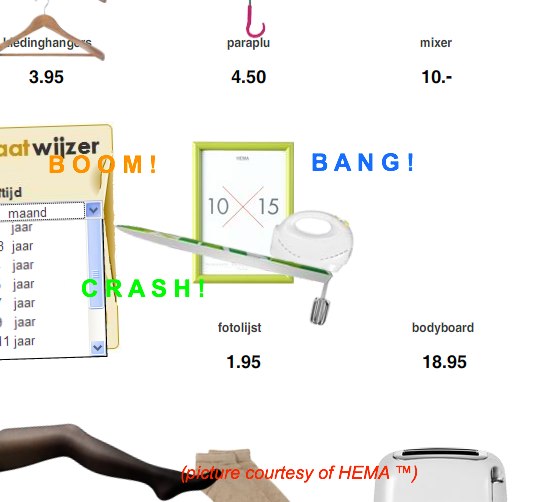 Time for those Sunday-links again. Today, I'll discuss the cocktail that is smell and how some things just don't mix; how green is not all it's cut out to be; a possible shift of power from retail to farming (or not); how lego came to be and where it is going; and how to sell me online shopping.
Previous link-discussions can be found here and my bookmarks here.
Link 1: Starbucks Admits Sensory Mistake - These are the kinds of stories that make me I like the NeuroscienceMarketing-blog. If you follow the science-section of the Economist, you'll know that neuroscience is a big deal anyway. In any case, this story is about how Starbucks designs atmosphere, largely influenced by smells. Apparently, smell of heating egg and cheese sandwiches doesn't mix well with the coffee aroma.
Link 2: False 'Green' Ads Draw Global Scrutiny - Two problems linked to green adverts these days, I think. One is that consumers are growing tired of it. And two is that, as this story shows, just because companies say they are, doesn't mean they are. I like the Norwegian approach to this. They ban green adverts by products that cause more problems, no matter how innovative they are (about hiding it).
Link 3: Farmers Wonder if Boom In Grain Prices Is a Bubble That food-prices are rising is an inescapable fact. But it also presents an interesting shift in the status quo. In the food-chain of the grocery-business, farmers are pretty much at the bottom. Now, even though their own costs are increasing also, they can charge more on top of it and decrease retailers' margins. Time will tell if this is something that will be acceptable for a long time. Certain signals very much suggest to me that farmers may be in the right position to cut out the middle-man and become retailers themselves.
Link 4: The Making of…a LEGO - I'm still a kid at heart, so I love anything to do with games and toys. My parents never bought me much lego as a child, which I regret as I hear it breeds geniuses. In essentially two pages, the article describes how lego came to be, what makes it so perfect, and what the company's strategy is. I was always impressed with the brand-extensions they did with the games, the robots, and the theme-park. A company to follow.
Link 5: Online shopping at Hema.nl - I've linked to this on twitter before, but it brought another smile to my face watching it again. Just when I think that online-shopping has no future, innovative uses of technology surprise me again.
5 links—retail-saturation, RFID's costs, elements of fun, tricking shoppers, & home-cinemas
0 comments Posted by Unknown at 10:41 AMIt is time for those links again! This time, we'll be discussing the economics of Apple's physical stores, how Walmart is enforcing RFID, how retailers are trying to trick people to buy more expensive things, how people perceive fun in games, and 10 ultra-geeky home-cinemas.
As usual, my bookmarks can be found here, and the previously covered links, here. Enjoy!
Link 1: Why is Apple saturating (US) cities with retail stores? is a question that Choire Sicha asks on Kottke.org, and lead me to this profit & cost breakdown of Apple's retail stores at Seeking Alpha (see pic below). It does appear it's all about the money, though hard it remains to read Apple's mind 100%. In related news, OObject lists all the items needed to build an Apple store.
Link 2: Is RFID economically feasible? I'm planning to dedicate at least 1-2 posts on RFID on this blog in the future, as I've essentially been following its development since the early coverage on Slashdot. This story on InformationWeek discusses the pressure that Walmart, certainly the biggest champion for RFID in the retail-arena, is putting on its suppliers to finally add RFID into their logistics-chain. As far as I remember, the latter have been complaining about the unfair balance of cost that RFID causes, shifting most of them onto suppliers. I assume, however, that these chips and pallets are reusable.
Link 3: What makes games fun? Lightspeed Venture Partners has an interesting blog, which mostly discusses the business and principles behind digital games. I follow it because games are fun, and if you can understand the source-code of fun, you can replicate it elsewhere. In that spirit, then, it links to an interesting white paper trying to map out what exactly goes on in gamers' heads while playing games. Part 1 is also very much worth a read.
Link 4: A buyer's christmas? The New Yorker digs into consumers' buying behaviour. Interesting is, that people use the net most often to find info, not to buy, but can use that info inside stores (we'll still need ubiquitous internet for it to be shoppers' utopia, however). Equally interesting is, that if a store has two microwaves, consumers will usually buy the cheaper one. With three products, however, they will usually by the mid-priced one. There's still room for trickery, I guess…
Link 5: 10 stunning ultra-geeky home cinemas. In the spirit of my previous post on cinemas & luxury, I thought that this link would be fitting. The Star Trek-themed one is a little too geeky for me, but the Titanic one (no. 6) looks awesome. I'm still doubtful about whether it's about the design or about the movie, but I can't deny that people put a lot of work into designing these.
5 links - cool vs. tech, touch-screens, women, pizza, & bookstores
0 comments Posted by Unknown at 12:09 PMMan, I collected so many links, that I'll probably have to write three updates to cover the most important ones. We've got a lot of ground to cover, so let's get started. You can find my previous coverage on interesting links from the web, here, and my continuous stream of bookmarks, here.
Link 1: On Magnetbox - Correlating cool with tech - With pictures like the one below, my work on this blog is really done. Interesting is the rise of computers vs. dance & hip-hop music (both of which are hugely benefiting from the cost-savings made possible by PC-based studios. (A note: low industry-barriers = high chance of suckage!). Also note the fall of art, after the colour TV was introduced. Kottke also made some comments about it.
Link 2: On BuzzFeed - Touch-Screen Ordering - BuzzFeed presents us with some stories about automatised ordering. There are both advantages and disadvantages, I think. Good is that it minimises errors in ordering and can interface well with back-office operations, such as ordering new supplies. It might also fit with the individualistic preference for self-service, I wrote about before. The disadvantage is the cost and the margins of error that information systems bring (I still shudder at the thought of the LAS disaster (pdf)) + the lack of the human factor. Martin Kunzelnick (German) links to some videos of Microsoft's Surface in a restaurant-environment.
Link 3: On Lightspeed Venture Partners - It is no accident that Typhoid Mary was a woman - Although it's a horrible-horrible title, and perhaps an obvious point, I've been coming across many stories about the social qualities that women possess, making them better at PR, marketing, sales, relationship-building. Something to keep in mind for any people-based business.
Link 4: On Reuters - Pizza Hut rolls out nationwide mobile ordering - A news-item (finally), and I'll probably delve into this topic sometime in the future. Arguably, Pizza Hut has been pursuing a different strategy from pretty much 98% of the pizza-restaurants out there. I'm sure that there is considerably brand-loyalty towards Pizza Hut, which will give it an advantage over delivering pizza-franchises, HOWEVER, it will probably be competing on price, which the franchise has not done so far. I'm not sure how that will affect their brand at all, but it's something to keep an eye on.
Link 5: On WSJ - Who's Buying the Bookstore? - arguably, there are few retail-outlets that evoke such an emotional response as bookstores. I find them comforting, and very similar to churches, in the way that it really is expected of you to be silent while browsing (on a side-note, I discussed a link of Dutch bookstore being opened in a church before). It's also a symbol of a community, as WSJ points out. Well, with competitive pressures from Amazon et al., these types of stores are clearly disappearing, or changing into hybrid monsters, which smaller stores can no longer compete with. WSJ points out a phenomenon related to that community-spirit, which is very touching. Capitalism isn't everything, particularly in places that target the softer pleasures in life. I'll have to reflect more on this, as I'm very attracted to these types of stores, and would love to set one up myself.
That's it, for this week. I'll see how I'll catch up on the rest of my links, but this went great (took 20 mins), and I always enjoy re-reading my bookmarks. I hope you do too.
 Dear all,
My fingers are really itching to get back into blogging and pursuing my passions. I've also lately been thinking that my interest in the communicative arts is perhaps a sign to go into marketing. I wonder how "blogger for 2+ years" looks on a resumé?
Today, I started with writing my conclusions for my thesis, which involves me going through it, and picking up the pieces that I like. That should also lead to a better introduction and executive summary. My next deadline is for this Sunday (or before), after which some more detail-work will need to happen (cutting/editing, checking/formatting references, prettying up some graphics etc.).
Btw. now that I'm actually reading what I wrote, I'm liking what I'm seeing. It'll be hard to cut much.
5 Links
I need to take a break for 30 min., so I'll take a look at if I bookmarked something interesting for y'all. I wish I could write something more in-depth, but it would just be too distracting at the moment.
- St. Petersburg Times (US) has a very interesting write-up about a new "health food restaurant and Hip-Hop-themed video-gaming business," called HipHopSodaShop, that is opening in their 'hood. This would normally be nothing special, except I'm pretty interested in symbiotic businesses, and particularly anything reflecting popular culture. The article includes a number of details related to the legal aspects, the financing, etc. Worth a read. More details can also be found via BuzzFeed.
- Ha! MetaFilter does a write-up about a new bookstore opening in one of my hometowns, Maastricht, where my parents live and where I attended school for 5 years. The bookstore, Selexyz, is actually located in a Dominican church and makes for some interesting pictures. I was hoping to visit it last weekend, but I only got to see some of Maastricht's other architectural gems (the city is booming with development) and two of its museums.
- Yahoo-news publishes a list of 80 things to watch out for in 2008, from a marketeer's perspective. Big things include the Beijing Olympics and the US-elections of course. I also like "De-teching," "Eco-fatigue," "Green weddings," "Hip-hop's Retro Kids," "Intellectual luxury," … and actually 30 more I think.
- PSFK points us to an Economist article about the decline of the shopping mall in the US. Honestly, if I had a choice, I would prefer for my shop to be located in one of the new open city projects in Maastricht or elsewhere, than in a dusty high-riser with artificial light and air. PSFK also writes that "consumerism is thriving in downtown shopping districts and outdoor shopping meccas," rather than in the infamous mall.
- 2 for 1: Starbucks is in trouble. The Starbucks Gossip Blog points us to two stories. One on McDonalds converting its venues to Starbucks-clones (surprise, surprise), another on Howard Schultz taking back the reigns (a Dell manoeuvre?).
Happy reading!
The picture is of course my own… jumping into 2008!
Hi all, let's face it. This blog is on hiatus until beginning of 2008 and as such I can only post the occasional link.
Exhibit 1: 11 Myths of the Small Business Entrepreneur, by Susan Dunn, describes 11 misnomers about entrepreneurship, such as being the boss, being free, independence, etc. All of which are all somewhat incorrect. I already knew most of them, but a good reality-check, nevertheless.Why am I thinking about a framework? With blogging there is a constant trade-off between providing content and linking to content. Well, trade-off is a big word, it would suggest that there is an opportunity cost. Since the only cost of blogging is time, there really is no trade-off in my mind—if someone can phrase words better than you (which comes from having done more research, usually), than you're better off linking to them.
Exhibit 2: Why early stage venture investments fail, by Fred Wilson, outlines two primary reasons why an investment may fail—a dumb and/or misdirected idea—and gave me a cool quote, which made the whole bookmark worthwhile: "the art of a successful deal is figuring out dead ends quickly and trying another and another until you find the one paved with gold (source: Dick Costello)"I am also thinking about the nature of links because it's the 10-year anniversary of blogging, and I read a guide to blogs by one of the first bloggers on the net.
Exhibit 3: Top 10 Tips for New Bloggers From Original Blogger Jorn Barger, by Jorn Blogger, is a list of tips that really made me think. For instance: "if you have more original posts than links, you probably need to learn some humility." Or: "Being truly yourself is always hipper than suppressing a link just because it's not trendy enough." Or: "Always include some adjective describing your own reaction to the linked page (great, useful, imaginative, clever, etc.)." Yes, really an, ahum, insightful guide to being a link-blogger.I don't consider myself a linkblogger, not like Jason Kottke or Robert Scoble at least, both whom I think excel in their craft. And, of course, if everyone were to become a linkblogger—and the rise of link-blogging platforms like Tumblr and del.icio.us would certainly suggest it—then it would lead to a fall in content.
But I feel that I need a framework for what links I post and what links I don't, as the latter are links that I plan to incorporate in my own "original" content (sorry for the lack of humility, Jorn).
I think it's as follows. When I read a cool story, which I think is well-researched and adds some general value to coming up with new ideas, or which falls out of my core-competencies, then I'll link it.
Exhibit 4: The Advertising Slogan Hall of Fame lists some noteworthy slogans between the years 2000-2003, such as: "All the news that's fit to print (NY Times)," or "Let your fingers do the walking (Yellow Pages)," as well as offers a—somewhat spammy—guide to developing your own slogan.Any original content, which I plan to start producing again beginning of 2008, will be in the form of a brainstorm, where I write about what matters to doing business in the food & retail-space. Sometimes these will be somewhat long posts, at other times, they will be short bursts. But whatever happens, I hope it adds just as much value to your life as it does mine, and that it does the legacy of blogs proud.
Another thing I'm thinking about is whether I should be more or less specific about my links. For instance, I link a lot more to stuff about entrepreneurship, innovation, and design, than I do about e.g. food.
Exhibit 5: A bookreview of "Starbucked", by P. J. O’Rourke, NY Times, discusses what the rise of Starbucks may have had on the general coffee-culture in the US, competition, and the fair-use of coffee. I find it pretty balanced, and interesting that between 1989-2007, the number of coffeeshops in the US has grown from 585 to 24,000—57% of which are "mom & pop". And that Starbucks only sources 2% of the global coffee-supply and does not have as much an effect on "fair conditions in coffee" as people may think.It's links like these that a reader of a food & retail blog will perhaps prefer to read.
But the framework should be, I think, one that is based on balance. Content, which i think is already well-produced, and for which the only value I can add, is a link with a well-phrased description, should just be just that: a link. Content, where I think I need to do more research for my own self-development, and where it helps that I write a good piece of text about it, should be written by myself.
Stuff on this blog, for the rest of 2007, will be limited. I plan to produce a list of perhaps my favourite albums of 2007, as music, I think, has a great influence on how people feel in environments that I want to create. After Xmas, I think. And next year, I'll start with an overview of what I've written so far, to continue with a clean slate.
Heh, a good way to present 5 links, I think. For more like these, check out my bookmarks or the Link-tag on this blog.
The picture is part of the Reuters pictures of the year 2007 collection (hope they don't sue me).
Metaphor: I am the bunny or rather my thesis is. Everything is progressing well, but of course it's a lot of work. More when I'm done.
(via Kottke)
5 links to let people know I'm not dead:
- How to choose a name for your product / service / business by Scott Trimble - not much to say about it, except it rocks.
- The 8 challenges innovations face by Scott Berkun - there's so much talk about how cool innovation is (flying cars, anyone?), and very little about how hard it is to actually bring it to the market. Exactly the topic of my thesis, btw., mostly focussed on Scott's point 3: "Find a sponsor and funding".
- The 2007 Esquire 100 has some awesome food-related stuff. Namely on Luxardo, Sechuan buttons, New Texas Cuisine, Rum, shrinking cocktails, The Best Breakfast in America (mmmh looks good!), Washington Wine, and other cool stuff.
- Understanding Web Design by Jeffrey Zeldman - "Web design is the creation of digital environments that facilitate and encourage human activity; reflect or adapt to individual voices and content; and change gracefully over time while always retaining their identity." Kind of applies to designing other kinds of interactive environments as well (don't shoot me Jeff).
- Wal-Mart’s Environmental Report Card (NYTimes) - the point is that Walmart is continuously increasing its competitive advantage in the area of green tech, which is sure to affect businesses bottom-line in the future. So get busy!
5 Links: human sigma, link-baiting, neuroscience, brand experience, wine
0 comments Posted by Unknown at 11:47 AM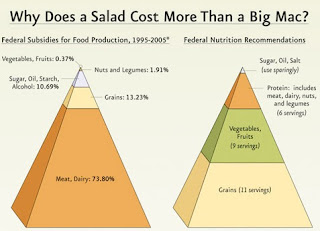 While I'm stuck on writing some other posts—the idea is there, the execution some way off—it is time for another collection of links.
- Using Human Sigma for measuring customer engagement - Mitch Owen reviews a new book on the market, that suggests that evaluating our efforts at customer satisfaction happen on four levels: Confidence, Integrity, Pride, Passion.
- How to coast to a writing career - Valleywag writes an insightful post (for once) about what matters when blogging. I like "AVOID: Blogger ego. If you do blog, just write and forget about it. Don't reply to your comments with more than "Good point, h8rboi, thanks. Don't troll other bloggers for links, or try to get onto Techmeme by posting about whatever's already there. ... People in the real media don't care what your Technorati rank is, they'll just Google you to see what you write." That said, I have no intent to engage on a writing career.
- Mind hacks: an interview with Jonah Lehrer on neuroscience - What I like: "Artists are constantly being forced to reverse-engineer the brain. By reverse-engineering the art - by trying to understand why, exactly, it resonates with us - we can learn about the mind."
- Thirteen examples of successful brand experiences - could be filed under architecture. The British design council points us to 13 different "experience-castles" (my own term), where customers can be enchanted.
- Calculating the carbon footprint of wine - What can I say? It's the new world! Some key-points: organic is not as efficient as we think; distance matters; packaging matters.
- Bonus Link: Why does a salad cost more than a big mac. - A picture says more than a 1000 words. This is just as applicable to Europe btw. Thank Wolsey for inventing the subsidy!
Enjoy! More of this: check out the S+FnR bookmarks—updated 24/7 !
5 links to think - on Japan, designing experiences, globalisation, and endorsements
0 comments Posted by Unknown at 3:12 PM Really no shortage of interesting links this week, which is always nice. At the same time, it makes choosing 5 that much harder, but here goes.
- An Alien in Japan: Charlie Stross describes his trip to Japan last summer. …From Yokohama to Tokyo to Kyoto; …about shaved cats, getting lost in shopping malls, to Hello Kitty, and extreme bathing, to monorails and re-building history. A very interesting read, which presents some insights into that alien world, Japan.
- Blasting scents into coffee-consumers' brains: Roger Dooley explains the importance of environment to sensory experience, and describes how Nestle's Nespresso found their way into people's noses, brains, and hearts. In coffee, just as with good food and wine, scent is everything! Food for thought.
- Can experience be designed? After reading Bob Jacobson's essay, I'm not so sure. He writes about placing human experience into the centre of the design process, about systemic relationship between information and the environments (see above link as an example), about the difference between user- and human experience design, and how you can probably never design an experience to completely meet a person's expectations. At least, I think that's what he writes. So much of this text is far above my head, but worth reading to guide your mind into new directions, and a must-read for anyone interested in creating experiences. It's all a pre-cursor to a book, which, judging by the range of material, I expect to be published in 2 to 5 years, but which will be well-worth the wait. In the meantime, check out Bob's great blog.
- The downside of franchising: Richard Layman, in his artsy urban blog, writes about how franchises have transformed L.A.… into a clone of just about any other city. A little anecdote: I observed a similar trend when I was last in Belgrade, Serbia, which I hadn't visited since the war. It looks just the same as any other city, and that's sad because I remember there being a lot more authentic clothing- and food-venues. When I see this, I'm not sure I'm a fan of globalisation, or franchising for that matter.
- A twosie on Human brand-carriers (Sounds like a disease, doesn't it?): Two articles discuss this, one, by the NY-Times, on rock-stars and their interaction with brands. As one artist put it: "The barriers are changing and we as artists are making less and less money, and we have to get creative." At the same time, I have great sympathy for artists like Springsteen, Tool, and N.I.N., who refuse to corrupt their art. And another article, by HBR, on endorsements in sports, which is, at last count, a 100 billion dollar industry. I'm fascinated by this phenomenon, so maybe I'll write something about it in the future.

- Seth Godin on Permeability - essentially he presents a simple test to see how well integrated an organisation is. Also food for thought for top-managers at a firm. Do my employees know my name and what I stand for? If not, why not?
- Hugh MacCleod on De-Commodification - his current business is wine, and he rightly asks about guarding against being just one of the many. His answer: blogging, aka. micro-branding. I think he could've dug deeper.
- S.B. Johnson on Literary Style and word-count - this one made me think. Steven analyses the average words-per-sentence in best-sellers and classics. His conclusion: books with an average sentence word-count of 20 words or less sell better. Made me count the words of my own sentences in my blog-posts.
- HBR on managing innovation - a nice Q&A in regards to management, creativity, disruption, and solutions. Answers are broad and range from deconstruction, to isolation, to building communities.
- NYTimes on a strange cultural trend in Japan - apparently fear is the new black and designers are creating clothes resembling everyday street-objects, like vending-machines. I can't yet draw any conclusion from this, except that Japan is a different place.
 Since I feel thoroughly uninspired to finish several half-written posts, I decided to post some links I enjoyed these last few days.
- A New York Times slideshow, showing where Vincent van Gogh passed away, including his and his brother's grave! (Thanks Jason Kottke!)
- Elements of branding, organised like a periodic table. Very cool! (Thanks Henri van den Hoof!)
- An interactive media-show of Ikea-kitchens. Inspiring, both in terms of nice visuals, as well as how to make a commercial for vast universes like Ikea. (Thanks, Benjamin Christie!)
- Hugh MacCleod on the Wine-industy, marketing, and his wine-brand Stormhoek.
- A scary map of how obesity is quickly taking over all of the USA. Health-products are big business, baby! (Thanks Laura Athavale Fitton!)

 The


