I've included just the top-25 and annotated their focus. What's interesting, but not surprising, is that the majority of companies in that list are not independent horeca-orientated, apart from two: Hennie van der Most and Sjoerd Kooistra, both Dutch horeca-entrepreneurs.
The majority is hotel-chains, though the top-10 is quite diverse; a number of convenience-(fast)food places, resorts, as well as retailers. Interesting that both Ikea and Hema are on that list. Hema, as far as I know, has not been on the horeca-market for long (no revenue reported in 2006), but is already reaping significant successes. Probably my favourite retailer in the Netherlands, btw. Ikea, as I reported before, has been in the restaurant-business since 1971.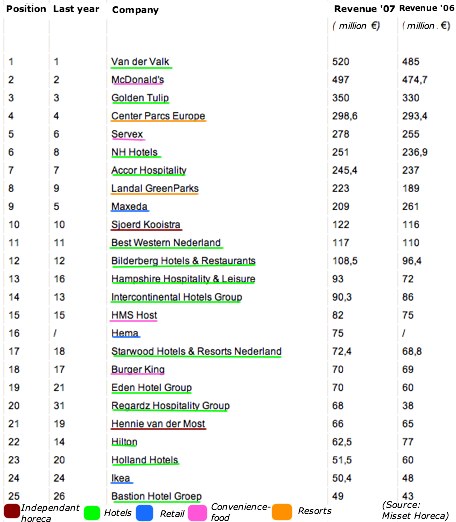
You can see the complete top-100 at Misset Horeca.
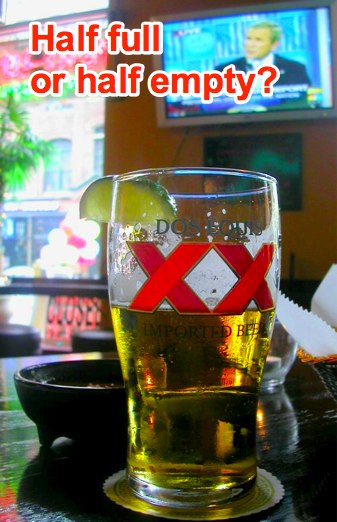 Normally, you would say that alcohol & money don't mix. But in the world of beer, at least in the Netherlands, there is tangled web that has been woven between financiers and the horeca-industry, which is difficult to unwind, and, some people argue, shouldn't be unwound.
First of all, what is investing all about?
It's all about profit, obviously, but it's also about minimising the risk for investors. Two big risks facing investors are informational.
One the one hand, there's moral hazard—the risk that entrepreneurs take their new assets (money) and misuse it in some way; On the other hand, there's adverse selection—the risk that entrepreneurs are not as capable as they claim to be.
Either of these situations requires a different response and a different type of investor. For moral hazard, the typical response is for investors to mingle in the affairs of their investee's operations and strategy and take equity; the so-called active investor, which includes business angels and venture capitalists.
For adverse selection, the typical response is to restrict the entrepreneurs movement through collateral, restrictive, covenants, and and short maturities, to minimise risk-engaging behaviour. This is the realm of the passive investor, which includes banks.
Financial beer-tactics
When looking at these two investors, you see some differences; Active investors take equity—become part owner of the firm—and they do this because they can't do much else to influence the use of their money. Passive investors prefer to use measures like lend against collateral, e.g. real estate or other tangible assets, which they can claim if the investment were to go wrong.
In the case of horeca-owners, you typically do have some kind of physical asset. You occupy a venue, you have machinery, and inventory. This is much more the realm for passive investors, who can relatively safely lend some money against the existing collateral.
There is one complication, however; Horeca is typically known for high failure-rates. I'm not sure why this is so. I guess that the leisure industry is largely sensitive to seasonal differences and economic downturns. And perhaps, the barriers to entry are low; there could be a lot of low-skilled entrepreneurs out there, who are not as capable of running & growing a business as they think. And finally, growth in itself could be a problem, if the capital requirements are significant.
The way investors get around it in the Netherlands is actually not to invest. Instead, they leave it up to breweries, who, against a right of exclusivity, lend a certain sum to the business, or give it a discount, and provided it with the necessary materials, branded of course.
What's the problem?
From my angle, there isn't one really. If horeca is such a risky business, and other investors are unwilling to invest, then I don't think an entrepreneur should complain about a simple exclusivity-contract. And particularly so, because of three factors.
For one, exclusivity is only valid if the brewery has less than 30% market-share. In the case of someone like Heineken, who also owns a number of other beer-brands, and has more than 30% market-share, you can quit such a contract after two months. Then again, Heineken does its best to provide other value-added services to make sure that this doesn't happen.
And second, there's a lot of consolidation in the alcohol-business. And just because a company has a certain exclusivity, it may have such a large portfolio of brands that there isn't any shortage of choice for customers; neither do I think these exclusivity-contracts are 100% bullet-proof.
The third factor seems to be a problem. By not giving customers a choice, they have learned not to care about brand so much when they enter a pub. They just ask for a beer. So for them, unless they're a beer-fanatic, it doesn't matter much. For producers, on the other hand, their brand has become a commodity, at least where nightlife is concerned.
Who cares, right?
Heineken seems to care, and is all for the liberalisation of Dutch pubs. Ignoring that a. this would disrupt a pretty good funding situation for Dutch pubs, and b. that Heineken owns more than 30% of the beer-market, making their exclusivity-deals vulnerable anyway, I do kind of see their point.
By turning a brand into a commodity, you take away marketing-potential. If you can position your beer-brand above that of regular beer, then you can reap higher profits. That makes 100% sense to me, from the brewery's perspective.
And, from what I understand, British pubs don't actually have such exclusive deals with breweries. The question is then, how they get funded, or whether the failure rate is perhaps lower in the UK? That, for now, is a question unanswered to me, but I'll do my best to find out.
(You can always give it to me in the comments.)
Part of this topic was inspired by a good article (unfortunately not online) in Dutch Marketing Tribune, still my favourite Dutch mag.
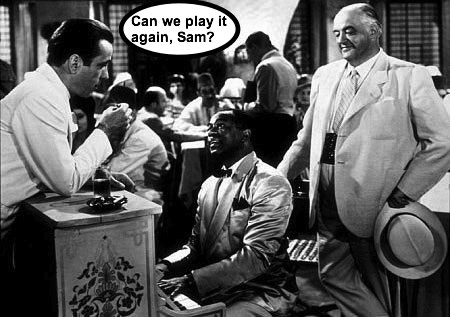 The argument for mass-production is that it enables innovations to become cheaper and hence raises the general quality of life of consumers. The argument against mass-production is a more controversial one: that it destroys the unique quality of, let's call it, art.
Starbucks is a very good example of those principles. It brought a higher standard of coffee to the American masses, who, according to Howard Schultz's Starbucks biography, had long been oppressed by low-quality coffee from retailers and coffeeshops alike. At the same time, as the recent crisis at Starbucks illustrates, it has reached a saturation-point: it has brought Starbucks-outlets to every corner in the US, as well as spawned a whole army of competitors, and its brand has become diluted. It has become a commodity.
Back to their roots?
The re-enstatement of Howard Schultz as CEO is a signal, that the business has lost some of its original spirit and is in need of a guiding light. A letter that is rumoured (!) to be written by Schultz confirms that Starbucks will be focussing on re-introducing that original spirit, as hard as that will prove to be. There's only so much that you can change, after your company has reached a certain size. It would, at this point, be like saying that McDonalds is planning to become your corner-restaurant where everybody knows your name and favourite food.
The innovative angle
A friend of mine made me aware of a new coffee-brewing machine on the market, called Clover, which promises to deliver a higher quality coffee to consumers, though also at a higher price. According to Bruce Milletto, a retail consultant to the coffee industry, "a typical American café spends around $50,000 on equipment, about one-quarter of which goes on an espresso machine. At $11,000, a Clover costs the same again." Thus the investment-proposition is not an attractive one to the average cash-strapped café, who would have to spend that kind of money and charge an expected $6 per cup to recuperate that cost.
Following the rules of mass-production, Starbucks + Clover makes for a match made in heaven, and so it is: Starbucks has in fact acquired Coffee Equipment Company, the four-year-old Seattle-based maker of the Clover coffee brewing machine, for an undisclosed sum.
Considering that Starbucks has long been threatened by the commoditisation of coffee in the US, through the birth of literarily 1000s of new franchisers who, on the surface, provide the same value-proposal, though perhaps at a lower quality and price, it makes sense to acquire one piece of machinery that makes a bit of difference in the eyes of certain consumers. Considering the recent partnership with Apple, I believe that these consumers share a similar taste and price-insensitivity, and since that segment appears to be growing, I believe that Starbucks made the right call. They appeal to the type of customer that will pay $6 for a cup, and with their economies of scale, that price is sure to drop to a slightly more acceptable level of (I guess) ca. $5.
The cultural angle
There is another side to this. The USA is not the world, and while Starbucks has been thriving over there, the Europeans (I can't speak for other continents) have enjoyed a coffee-culture for quite some time. For people like my parents, who are respectively citizens from Southern- and Western-Europe, and avid café-visitors, they would not even consider going to the Starbucks in the centre of their German hometown, because there are plenty of alternatives with more atmosphere, more identity. To them, Starbucks is like a McDonalds, a franchise that in fact shares many cultural values—bringing a good to the masses—and does so by building ecosystems of services—from music-retail to the happy-meal—to deepen the (commercial) relationships with its customers.
Consciously and subconsciously, I'm a sympathiser of "unique" café-outlets. I like spending time in them, sometimes hours at a time, read my newspaper in peace, and enjoy a reasonably good coffee at slightly less than $2 a cup. I don't actually care about spending twice that for a coffee, but all the Starbucks's I've been too (exclusively in Germany and the UK, I must admit), have been so devoid of atmosphere that I don't really spend more than a few minutes there, 30 max. The only thing that does attract me about them and similar stores, is that I can grab a cup-to-go, mostly in the summer, and enjoy it out in the sun.
As a citizen of Europe, I think I am a fan of the heritage of the traditional café and don't really want it to go. If that makes me "backwards" or conservative, I am sorry. I want the chance to enjoy a Turkish coffee in Brussels, an Italian coffee in Cologne, or simply a Dutch one here in Rotterdam. I enjoy knowing the history of a pub that has existed for over a 100 years in Antwerp, and the same in Maastricht, or Amsterdam. I want there to be a diversity, and most important, I want that choice to be mine. I don't want there to be a cloned coffeeshop on every corner.
One of the saddest things I heard, while I was in Belgrade last year, was the exactly such a historical café was replaced by a chain (and the coffee stunk too); and I was equally sad to see that nearly all of the traditional retailers I remember from before the war had been replaced by a cloned shopping-centre that would've made any Western city proud: from H&M to Footlocker.
Opponent: Starbucks?
Globalisation is a situation we must all deal with. Its oldest proponents are the FMCG-companies, who are focussed on producing the same good for millions of people. The question is whether coffeeshops should embrace the FMCG-principles like McDonalds and Starbucks clearly have.
Starbucks is a formidable opponent: it is both a roaster, a retailer, and an FMCG-producer. It is strong in the US, and has a significant presence in the rest of the world. It will not go away, And not all believe that their presence is all that disruptive. I don't either, as long as Starbucks knows its limits. There are parts of the world that do not share the same qualities as US-towns. Some cities have long histories and places of heritage that should perhaps not be housing a McDonalds or Starbucks.
In a way cafés are stuck. They need the kind of innovation that Clover brings, but they are not in a position to buy their way in. If they did, they too would have to become mass-marketeers, in order to recuperate that cost. Instead they need to focus on what they do best, and coffee-machine makers to do the same and just license their technology. And whether the latter is able or willing to do that is the question.
I'm not sure how much Clover was acquired for, no one is. And I'm not sure how far Starbucks is willing to go to ensure their qualitative and quantitative dominance of the market. Will they grab every new piece of technology that promises to introduce a higher quality of coffee to consumers, keep it for themselves, and leave the traditional cafés to differentiate themselves simply by their "culture"? Sheer business-principles dictate that they will.
Howard Schultz made me believe, in his book, that it was Starbucks' mission to bring better coffee to the world. Let's hope that a richer coffee does not come at the price of a blander world.
This piece is in fact incomplete. Optimally I should write up a list of actions for coffeeshops to take. However, I am not yet that familiar with all the business-issues facing these organisations and all of my suggestions would be targeted at growing in size and battling on similar terms as a national or global player. And I'm pretty sure that many would not be willing to do that. So I think I'll wait until I have a more objective grasp—from all angles—on the situation, before giving practical advice. Feel free to provide me with that objectivity through your comments.
 When I first wrote this post this afternoon, it was really long. After cutting it a little it's still really long. Sorry about that.
A lot of people I know from uni are into this thing called New Business Development (NBD). It makes sense, since it's the title of a course we studied together and it was absolutely the best course I've had in my life. Around 60 hours of hell per week for 2-3 months, but one hell of a ride too.
NBD is a necessary mechanism for when your core-business is stagnating. Let's say you have a good high-volume business, but competition is hammering you with low prices. If you can find a new business opportunity that allows you to make money differently, preferably at high margins, it's a good business opportunity. If it's synergetic with your core-focus, then it's an excellent business opportunity. Three small examples I stumbled across these last few days come to mind.
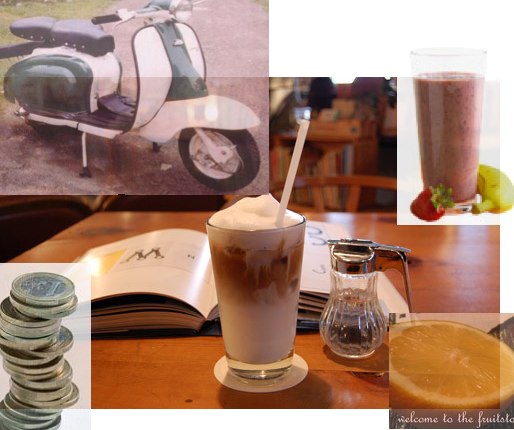
1. Bookstore + café. Verdict: logical
Buying books is a luxury. They serve no real purpose (unless you want them to) and are generally aimed at price-insensitive people. It is also a fairly slow sale. You are selling information, people are swamped with information, and it takes them time to make a decision. Sometimes… not always. I think time + the amount spent on an item also correlates positively, up to a limit.
That combines well with a café. The luxury-aspect allows you to charge more in cafés as well, meaning higher profit margins. Cafés lead people to relax and spend more time in bookstores, meaning they will likely purchase more books too. Combining the high traffic of price-insensitive consumers together with high profit margins and you have a good business. Also, it's a great way to compete against online-retailers, who are not able to add the atmospheric value.
2. Fruit-vendor + fruit-shake stand. Verdict: logical
Fruit is generally a low-margin product. The fruit-vendor in question sells 5 KG of Spanish oranges for €2. You can charge more for fruit-shakes; To the consumer, they taste good, represent health, and require very little in work (all emotional values = higher price-insensitivity). The fruit-retailer sells an orange fruit-shake of 0.5 litres for €2.50. Assuming that's about 1 KG of Spanish oranges, that's quite a lot more profit than €0.40 would give you. But of course there are other considerations.
The fruit-vendor is located right in the centre of Rotterdam on the busiest street. Likely the cost of renting a place is expensive, so is the added cost of producing the shake. The fruit-vendor also competes with a fruit and vegetable market, located a few hundred metres away, and a supermarket, 50 metres away. And his new business competes with other fruit-shake stands. What makes this combination work?
The higher profit margins for convenience-fruit-products, combined with high volume of people passing by is good. It also persuades investors to loan the money for the fruit-shake machinery, which they would probably not do for a low-margin business in a less favourable location. There's a lot of efficiency also; fruit is sourced from the same suppliers, so are packaging-materials, and the retail-space acts as a warehouse. Because fruit is cheap and the retailer has a large selection, he can charge lower prices than the competition and offer more variety. And he enjoys high profit margins even if the volume of fruit-purchases is lower because of the price-competition from the (super-)markets.
3. A eurostore + scooters. Verdict: illogical
This case is a little more complex and contextual. A year ago a eurostore, which is like a dollarstore—a shop offering a great variety of goods at low prices—started offering scooters alongside their regular products. They quickly abandoned the experiment and I have a theory why.
Likely this deal came out of partnership with scooter-retailer/-importer. The eurostore was in a good location with lots of traffic (good for the scooters) and the scooters would give it much higher margins than their regular products. Seems like a win-win.
Consumption of "euro-"goods is different from that of scooters, however. With the first, people expect stuff to break and don't come asking for a warranty. They just buy another. Buying a scooter or anything over a certain amount is very different. People expect extensive information, they may want a test-drive, they certainly want a warranty, and after-sale support.
Since the eurostore is what it is, a store with low margins, this kind of service is out of its realm. It ends up referring customers to the actual scooter-retailer, and very likely the purchase happens there also. Unless you have a contract that specifies this eventuality, gone is the alluring profit-margin. And that, as they say, is that.
Final thoughts
High traffic of goods is a good basis for new business development. It means you have a customer-base to which you can try and sell other products and services, hopefully at a good margin. Location and demographics are important also. Both the book- and the fruit-retailer were well-located and had access to a good demographic, allowing them to sell at high margins and high volume. The eurostore was only well-located. Synergies are vital. For the bookstore it was consumption-pattern and price-insensitivity; for the fruit-vendor it was offering essentially the same product in different packaging; for the eurostore there was little, or rather, none.
Isn't new business development fun? And was my analysis correct?

 The
The 


