 One of the downsides of not being at home for three months is that the mail tends to pile up. The culprit is The (weekly) Economist, which forced my landlord to dedicate a special cabinet just to accommodate them all. He was happy to see me.
My thesis is handed in, and while I'm anxiously waiting for the feedback / grade, I'm doing a variety of stuff to diffuse the thesis-haze that was in my head these last months. One of these is thinking about how I will organise the research that I collect for my work / blog. This is part of a dual trajectory I'm pursuing—one side is research, which I use to build up my knowledge about the field of food & retail, the other side the practical path, which I can now finally pursue freely.
The pile of 15 or so Economists is actually a good exercise to think about what really matters, and I'm going through them quickly, marking the articles that are interesting to read, and later cutting them out and adding them to special folder, after which I may categorise them by country and subject perhaps.
It's easy with The Economist, but there other publications that I'm much less eager to chop into pieces. My books are filled with pencil-marks, as are my Harvard Business Reviews, but there's no way that they'll ever feel the cold blade of my scissors. With those publications, I'm forced to keep all that extra paper and try to get my thoughts to paper as quickly as possible.
The other, sort of, complication are web-articles. I've been printing stuff to pdf and have a special S+FNR folder, reserved for anything from fashion-trends to human-resource management. I'm also going to print them out and add them to my folder for future analysis.
As you can see, I take my research seriously. A probable after-effect of writing a 180-page thesis, studying three academic fields—innovation, entrepreneurship, and finance—and interviewing roughly 300 businesses.
But I wonder how the real bloggers do it. If you're someone who takes blogging seriously, how do you organise your material, or do you organise it? If you do so on paper, I'm curious as to what kind of folders you use (incl. a link to a photo if possible).
Note: If you use a computer to store stuff digitally, I assume you use a personal database, like Devonthink or Jojimbo for the Mac. I'll tell you right now, I've used them all (to organise my thesis) and found it frustrating that they wouldn't do everything I wanted and tried to lock me in in the process (I've spent many hours migrating everything from app to app—it sucks!). They also don't help you much with paper-based materials, like mags, journals, and books. No, on the computer, I prefer a regular folder and to add text & pdf to it. Simple, portable, and cross-platform.
5 links to think - on Japan, designing experiences, globalisation, and endorsements
0 comments Posted by Unknown at 3:12 PM Really no shortage of interesting links this week, which is always nice. At the same time, it makes choosing 5 that much harder, but here goes.
- An Alien in Japan: Charlie Stross describes his trip to Japan last summer. …From Yokohama to Tokyo to Kyoto; …about shaved cats, getting lost in shopping malls, to Hello Kitty, and extreme bathing, to monorails and re-building history. A very interesting read, which presents some insights into that alien world, Japan.
- Blasting scents into coffee-consumers' brains: Roger Dooley explains the importance of environment to sensory experience, and describes how Nestle's Nespresso found their way into people's noses, brains, and hearts. In coffee, just as with good food and wine, scent is everything! Food for thought.
- Can experience be designed? After reading Bob Jacobson's essay, I'm not so sure. He writes about placing human experience into the centre of the design process, about systemic relationship between information and the environments (see above link as an example), about the difference between user- and human experience design, and how you can probably never design an experience to completely meet a person's expectations. At least, I think that's what he writes. So much of this text is far above my head, but worth reading to guide your mind into new directions, and a must-read for anyone interested in creating experiences. It's all a pre-cursor to a book, which, judging by the range of material, I expect to be published in 2 to 5 years, but which will be well-worth the wait. In the meantime, check out Bob's great blog.
- The downside of franchising: Richard Layman, in his artsy urban blog, writes about how franchises have transformed L.A.… into a clone of just about any other city. A little anecdote: I observed a similar trend when I was last in Belgrade, Serbia, which I hadn't visited since the war. It looks just the same as any other city, and that's sad because I remember there being a lot more authentic clothing- and food-venues. When I see this, I'm not sure I'm a fan of globalisation, or franchising for that matter.
- A twosie on Human brand-carriers (Sounds like a disease, doesn't it?): Two articles discuss this, one, by the NY-Times, on rock-stars and their interaction with brands. As one artist put it: "The barriers are changing and we as artists are making less and less money, and we have to get creative." At the same time, I have great sympathy for artists like Springsteen, Tool, and N.I.N., who refuse to corrupt their art. And another article, by HBR, on endorsements in sports, which is, at last count, a 100 billion dollar industry. I'm fascinated by this phenomenon, so maybe I'll write something about it in the future.
In this regular segment I focus on news of note (to me at least), about brands that I'm familiar with. I may someday write about Nordstrom, Costco, and Walmart, whom I hear great things about in terms of service, supply-chain management, and frugality, but until I come in contact with what they sell, I'm not sure I can say much. That said, I'm aware that Walmart made moves into Germany (and failed, which intrigues me), and has taken over at least one chains (Asda) in the UK as well, which I have visited. So never say never.
Coca-Cola and Nestlé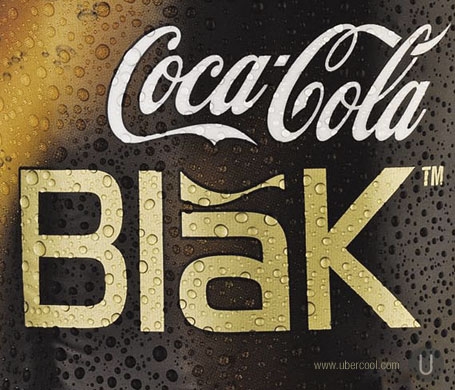 Coca-Cola has, for a third time, partnered up with Nestlé, this time to develop coffee and tea-products. The previous times, the company worked Nestlé to develop Enviga, a calory-burning drink; and with L'Oréal, a daughter-company of Nestlé, to develop the beauty-drink Lumae. So reports Dutch Marketing Tribune.
A few months ago on Tech IT Easy, I expressed my wonderment at the Coke Zero brand and what their aim was there, as well as held a rant on how un-innovative "junk"-drink (or -food) brands are in general. I think this is an interesting move. It won't make the world a better place, perhaps, but it'll be more colourful.
Similarly, I know that Starbucks formed a partnership with PepsiCo a few years back, to develop canned coffee-drinks, also to be sold in supermarkets. So this could very well be a competitive move, by either Nestlé and/or Coca-Cola to compete with a perceived threat of Pepsico's or Starbucks reach into customers' taste-buds. Update: Looks like MSNBC reported on a similar story last year.
Leonidas expands to the cafe-arena In other, coffee-related news, Belgian chocolate-manufacturer and retailer Leonidas is opening a coffee-outlet in the Netherlands, a first step of what it calls a worldwide expansion of its products and outlets. This according to Dutch publisher, Elsevier.
Again similarities can be drawn with Starbucks (sorry, SB-haters), which started as a producer and retailer of coffee-beans, before it expanded into the business of coffee-bars as well. I think what both Leonidas and Starbucks have in common is a reputation of offering fine products as well as offering a third place which customers feel comfortable in. It's a relatively easy step-up for Leonidas, if its experiment were to succeed, because it can simply adapt its existing retail-outlets.
Isn't the world of coffee exciting?
The case of NBC vs. Apple - a problem of customer-disassociation?
3 comments Posted by Unknown at 9:47 PM I don't like the principle of re-blogs, but sometimes, no many times, people say smarter stuff than I do (in this case, John Gruber), so here goes.
NBC, in a public statement, said following noteworthy things:
In addition, we asked Apple to take concrete steps to protect content from piracy, since it is estimated that the typical iPod contains a significant amount of illegally downloaded material.and
NBC Universal also wants iTunes to stiffen anti-piracy provisions so computer users would not have easy access to illegal downloads.Gruber's response:
This is straight out of the music industry’s playbook: assume your customers are criminals and treat them with contempt.and
It Is Estimated That NBC Could Not Have Screwed This iTunes Thing Up Any Worse.No, I don't highlight this because I hang on everyone of Gruber's words, far from it, but this does point out a core-problem in the supplier-retail relationship, in my opinion. That of disassociation.
Yes, their estimation of pirated content on the iPod is probably an accurate one, but what business is it of theirs? It would be similar to me entering a record-store and having to submit to a strip-search for "estimated" pirated content. It is disrespectful and any customer-focussed company would know that.
However, NBC is not a customer-focussed company. It is a supplier of content, which means it is a business-2-business company. It acts merely as a legal entity connecting the creators, e.g. the lovely Tina Fey from 30 Rock (who is clearly a human-being), to the owners of iTunes, Apple. They, in turn, sell their products to people, which makes them more customer-focussed (though online selling isn't exactly the same as being in the same room with your customers).
It is my personal opinion that people, and businesses, are the way they are, because of experience... at least as far as people-interaction is concerned (case in point: "the rise of tech is killing the art of chat?"). The more a business interacts with its customers, the human kind, the more it will start to see their point of view. Right now, NBC only understands contracts, and perhaps the creators point of view. But it does not seem to understand that people would be perfectly happy to buy their products, as long as the relationship is based on good value for them, which includes both respect and a fair price.
The way to get around this is not simple market-research. It requires a constant stream of information back to NBC, a barometer of moods, trends, and plain-and-simple information, which gives NBC an idea of where it stands. And of course that won't prevent mistakes. But it will lead to more mistake-fixing instead of making public statements where they call all of us iPod-owners pirates. For one method on how to accomplish this, read my blogpost about Proctor & Gamble's take on shopper marketing.
To a degree, it is understandable why this does not happen. It is not efficient, unless NBC has control over the sales-channel. And it is not efficient for NBC to enter sales, from their perspective, I think. But that is no excuse! If they don't understand a business, they must either gain the necessary knowledge to operate well in it, or stay out of the kitchen! [/end rant]
Btw, how does not having their content in a legal outlet, lessen the risk of piracy? Wouldn't that result in more piracy?
 This is not the first time, we've heard this of course, but still interesting how the company deals with the challenges of diversity and picky European customers.

 The
The 


