 Ten tips, taken from an essay written by Masterson, entitled "The Winner's Rule", from the book "Just One Thing
Advice is a funny thing. I don't think it's advice at all; rather it's a set of criteria or truths, and fairly shallow ones at that. They ignore the context a person, a reader, a student, a business goes through. And what if we all met these same criteria? Wouldn't the world be a much more boring place? As such, treat all "advice" with care.
I can classify Masterson's points into two categories: Business-related & person-related.
Business-related
1. It's not a business until you make the first sale.
2. The most effective way to enter a new market, is to offer a popular product at a drastically reduced price.
3. Sell, sell, sell: keep on increasing the perceived value, allowing you to ramp up the price, and increase profit margins.
All of these are sort of straight-forward, I think, though certain terms should be qualified. For instance, what does a 'sale' mean? It's easy to understand it within the context of a product going over the counter, but what about service-companies or the many web-businesses that fund themselves through advertising (if that)? I would nominate the first "rule" to be: It's not a business until you make money.
The second and third points, to me, seem like a typical VC-thing to say. Scale, scale, scale. Sell cheap and sell much. And worry about increasing the profit-margins later on. Again, it should be qualified, depending on the type of business. For instance, the internet is a market-place for countless cheap (or free) and mass-products; but as a result many products/services have become simple commodities, with no one willing to pay for them, and businesses having to look towards advertising as a funding-source (shudder).
Personality-related
4. When choosing a business, pick the one that can be grown without your personal involvement.
5. Before investing, know exactly how much you're willing to lose, and get out before you hit that point.
6. First, improve your strengths. Then, eliminate your weaknesses.
7. Focussing is more effective, than a diversified approach.
8. Let your winners run, and cut your losers off… quickly.
9. 80% of success comes from 20% of your resources.
10. Try to always focus on the good of the whole, vs. the good of the one (applies to any relationship).
Lot's more to say here.
Completely agreed with point four, as entrepreneurship should not be about enslaving yourself to another organisation, at least not for life. Many entrepreneurs seem to ignore that rule, however. Also, VCs often prefer to replace the founders with more qualified executives to "grow the pie."
Point five is spoken like an investor and is very much dependant on the perception of risk you have. Entrepreneurs are reputed to be risk-taking people, however the smart entrepreneur takes a calculated risk, and understanding how much you're willing to lose is part of that.
Point six and seven are a personal weakness of mine, I'm too damn curious for my own good sometimes, more interested in exploring areas (of myself or in life) that are unknown to me, rather than that which is known. That may change, but is certainly not a criteria that I personally meet. I wrote about focus before, btw. Differs from person to person.
Point eight comes with experience, I think. On the one hand, you need to have perseverance, even when things are hard or going badly, especially during the early stages of a start-up. On the other hand, a reality-check is price-less. I suggest bouncing your ideas off as many people as possible.
Point nine is true, nothing to add.
Point ten is about understanding the core-principles of business and, even as an employee, doing all you can to make that business (instead of yourself) profitable. Ram Charan is a good man to read on that.
Good essay, made me think about my place in the world.
Read more entrepreneurship articles here.
 Ran Charan, who I wrote about a few days ago, made another excellent contribution to my thinking (and hopefully yours), the concept of "social operating mechanisms." He defines them as mechanisms that synchronise individual contributors' efforts.
A step back
Individualism vs. collectivism represent two personality-types. There are the managers, who are integrators and bring both groups together and (are supposed to) identify with the greater purpose of the organisation: maximisation of profit, etc. And there are individual contributors, who through their own efforts bring forth new data and growth, etc. These types are not always suited for management, as they need that freedom to be creative.
Social operating mechanisms fit within the framework of execution, in the sense that that is one of the last stages in a multi-stage process. As the leader/problem-solver of an organisation, you start by identifying a problem; you come up with a set number of fundamental priorities to solve the problem; and you (design social operating mechanisms to) spread that solution throughout your organisation.
An example
Mr. Charan mentions a number of examples, but (for obvious reasons perhaps), I like the Wal-Mart one the best.
- In the early 90s, every Monday to Wednesday, ca. 30 regional managers visited 9 Wal-Mart stores and 6 competitor-ones, to check if Wal-Mart's strategy of offering lower prices than the competition was being implemented correctly.
- Every Thursday-morning, Sam Walton conducted a 4-hour session with a group of 50 people, including those regional managers, buyers, logistics- and advertising people to discuss the status quo, what was going right and wrong, and the future.
Making it relevant?
If this seems like a big-company problem, maybe so. But even on a smaller scale, you could see a similar process happening in the week of a franchise-owner, I discussed a few weeks ago.
As soon as an organisation grows beyond a few people, the barriers between your customers and the leadership of an organisation increase. The politics can be frustrating and are one of the main reasons why original founders leave. The Amazon-story, which I wrote about a while ago, and which also discusses of how Jeff Bezos, founder and CEO of Amazon tries to keep in touch with the core-principles of Amazon, is also an example of a social operating mechanism.
Naturally, today's reality is somewhat different from the time (2000) that the book was published. We have "the internet" now, which should make creating social mechanisms a much easier to solve. I say 'should' as opposed to 'will,' because it still requires the necessary cohesion, which many technological solutions (in my opinion) are still lacking.
It still comes down to designing people-processes which help you implement core-priorities, and having the tolerance for, let's call them, idiotic decisions that sometimes come from the type of group-think often prevalent in organisations.
The picture is courtesy of infed.org
 I'm currently reading "What the CEO wants you to know," by Ram Charan, and it's safe to say that it belongs in the top 10 business-books, I've ever read. It's only 140 pages short, but filled with advice that is extremely easy to digest, that I'll be sure to re-read it several times later on, and can warmly recommend to others too.
One chapter in the book struck me particularly, on coaching, as I consider it a vital skill in business-relationships. Although I think Mr. Charan paints a bit of a rosy picture, I consider it a good standard to aim for. Some quotes:
How would you feel if someone gave you positive feedback on the things you're doing well and specific suggestions for building your skills? Chances are you would feel that you had a personal coach, someone who wanted to hep you succeed. You would feel energized. I can tell you from experience that it works. You can do it for those who report to you, and in the process, you will expand your own capacity.The chapter also goes into a number of examples from real life.
…
Coaching is not a performance review. It's not about what someone did last year, and it's not about money. It's very personal. You're hitting the person between the eyes. You're helping him face his blind sides and learn to do things better. The feedback has to be honest and direct. No sugar coating.
…
Self-confident, secure leaders love to give true feedback because they know that growing people is their responsibility. By true feedback, I mean saying what they really think. Too often, people hesitate because they know they may be wrong, or that they feel reprisal. But chances are your instincts are correct, and they'll improve over time. I've seen numerous times that when you put experienced businesspeople around a table and they talk candidly about an individual, the judgements converge very quickly. It's not had to zero in on the most critical thing the person needs to improve.
Some people say this kind of coaching is a good idea, but their company doesn't have the ambiance for it. Still, you can start with three of four people who would be receptive for it.
Charan's book is all about understanding business principles and setting a limited number of fundamental priorities to improve a business. Coaching is a logical extension to that, as when you clearly communicate what the business priorities should be and how that individual can get there, that's essentially coaching (and makes your life considerably easier in the process).
The author also co-wrote a book called "Execution," which I haven't read, but based on this book, believe is a good choice if you need a more modern read. "What the CEO wants you to know," is from 2000, but I consider it timeless advice.
5 links: the obvious one, brand-logic, happy places, e-toys, neuroscience
0 comments Posted by Unknown at 11:02 AM It's Sunday again, and I have a nice big collection of links today: on running a cheap yet effective start-up; on why brands exist; on creating happy places for yourself and employees; on the business of children; and finally on a whole load of neuroscience. The aesthetically pleasing picture of Marilyn links to a particularly disgusting image of a "healthy" burger—my initial choice of illustration. You have been warned.
Previous link-discussions can be found here.
Link 1: the obvious one - Seriously, unless you actually used this weekend to, eh, have a life, you'll have noticed the firestorm started by Jason Calicanis, continued with Duncan Riley, tempered by Jason Fried, and the final words of wisdom by Micheal Arrington. Crazy, how opinionated these entrepreneurs/bloggers are, right? Yeah, right. A good read if you're (thinking about) running your own business, with like lazy employees and expensive tables.
Link 2: A brief history of brands - well actually a blurb about a book. I like:
"Branding became necessary when large-scale economies started mass-producing commodities such as alcoholic drinks, cosmetics and textiles. Ancient societies not only imposed strict forms of quality control over these commodities, but as today they needed to convey value to the consumer. Wengrow finds that commodities in any complex, large society needs to pass through a "nexus of authenticity.""
Link 3: the architecture of happiness -
"There are three concepts central to the “yoga of the home”…. The first rule is to align your schedule with universal schedules by getting up and going to bed with the sun. “We try to keep lightweight and low furnishings in the north and east — to create an openness — so that we can draw in the healthy early morning sun,” says Cox. Heavier, taller furniture goes in the south and west. Second is bringing nature indoors — plants, natural fibers, no synthetics. “Vastu is the first intentionally green science,” Cox says. And last, vastu asks us to “celebrate who we are and what we love” by surrounding ourselves with things that have meaning. “When someone enters our living room and we’re not in the room yet, we want this guest to get a sense of who we are,” she says. “The room speaks of us.”"I've been thinking about this topic and the general issue of creating happy places for a while. A worthwhile read is also Frank Addante, a serial entrepreneur, on choosing the office-space for his start-up: link 1 and 2.
Link 4: building a toy e-commerce store - since I linked to Lego last time this seemed appropriate. In all seriousness however, I think the subscription-model + children is a cash-cow; kids always want more stuff and have old stuff to get rid off. Applicable not just for toys, but clothing and furniture as well.
Link 5: Some neuroscientific stuff - ignorant shoppers are blissful, though information that stimulates the imagination still works (as do quality-labels as they allow you to charge a premium); body-language works for consumers, in other words an in-store-television-advert or one of those annoyingly friendly taster-people in supermarkets, should cause people to buy more food. A little bird tells me this applies more to the US than the French; 15% of women don't like perfume, which is interesting I think as I'm not a big fan either; and Art-adverts work, enough said. And yes, EurekAlert is my new favourite site.
 When I first wrote this post this afternoon, it was really long. After cutting it a little it's still really long. Sorry about that.
A lot of people I know from uni are into this thing called New Business Development (NBD). It makes sense, since it's the title of a course we studied together and it was absolutely the best course I've had in my life. Around 60 hours of hell per week for 2-3 months, but one hell of a ride too.
NBD is a necessary mechanism for when your core-business is stagnating. Let's say you have a good high-volume business, but competition is hammering you with low prices. If you can find a new business opportunity that allows you to make money differently, preferably at high margins, it's a good business opportunity. If it's synergetic with your core-focus, then it's an excellent business opportunity. Three small examples I stumbled across these last few days come to mind.
1. Bookstore + café. Verdict: logical
Buying books is a luxury. They serve no real purpose (unless you want them to) and are generally aimed at price-insensitive people. It is also a fairly slow sale. You are selling information, people are swamped with information, and it takes them time to make a decision. Sometimes… not always. I think time + the amount spent on an item also correlates positively, up to a limit.
That combines well with a café. The luxury-aspect allows you to charge more in cafés as well, meaning higher profit margins. Cafés lead people to relax and spend more time in bookstores, meaning they will likely purchase more books too. Combining the high traffic of price-insensitive consumers together with high profit margins and you have a good business. Also, it's a great way to compete against online-retailers, who are not able to add the atmospheric value.
2. Fruit-vendor + fruit-shake stand. Verdict: logical
Fruit is generally a low-margin product. The fruit-vendor in question sells 5 KG of Spanish oranges for €2. You can charge more for fruit-shakes; To the consumer, they taste good, represent health, and require very little in work (all emotional values = higher price-insensitivity). The fruit-retailer sells an orange fruit-shake of 0.5 litres for €2.50. Assuming that's about 1 KG of Spanish oranges, that's quite a lot more profit than €0.40 would give you. But of course there are other considerations.
The fruit-vendor is located right in the centre of Rotterdam on the busiest street. Likely the cost of renting a place is expensive, so is the added cost of producing the shake. The fruit-vendor also competes with a fruit and vegetable market, located a few hundred metres away, and a supermarket, 50 metres away. And his new business competes with other fruit-shake stands. What makes this combination work?
The higher profit margins for convenience-fruit-products, combined with high volume of people passing by is good. It also persuades investors to loan the money for the fruit-shake machinery, which they would probably not do for a low-margin business in a less favourable location. There's a lot of efficiency also; fruit is sourced from the same suppliers, so are packaging-materials, and the retail-space acts as a warehouse. Because fruit is cheap and the retailer has a large selection, he can charge lower prices than the competition and offer more variety. And he enjoys high profit margins even if the volume of fruit-purchases is lower because of the price-competition from the (super-)markets.
3. A eurostore + scooters. Verdict: illogical
This case is a little more complex and contextual. A year ago a eurostore, which is like a dollarstore—a shop offering a great variety of goods at low prices—started offering scooters alongside their regular products. They quickly abandoned the experiment and I have a theory why.
Likely this deal came out of partnership with scooter-retailer/-importer. The eurostore was in a good location with lots of traffic (good for the scooters) and the scooters would give it much higher margins than their regular products. Seems like a win-win.
Consumption of "euro-"goods is different from that of scooters, however. With the first, people expect stuff to break and don't come asking for a warranty. They just buy another. Buying a scooter or anything over a certain amount is very different. People expect extensive information, they may want a test-drive, they certainly want a warranty, and after-sale support.
Since the eurostore is what it is, a store with low margins, this kind of service is out of its realm. It ends up referring customers to the actual scooter-retailer, and very likely the purchase happens there also. Unless you have a contract that specifies this eventuality, gone is the alluring profit-margin. And that, as they say, is that.
Final thoughts
High traffic of goods is a good basis for new business development. It means you have a customer-base to which you can try and sell other products and services, hopefully at a good margin. Location and demographics are important also. Both the book- and the fruit-retailer were well-located and had access to a good demographic, allowing them to sell at high margins and high volume. The eurostore was only well-located. Synergies are vital. For the bookstore it was consumption-pattern and price-insensitivity; for the fruit-vendor it was offering essentially the same product in different packaging; for the eurostore there was little, or rather, none.
Isn't new business development fun? And was my analysis correct?
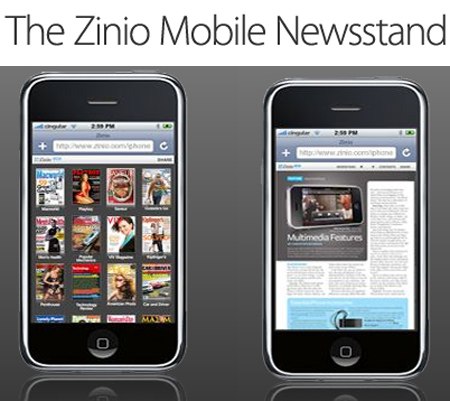 One of the things I do on this blog is deciding on the potential of industry-segments, ranging from farming to coffee-shops, and from grocery to other types of retail. On Tech IT Easy I've previously expressed my scepticism at media (in which I include text, art, audio, video, and gaming), especially in terms of business-models, which I think that segment lacks.
Equally so, I see fairly little space for it in the physical retail segment, simply because it is so much more convenient to purchase and consume it via digital means. The PC (and other tech-gadgets) have essentially become the hub for all things media, and creating barriers to that experience just leads consumers to pursue more convenient ways of experiencing that media. That search for convenience is something that I've also approached in a previous post on this blog.
Let's look at some media-types and how they are being sold online.
For Video - there's iTunes, consoles, and set-top boxes that are controlled by media-producers. In any case, the power-differentials between producers and intermediaries is very unbalanced and it isn't a nice segment to enter as a retailer. Also, let's not forget the free alternatives: YouTube et. al and piracy.
For Audio - again iTunes, Rhapsody, and Amazon MP3 Store, but also smaller digital store for independent artists, like CD-Baby (which operates through iTunes also). Let us again not forget piracy and the fact that much of music is being produced through digital means and it makes sense to organise distribution that way also.
For text - there's again online outlets like Amazon for eBooks (Kindle) and Zinio for magazines. And let's not forget that 99% of text-based media is viewable for free online. Still, admittedly, electronic devices for consumption are not yet able to compete with paper-based methods, at least where price is concerned. Also Audible should not be forgotten as a source for audio-books, recently bought up by Amazon and partially distributed through iTunes again.
For Gaming - I'm not too familiar with the online market for this one. Even so, there's Steam, a digital distribution system by Valve, a platform which they recently opened up for use by other game-publishers. There's also plenty of smaller games being distributed through Xbox-live, the future Playstation Home, and of course the internet.
Finally, Art - here the situation is more complex, while on the other hand being relatively simple. It is complex for artists like my mother, who paints, and conducts business on a personal level by interacting with her customers. On the other hand, there's photography and digital art, arguably the evolution of traditional art, which is easy (for some) to produce digitally and distribute online. I suppose every industry has that friction between the traditional way of doing things and "the new way."
All in all, I don't see media as a big cash-cow for physical retail. I like to think that, because production and distribution becomes cheaper, that its cost will eventually fall to a very low price, allowing for it to be included as an added-value component in the service-proposition of physical retail-outlets (to which I also include restaurants, etc.). I also like to think that creating environments that make the consumption of media a comfortable process (e.g. cinemas) also has some potential.
But my outlook for selling media as a product, something that could easily be sold digitally, remains bleak. Please let me know if there are arguments against my point of view, as I'm here to learn.
"The Disney Way" oh, how I hate thee, as a book, so far (UPDATED!)
0 comments Posted by Unknown at 9:27 AMUPDATE: After skimming through the book, I did manage to find some more informative chapters on how to structure creative enterprises. So, I'll raise my score of the book to 5/10, and will update when there's more to say. I was actually not planning to write anything too bookish this week, having championed their status for more than a few days last week. I just want to say that, ever since starting reading TDW, I found myself growing more and more uncomfortable for a few reasons.
First of all, the credo that the book is trying to sell to me is "Dream, believe, dare, do." Yes, I remembered it without checking the book. DBDD is such a simple system, meant to emulate Walt Disney & Co's way of thinking, that pretty much any idiot can remember it.
And that is how I feel like I'm being treated. Like an idiot, who can't remember more than four words.
The book is split up into parts, representing each of the four "magic words." I started on 'Dream,' expecting to find practical story-boarding tips. I'm not yet done, so maybe at the end, but all I've been reading was about companies that the authors consulted, which had "big problems" and now are "a leader in their industry." There is very little, except for between the lines, which I can use as a case-study for me to think that I can replicate this in my own company.
The method most mentioned, is to create a "Dream Resort" (always capitalised, because it's the authors' business). If you go to a Dream Resort, all your creative barriers will fall away, the magic will happen. Believe it! Well, until I see something that justifies spending 1000s of dollars on consultants, or how I can replicate some methods on my own, I don't believe it.
The only instructions I remember reading so far, was a pseudo-sociological experiment with monkeys. Apparently, if you put 99 monkeys on a beach with sandy fruits, one monkey will work out how to wash his fruit in the sea and make it taste better, and eventually the other monkeys will learn from him. And, I paraphrase: "That's how companies learn too." We are all monkeys!
Somewhat ironic, the authors mention several characteristics that people don't like about how big companies are managed, such as arrogance and not including employees in solving problems. I would like to add treating people condescendingly to that list.
The lack of dreams, you could argue, is a big-company problem, which is another incompatibility-issue with some readers like me. There is no creative barrier, really, what is needed is a framework to build a business around it.
Also, small companies are flatter, there are less structural problems preventing the spread of ideas, it is actually a survival mechanism that everyone takes part in steering/fixing the machine that is a start-up.
Anyway, I decided to give this book until the end of the 'Dreams' chapter. If I don't get clear-cut language by then, I'll skim and throw it away.
And I still can't believe that I'm being advertised to buy services in a book that I already bought. An end-of-book brochure is fine, but so far it's very much over the top.
Reviewer's current grade: 3/10 and I'm being generous.
 If you follow my blogging-history, you may have noticed that I write about books… a lot! There are several reasons for this. One is certainly that I am a bookworm—I enjoy reading books, learning new things, and whenever I enter a bookstore, I go into a trance and start studying books to buy now or in the future. Case in point: I wasn't planning it, but I bought two more today! Talk about impulse-buy… More on those in a sec…
The other reason is more complicated. I actually think that books translate better to blogging than much of real life. This clearly differs from blogger to blogger. You won't find Robert Scoble blogging about books much, nor Fred Wilson, both of whom blog on more daily issues (Scoble is also a media-guy). Both John Gruber and Jason Kottke do cover books, but often base their writings on articles and other shorter readings.
For myself, it is different and I can give several examples of this. One, I was a pretty regular blogger until about a year and a half ago, when I started on a project of researching venture capital in the Netherlands. Not only was it a time-intensive process, but I was constantly questioning myself as to whether my blogging was ethical or not. There were certain topics reigning in my life, relating to that company, which i could just not disclose. A similar thing happened before that, when I worked at a high-tech start-up, and most recently, while completing my thesis.
There are several blogging friends I could mention (F., J., C., & M.), where you notice this same phenomenon.
Books instead, as well as articles, offer a foundation to build upon. One, they are public, which dismisses any confidentiality issues. Two, if they are well-written, they communicate core-ideas well, and you can add to that with your own knowledge. The complication with reading is of course, similar to writing, finding the time to do so. I think I found a doable system, by reading just before sleep, but I don't know how that will hold up in future projects.
The way I choose books (and articles)
As I look back at my short life, I find that I've evolved in the choices of books I made, and most recently after engaging on this trajectory—the food & retail blog and the underlying purpose that serves. While before, my choice of business-books was somewhat restrained to general management, strategy, and entrepreneurship books, I now choose books purposefully that fill a gap in my knowledge and focussed on business-issues in this industry.
Some examples
I choose the McDonalds (coverage here & here) and Starbucks books (here, here & here), because they seemed like a good venue-point from which to understand how food-businesses work. My interest has always been towards chains of businesses, not individual ones, so that was also a bonus. Similarly, the IKEA-book (here) offered insights into retail, and the eBay-book (here), while less relevant, into starting a business and running a community.
The Disney-book (here), which I'm currently reading, gives me insights into building a framework around the soft discipline of entertainment, story-telling, etc. It is very relevant to my earlier post today on cinemas, which is clearly a raw perspective, but one I hope I can refine, as entertainment is a core-value I have.
The two books, I've chosen today, are on two diverse, yet, to me, relevant subjects. "Managers as mentors" is about what the title suggests. The reason I chose it, is because I'm not a fan of the traditional perception of management. I find it a hard world. The way I relate to people is through learning and teaching. I've raised my brother since I was 11, as my parents were often away from home, and find it very rewarding to see him become an adult. I have a similar relationship towards people, where I like to turn them into more than they imagine themselves to be. So this book seemed right. That is not to say, that I have any problem with firing people that I don't feel have potential. ;-)
The second book is even more interesting to me, it's called "the growth strategies of hotel chains - best business practices by leading companies." It's very strategy-orientated, covering principles of diversification vs. specialisation, vertical/horizontal/diagonal integration, m&a's, franchising vs. ownership, branding & globalisation, and US vs. European differences, as well as examples of said leading chains at the end of each chapter. Exactly up my alley! Needless to say, I will read it after the Disney book!
So what about you?
Now, a discussion is only valuable if more people take part. So please, if you have an opinion on this, or on a better research-methodology for blogs, let me know in the comments!
The picture is courtesy of brandtarot.com
 So, I finally finished the book on IKEA, which, sadly, is NOT yet available in English, though there are other choices + I seem to remember reading that it will be released soon.
In any case, a great book, which taught me a lot about the mentality that reigns inside IKEA, how logistics are organised, what determines design, what determines price, how people are managed, and… the most boring/interesting part: how IKEA evades taxes. That last one is really worth a read… they basically designed a complex financial structure, which enables them to offset tax-differences in various countries. As you may know the tax-levels in Sweden, its country of origin, are somewhat insane and have marked the company in a way that the Swedes probably didn't intend.
So what to do next. I'm a strong believer in making things actionable, vs. the passive digestion (& forgetting) of facts, and, in order to make this book useful, I need to do something about it. I previously thought about writing about the way that IKEA expanded internationally, as that sheds some insight into cultural differences of countries and the considerations a business has to make when launching there. It's also relevant IF you care about how the origins of a business determine where and how it will grow. I may still do that, but since it's a lot of work, I'll do it in note-form.
Something will probably come out of it. You can read about my previous coverage of IKEA here.
Next book: The Disney Way
While IKEA taught me about retail (and some extras), I'm hoping to learn more about how to organise entertainment. As I wrote a few days ago, a strong theme in my life is how to tell stories, in whatever form, but there is a whole process behind that and, while I have a rough view of what that is, I'm hoping that the Disney book has some practical tips.
I'll probably supplement this with The Toyota Way at some point, as I have a certain fascination for supply-chain management also.
Yes, yes, I read entirely too much…
FYI, previous book-reviews include:
- eBay's "The Perfect Store"
- McDonalds "Grinding It Out" here and here
- Starbucks' "Pour Your Heart Into It" here and here.
The picture is a mashup of this picture of a scary clown and this other lesser-known picture here.
5 links - cool vs. tech, touch-screens, women, pizza, & bookstores
0 comments Posted by Unknown at 12:09 PMMan, I collected so many links, that I'll probably have to write three updates to cover the most important ones. We've got a lot of ground to cover, so let's get started. You can find my previous coverage on interesting links from the web, here, and my continuous stream of bookmarks, here.
Link 1: On Magnetbox - Correlating cool with tech - With pictures like the one below, my work on this blog is really done. Interesting is the rise of computers vs. dance & hip-hop music (both of which are hugely benefiting from the cost-savings made possible by PC-based studios. (A note: low industry-barriers = high chance of suckage!). Also note the fall of art, after the colour TV was introduced. Kottke also made some comments about it.
Link 2: On BuzzFeed - Touch-Screen Ordering - BuzzFeed presents us with some stories about automatised ordering. There are both advantages and disadvantages, I think. Good is that it minimises errors in ordering and can interface well with back-office operations, such as ordering new supplies. It might also fit with the individualistic preference for self-service, I wrote about before. The disadvantage is the cost and the margins of error that information systems bring (I still shudder at the thought of the LAS disaster (pdf)) + the lack of the human factor. Martin Kunzelnick (German) links to some videos of Microsoft's Surface in a restaurant-environment.
Link 3: On Lightspeed Venture Partners - It is no accident that Typhoid Mary was a woman - Although it's a horrible-horrible title, and perhaps an obvious point, I've been coming across many stories about the social qualities that women possess, making them better at PR, marketing, sales, relationship-building. Something to keep in mind for any people-based business.
Link 4: On Reuters - Pizza Hut rolls out nationwide mobile ordering - A news-item (finally), and I'll probably delve into this topic sometime in the future. Arguably, Pizza Hut has been pursuing a different strategy from pretty much 98% of the pizza-restaurants out there. I'm sure that there is considerably brand-loyalty towards Pizza Hut, which will give it an advantage over delivering pizza-franchises, HOWEVER, it will probably be competing on price, which the franchise has not done so far. I'm not sure how that will affect their brand at all, but it's something to keep an eye on.
Link 5: On WSJ - Who's Buying the Bookstore? - arguably, there are few retail-outlets that evoke such an emotional response as bookstores. I find them comforting, and very similar to churches, in the way that it really is expected of you to be silent while browsing (on a side-note, I discussed a link of Dutch bookstore being opened in a church before). It's also a symbol of a community, as WSJ points out. Well, with competitive pressures from Amazon et al., these types of stores are clearly disappearing, or changing into hybrid monsters, which smaller stores can no longer compete with. WSJ points out a phenomenon related to that community-spirit, which is very touching. Capitalism isn't everything, particularly in places that target the softer pleasures in life. I'll have to reflect more on this, as I'm very attracted to these types of stores, and would love to set one up myself.
That's it, for this week. I'll see how I'll catch up on the rest of my links, but this went great (took 20 mins), and I always enjoy re-reading my bookmarks. I hope you do too.
Cracking impregnable fortresses - on the art of war and blue oceans
0 comments Posted by Unknown at 9:14 AM Every industry has a number of pains. Arguably, a problem in the FMCG (fast-moving consumer goods) sector is that the market is saturated and that margins are fairly low. Over the next few weeks, I plan to take a deeper look at companies within the FMCG-segment for food, in order to understand the structure of the industry better, and the challenges faced by companies—new and existing.
Somewhat related to this, I came across an interesting article at HBR, on "strategies to crack well-guarded markets," which I'll go into now.
I'm a great fan of the book "The Art of War" (not to be confused with "The War of Art," that I reviewed a few months ago…). Sun Tsu offers some timeless and broadly applicable tips on how to fight battles that cannot be won by force alone. The quote I remember best goes something like this (paraphrased):
"A big army is like water; it is fluid, it can envelop you, but it is also hard to control. Fight a big army like you would water, in places where it finds it difficult to move."HBR makes a similar point in their article (abstractly paraphrased to stay in character):
- Thread lightly - using a minimum of resources to enter these new markets also minimises the risk associated with these experiments.
- Be unpredicatable - when doing things fundamentally different from your enemy, you end up catching him off-guard and slow to respond.
- Use a dagger, not a sword - just like Sun Tsu's point about water, it perhaps makes little sense to use a bucket at the beginning. Instead attack there where it least expects it—via a market-niche—and start building towers.
- As well as a combination of any of the above
It reminded me to pick up the book, "Blue Ocean Strategy" again, which describes methods on how to find uncontested market-space, based on an analysis of existing products and companies and their shortcomings.
A pretty obvious example of this is the Nintendo Wii, which Jeremy discussed on Tech IT Easy some time ago, and which is reaching out to a whole new group of consumers, who traditionally not play console-/computer-games. Interestingly, the HBR-article looks at a related company, Jakks Pacific, which has also entered the console-market to compete with the big three, and has done so successfully by competing on price ($20 consoles) and marketing (working with big partners like Disney).
Other examples of Blue Ocean Strategies include Cirque Du Soleil v.s traditional circuses, which is a big inspiration to me personally, and Starbucks in the 80s-90s and on US-soil (!).
In the case of Starbucks, you certainly couldn't argue that their strategy is "blue ocean" in Europe or even globally today. However in the US, when they started, they targeted a niche demand for quality coffee, reshaped the value chain of a coffee-retailer, and initially grew through the acquisition of the Starbucks-brand and coffee-plant. Today the situation is somewhat different, Starbucks is the incumbent and its competitive advantage relies on finding new business opportunities. Whether they succeed, the future will show.
Any successful Blue Ocean Strategy depends, I feel, on the inability of incumbents to react—i.e. focussing on areas which incumbents are either neglecting or are finding it difficult to manoeuvre in. Starbucks is in a different business-cycle now, its novelty has worn off, and other companies can benefit from similar advantages in the value chain, such as sourcing quality raw materials and a huge demand in the market. I guess, to a degree, Starbucks' educational focus has created that market and given competitors a success-formula to emulate.
As mentioned, during the next few weeks, I'll be looking at other food-companies, particularly FMCG-ones, to get a better understanding of the industry and the challenges facing these firms. Who knows, maybe I'll discover some blue oceans…
The picture is courtesy of valuebasedmanagement.net.

- Cordless earplugs that are also headphones - imagine going to bed and blocking out your partner's snoring, and waking up to the sweet sounds of […insert your sweet sound here…].
- Fluorescent permanent marker - to convert my non-pro Apple laptop-keyboard, into one that lights up in the dark.
- A binder/folder that allows me to bind printed web-articles into an easy to read non-webzine.
- A mobile (!) pad that allows me to draw on paper, which stores these drawings electronically, and allows me to later transfer them to my computer - saw this somewhere for €80, always regret not buying it.
- Some kickin' clothes.
- For my Laptop and iPod to last me through their 3rd year.
- Anything on my wish-list.
For 2OO9
- An Apple laptop that is as light and as thin as possible - So no disk-drive as that can be external. 3-4 USB-ports to compensate would be nice.
- The next OS (10.6 or 11.0) from Apple.
- An iPod with a nice screen and no phone - for music, video, books on the road.
- A small car (unless I live in a big city, then a good rent-a-car service).
- Orexin A.
- More public wifi / or a pan-European service.
- A Wii / DS and time to play it.
- Some kickin' clothes.
 I'm not a big lover of self-help books. My favourite quote of all times regarding this topic is from a movie called "School for Scoundrels," and goes something like this:
"How can you help yourself, when your self sucks?"Indeed.
My attitude towards "The War of Art" is not much different. I actually bought it as a gift for an artist that I know, realising shortly after that giving a book on creativity to an artist is about as useful as giving a book on parenting to an grandmother… or something to that effect.
So I started reading it myself. I call this a "mid-book-review," because I don't like reviewing whole books, rather I prefer writing what comes up from however many pages I read. Also, the first half of The War of Art is quite monotonous and, I would say, masochistic to read.
The first 70 or so pages are all about the barriers or resistance we encounter before we create. Essentially nearly every page describes another type of resistance: drugs, jealous people, procrastination, etc. If I were to read this book for myself, I would feel more and more beads of guilty sweat streaming down my back. My god, how badly I've been treating myself over these years trying to produce a thesis.
There must be some pedagogical law that guilt is not the best teacher. But ok… after reading about ca. 30 guilt-inducing types of resistance, I skipped this part and went straight to the good stuff. How to be a professional artist.
Now, I haven't read much—this is a mid-book review after all—but I think the gist of being a professional is discipline. Getting up early, going to your office (wherever that may be), and producing. But that's not all.
My artist-aquaintance is actually a tremendous producer. She produces paintings like a factory. But she does not get paid. And that I think is the other side of being a professional artist—the paycheque.
From what I can see, The War of Art is meant well. It's meant as a kick in the ass. But, just like all self-help books, it does not actually do the kicking, rather it's you that's meant to kick yourself… easier for some than others.
What is needed then is a framework, a recipe that people can follow to indeed transform into the professional artists they are meant to be. I have not yet found anything resembling that in this book. Instead, just like, I guess, the book, whose title it was inspired by, The Art of War, it is a collection of advice and up to the reader to follow and consult it again and again over the years. When the productivity is falling… what is that resistance? Ah yes, time to kick my ass again.
But I still have to finish the book before I can give a final judgement. If, incidentally, this final judgement is not printed on my blog, then you know how much, or rather, how little there was to say about the final 70, or so, pages…
Some eternal truths, I've learned myself, from producing what seem like countless pages for my thesis, include:
- After a while you enter the zone. It takes around 30 mins to 1 hour then your set to go. I can work for hours on end after that.
- The more your practice, the easier it is to enter a zone. Ever since I started blogging, I've essentially been writing creatively for several hours a day. And I can produce a piece of text fairly quickly, and get into the zone after a few mins already. And I notice the same when you draw on a daily basis or do whatever art you want to do. It all eventually gets easier, and that's why a daily discipline is important.
- Balance is vital. Nothing sucks as much as working your ass off, not quite finishing what you planned (perfectionist), and the only reward there is is the lonely tv, the only thing still "awake" in the middle of the night. Instead, people and experiences are the reward. These experiences also recharge you way more than a workaholic lifestyle ever could. Breaks are, as paradoxical as it may seem, vital to becoming a true workaholic—one who gets intoxicated by his work, sometimes referred to as loving his work.
- Little triggers matter. The greatest trigger ever? Feedback. Packaging your work into little chunks which people can evaluate really helps here. And getting feedback really forces you to create better work.
- It's all about the paycheque. You could say this doesn't apply to a thesis, but it does. A thesis is a piece of work that will be a reference for future job-applications for a long time. It will also help in managing future creative projects that do pay. So it really helps to factor that into the schedule: you are producing, not for the art itself, but because you want to achieve something. What that is is up to you and varies from project to project, but ultimately financial reward—direct or indirect—is a great motivator, not to mention fuel for the engine allowing for the creation of more things.
For now, my recommendation is: if you want to create, just do it. Don't waste time, build up a daily discipline, reward the little successes, get lots of feedback along the way, and always remember to get paid. And if you want to learn, then learning from doing is usually a better choice than learning about learning.
Hi all, let's face it. This blog is on hiatus until beginning of 2008 and as such I can only post the occasional link.
Exhibit 1: 11 Myths of the Small Business Entrepreneur, by Susan Dunn, describes 11 misnomers about entrepreneurship, such as being the boss, being free, independence, etc. All of which are all somewhat incorrect. I already knew most of them, but a good reality-check, nevertheless.Why am I thinking about a framework? With blogging there is a constant trade-off between providing content and linking to content. Well, trade-off is a big word, it would suggest that there is an opportunity cost. Since the only cost of blogging is time, there really is no trade-off in my mind—if someone can phrase words better than you (which comes from having done more research, usually), than you're better off linking to them.
Exhibit 2: Why early stage venture investments fail, by Fred Wilson, outlines two primary reasons why an investment may fail—a dumb and/or misdirected idea—and gave me a cool quote, which made the whole bookmark worthwhile: "the art of a successful deal is figuring out dead ends quickly and trying another and another until you find the one paved with gold (source: Dick Costello)"I am also thinking about the nature of links because it's the 10-year anniversary of blogging, and I read a guide to blogs by one of the first bloggers on the net.
Exhibit 3: Top 10 Tips for New Bloggers From Original Blogger Jorn Barger, by Jorn Blogger, is a list of tips that really made me think. For instance: "if you have more original posts than links, you probably need to learn some humility." Or: "Being truly yourself is always hipper than suppressing a link just because it's not trendy enough." Or: "Always include some adjective describing your own reaction to the linked page (great, useful, imaginative, clever, etc.)." Yes, really an, ahum, insightful guide to being a link-blogger.I don't consider myself a linkblogger, not like Jason Kottke or Robert Scoble at least, both whom I think excel in their craft. And, of course, if everyone were to become a linkblogger—and the rise of link-blogging platforms like Tumblr and del.icio.us would certainly suggest it—then it would lead to a fall in content.
But I feel that I need a framework for what links I post and what links I don't, as the latter are links that I plan to incorporate in my own "original" content (sorry for the lack of humility, Jorn).
I think it's as follows. When I read a cool story, which I think is well-researched and adds some general value to coming up with new ideas, or which falls out of my core-competencies, then I'll link it.
Exhibit 4: The Advertising Slogan Hall of Fame lists some noteworthy slogans between the years 2000-2003, such as: "All the news that's fit to print (NY Times)," or "Let your fingers do the walking (Yellow Pages)," as well as offers a—somewhat spammy—guide to developing your own slogan.Any original content, which I plan to start producing again beginning of 2008, will be in the form of a brainstorm, where I write about what matters to doing business in the food & retail-space. Sometimes these will be somewhat long posts, at other times, they will be short bursts. But whatever happens, I hope it adds just as much value to your life as it does mine, and that it does the legacy of blogs proud.
Another thing I'm thinking about is whether I should be more or less specific about my links. For instance, I link a lot more to stuff about entrepreneurship, innovation, and design, than I do about e.g. food.
Exhibit 5: A bookreview of "Starbucked", by P. J. O’Rourke, NY Times, discusses what the rise of Starbucks may have had on the general coffee-culture in the US, competition, and the fair-use of coffee. I find it pretty balanced, and interesting that between 1989-2007, the number of coffeeshops in the US has grown from 585 to 24,000—57% of which are "mom & pop". And that Starbucks only sources 2% of the global coffee-supply and does not have as much an effect on "fair conditions in coffee" as people may think.It's links like these that a reader of a food & retail blog will perhaps prefer to read.
But the framework should be, I think, one that is based on balance. Content, which i think is already well-produced, and for which the only value I can add, is a link with a well-phrased description, should just be just that: a link. Content, where I think I need to do more research for my own self-development, and where it helps that I write a good piece of text about it, should be written by myself.
Stuff on this blog, for the rest of 2007, will be limited. I plan to produce a list of perhaps my favourite albums of 2007, as music, I think, has a great influence on how people feel in environments that I want to create. After Xmas, I think. And next year, I'll start with an overview of what I've written so far, to continue with a clean slate.
Heh, a good way to present 5 links, I think. For more like these, check out my bookmarks or the Link-tag on this blog.
The picture is part of the Reuters pictures of the year 2007 collection (hope they don't sue me).
Amazon's Jeff Bezos on strategy & innovation (not Kindle-related!)
0 comments Posted by Unknown at 1:44 PM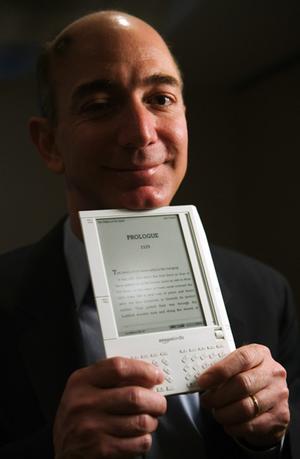 I'm writing this post for two reasons. One is that I am incredibly interested in the subject of leadership and try to learn about it in whatever way I can. A second reason is that, even though my main focus on my blog is food and retail, what Matthias calls "old economy" (thanks Matthias!), I try to also be very aware of "the past, present, and future of this industry," and (internet-)technology plays very much a part in the future of retail.
In terms of leadership, Amazon's Jeff Bezos is a good person to study—a man who created perhaps the most iconic garage-based venture since Apple, and who managed to not only take his company, Amazon, public, but also stay on as CEO until now, something that is rare amongst founders. In terms of retail, Amazon is itself great company to study. It has transformed the book-industry, and is doing amazing work in terms of providing infrastructure for web-based infrastructure. And, even though they are not as yet selling any books in the Netherlands. I'm hoping that SEPA, to be introduced next year, will change that.
Before I continue, this is not really a Kindle-related post. While we're on the subject, however, let me say that I'm a big fan of ebook-readers. At the same time, there are certain advantages to paper-reading, which I'm especially experiencing since I started my own blog—namely that I can write on them. I know I can take notes on Kindle, but it's not the same. And I think the price-point of either the device ($400), or the books (a $10 intro-price), or both, is just too high for something that can be produced in mass and has no printing-, and hardly any distribution-costs attached to it.
Speaking of notes, I took some while reading a nice HBR-interview with Jeff Bezos, in which he discusses his take on strategy, innovation, customers, ... and not Kindle. I'll share these, and my thoughts on them, with you now.
Innovation at Amazon
There are generally two types of innovation, the radical kind and the incremental (or process) kind. My general belief is that, while retail on the internet radically transformed the way we shop, and will continue to do so, ultimately it is an evolution in process. Instead of giving our credit-card to the clerk, we type in a number behind a screen, etc. etc. And, since the internet has taken off, this kind of process-innovation has become much more prevalent. Now, instead of clicking 5 times to buy a product, I can click once: yay! Before you ask, "so what is 'radical' innovation to you?" I'll just say: "Space, flying car, people living under water, that kind of stuff. So get busy!"
Amazon has of course just announced the Kindle, which could be interpreted as an innovative move. But again, what will make this innovation shine, if it does, is Amazon's incredible process-strength, namely that they can deliver the device to nearly every household in the Western world at beautiful economies of scale. For now, these are paying of for Amazon, but knowing their business-model, it's pretty certain that this will pay off for consumer too… eventually.
What I like about Amazon (and got from the interview) are that they have an incredible experiment-based culture and generally take a long-term view—both rare with public companies. In terms of experiments, these are encouraged on a company-wide level, and due to the nature of experiments, are both had to predict and not unknown to fail. One example of an experiment which became an enormous, but unplanned, success, is the Amazon-associates program.
As far as time-frame is concerned, innovations at Amazon usually take 5-7 years before they make any meaningful impact on the company's economic situation. This is a big risk and is offset in a number of ways. One is to minimise the costs of experiments. Amazon has a web lab just for that purpose, which undertakes these experiments on a massive scale, collects real usage data on what works best, and is constantly trying to push the costs of these experiments down. Again, taking a long-term view, it helps when building innovation on things that won't change in the next 5-10 years. For Amazon, these are basic customer preferences, such as: choice, low prices, and fast delivery (hello Kindle?).
There are three more core-attitudes, which I think have a big impact on the way innovation takes shape at Amazon. One is, to always ask the question "why not?" According to Bezos, the biggest mistakes at Amazon come from not doing something, rather than taking the risk. And asking "why not?" instead of "why should we do it?" opens up a whole other universe of possibilities. Similarly, there are lot of difficult decisions that Amazon has had to make over the years, such as allowing reviews on their site. The vital question there was "what is better for the customer?" Last, but not least, I like this line in regards to making experiments a success: "Be stubborn on the vision, and flexible on the details."
Strategy at Amazon
The other part of innovation is execution, some of which was already discussed above. Much of decision-making comes out of the way a corporate culture is shaped. Some cultures are hierarchical, some are flat, some are individualistic, some are collective. From my understanding of things, Amazon has both a departmental structure (which would suggest some hierarchy) and takes decisions collectively. Both senior management and departmental management have mechanisms through which this collectivity manifests itself. Seniors meet once a week for four hours and once-twice a year for a two-day meeting. Homework is assigned before and the latter type of meeting deals mostly with long-term issues. Department-management has a similar system.
Some more general characteristics of corporate culture were mentioned in the interview, namely that they can be incredibly stable over time, and are self-perpetuating in the sense that they attract people who like that culture (and repel those that don't). While a company's corporate culture is probably the hardest to replicate, and can thus be a tremendous competitive advantage, the rigidity of the culture can both mean that there are limits to what it can do (and should do), and it can sometimes hamper innovation during turbulent times. At the same time, a culture can by nature be open to change, which should overcome some rigidity.
A few weeks ago, on my blog, I wrote a post on Porter's five forces in which I outlined what I think matters in strategy, but also that it pays off to stay close to customers. Jeff Bezos shares a similar view-point, for a number of reasons. One, customer-needs change more slowly than a lot of other things, e.g. tech; and two, following the competition doesn't work well in fast-changing environments, e.g. tech. A third point is that being too competitor-focussed can result in a passive attitude once a certain dominance has been reached in an industry. You can argue about this either way, but when you look at certain large companies (no names), this "hey, we won, so why innovate?"-attitude, is definitely one that is recognisable.
One way that Amazon tries to stay close to customer-needs is by enforcing rotation. Every new employee has to spend time in their fulfilment-centres with the first year, every two years, employees have to do two days of customer service, and everyone has to be able to work in a call-centre. That includes Jeff Bezos.
Finally, he also had some advice as how to survive the transition from the founder of a start-up, to the CEO of a multinational, public company. It's simple (yeah right!). When you start, the main question is "How?"; as you grow, the question is "What?"; and when you're huge, the question becomes "Who?" There you go, the secret to being the leader of a big company.
Final thoughts
One of the weaknesses of secondary information, such as what came from this interview, is that I (and you) have to trust everything that is in the article. I can't ask follow-up questions and can't tell, by body-language, tone, or otherwise, whether some points are more important than others, or more true than others. Therefore I try to be careful to treat each piece of information as part of a greater whole. In other words, I may come across information that conflicts with what Bezos said in the interview. If it's noteworthy, I'll write a new post about it. One piece of important data, released perhaps a month after the interview, is the release of Kindle, which, as mentioned, I am sceptical of.
Two things I learned from the interview is that innovation takes time, especially to make it economically viable, for both the business and the consumer. In my opinion Kindle, in order to fit the philosophy of Amazon (which is not Apple after-all), has to drop in price, as do the books. It's a matter of ethics, of being customer-focussed, and of being a process-innovator. I can only assume, that over the next years, this is exactly what will happen.
The other thing I learned is to constantly be open to innovation that can benefit the customer. This point has been made many times in the words above, yet it bears repeating. A company can be incredibly rigid, the bigger it becomes. Competition can become incredibly threatening. Technology can change from one day to the next. But what doesn't change is that customers will pay you for products that make them happy. And I fear that a lot, a lot of businesses have forgotten that as they became big, arrogant, and focussed on anything but what customers want.
Finally, while I may be focussed on "old economy" topics, I think Amazon teaches some interesting lessons on how to remain high-touch in a high-tech environment. As such, this certainly won't be the last time I touch upon the topic of technology in retail.
Further reading
If you're interested in the topic of leadership, you mean also want to check out a list of free podcast-interviews with a number of CEOs, ranging from Google's Eric Schmidt to, indeed, Jeff Bezos, which I posted on Tech IT Easy a few months ago. Worth a listen. Oh, and don't forget to check out the original article on HBR.
This article is mirror-posted on Tech IT Easy.
 Still following the great book on Retail Marketing, by Dr. P. McGoldrick, this time I'll cover the different types of cost that are included in buying, developing, and running retail locations. For previous coverage, check out post I and II
Before buying property, considerable data analysis must happen in regards into estimating turnover, which comes from data on competition, accessibility, and population. And a calculation of costs must happen, least of which is the purchase price, and more complex will be three types of cost: development costs; running costs; and contextual* costs (*: for lack of a better word).
Much of this cost data will likely come from negotiations with site developers, lease owners, and an estimation of the costs involved in the development of the location.
Naturally, with the proliferation of the internet, there are plenty of databases that offer interested parties an overview of typical sums per region or type of location. Though the following are mostly aimed at private individuals, both My-Currency and Zillow offer these types of services, and Jeremy Fain wrote about a French service, called BMyKey.com on Tech IT Easy.
Purchase price
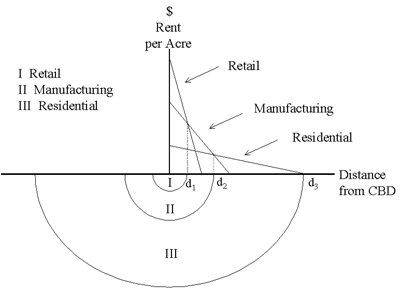
Traditionally, rent bid theory explains a lot of price-differencials within an inner-city environment. Variety and women's clothing stores would typically pay the highest rents and grocery stores the lowest. With the emergence of superstores and their focus on out-of-town locations, this formula can not be applied so generously anymore, though, as mentioned, I think that it should logically still apply to inner-city environments, and probably to inner-malls ones also.
And while buying the property may cost a certain sum, it is not atypical that the three of the following types of cost will far outweigh the initial purchase price.
Development costs
Three types of estimates need to be made here: design estimates, which include the costs of the architectural work; bid estimates, which involves negotiating the costs of labor, material and equipment; and control estimates, which are the costs of monitoring the project-development. For more info on these, check out this document.
In addition to this there are a number of costs that can be substantial, but are sometimes not taken into account. One is site preparation, which be steep, especially if the land needs to be converted or extensive demolishing needs to take place.
In addition to this local authorities can impose a number of restrictions on the height of the building, other architectural and landscaping aspects, and demand significant concessions from retailers to build there. All of which can at the very least slow down development considerably.
Running costs
The choice of location, site, and design can greatly affect the cost of running the operation once it's constructed. For instance, multiple floors and parking will mean that lifts will need to be maintained regularly. A location with a high crime-rate will require higher security-costs and lead to more theft. And high employment and income areas will also lead to issues regarding staff recruitment and retention.
Contextual costs
I made up this term, but it actually includes costs like delivery, promotion, and the impact on other branches of the business. Delivery costs are affected by the location choice of the outlet—how accessible it is via road or otherwise; how remote it is from the main distribution network. Promotion costs are also a factor (but a topic for another day). And the impact on other branches are a very important factor to consider. The higher the existing market-share in an area, the greater the potential loss, though, according to the book, this is often accepted as a necessary trade-off to a high growth strategy.
Final thoughts
Clearly real estate is something that needs to be thought about as part of a long-term strategy and with the help of professionals. And some of this is probably not applicable to start-ups in the retail-space. That said, choosing a location by itself is already a science—whether you rent, lease, buy, or build it. And both the direct costs—purchase or rent—and indirect costs—development, running, and contextual—will play an important part in the decision-making and business-planning.
Until now, I have mainly covered the issue of competition and cost in relation to a real-estate strategy. I'll probably not go into population and accessibility just yet, and will instead focus more on more complicated tools used in real estate strategy, beyond the simple checklist, which I covered in my first post on this. These include mathematical, mapping, and some other models, as well as, hopefully, some more data on the role of IT in this process.
For a more in-depth reading, I of course recommend buying the book on Retail Marketing, which largely inspired this article.
I've written two posts in the past, reviewing Gladwell's books, Blink and The Tipping Point. Both posts are no longer online and thus game for reproduction. Following will be these two reviews (lightly edited), which were already rather short, and would make for a good marketing-related interlude.
"The Tipping Point - How Little Things Can Make a Big Difference" (reviewed October 2006)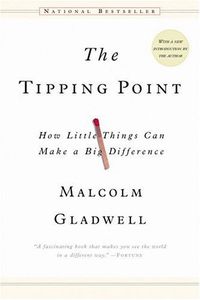 I read The Tipping Point by Malcolm Gladwell, about a year ago, a slightly older book from 2000, but with some timeless insights on viral marketing and tipping the user-adoption scale.
Essentially, the author takes takes cues from biology and epidemiology to explain how ideas can spread like virusses, facilitated by three key-players: Connectors, Mavens, and Salesmen. Each of these play a role at different stages of the adoption process, with Mavens acting as the knowledgeable early adopter, the Connectors acting as hubs between groups of user, and Salesman taking care of the last mile, the mainstream-market.
The book explains how people take in information, using a variety of examples from TV-shows to Sneakers, as well as how companies can shape their marketing-efforts to gain access to those three key-figures. Only in the afterword, does Gladwell cover issues like email and the rule of 150 - the latter refers to “Dunbar's Number,” which proposes there are limits to our cognitive social functions and that it's only possible to actively maintain a certain sized (150 people) social circle (Whether this still applies today can perhaps be disputed).
The Tipping Point does a fairly good job in translating social theories to practice, better so than recent attempts like Freakonomics (which, in my opinion, was too abstract), and the insights will continue to be relevant. That said, I expect that some trendspotting-practices of companies will change, or have changed drastically since the time of writing, in the sense that consumer-driven products seem to be taking off, as well as “long-tail” business (which may or may not be the same thing) . Perhaps his newest book, Blink, corrects this.
"Blink - The Power of Thinking Without Thinking" (reviewed December 2006) “If you Blink, you're dead!” This must be a phrase you hear in movies often, mostly when one character has a gun pointed at another (editor: seriously, this must be the corniest start of a post ever). Gladwell has definitely taken this phrase to an extreme, attempting to research everything about it.
My first reaction when hearing this book was “Malcolm, what were you thinking when wrote this book?” The space of two seconds—the time it takes to blink—turns out to be gigantic and many people wouldn't even know where to begin exploring what happens there. But mr. Gladwell does his best, looking through the lenses of experts from various disciplines and giving a broad range of examples.
The book starts with describing the purchase of a statue by a museum. After consulting many experts they decide the statue is authentic and pay a huge sum for it. Then, however, another expert, one from the field this time, takes a quick look and feels something is wrong with it. And he's right, the statue is in fact a fake. Malcolm Gladwell asks the question as to why some people have an instinct that can judge things, people, and situations more quicly, than studied experts can over the space of weeks, months, or years. The answer is perhaps obvious: practice.
Following this example, Gladwell proceeds to describe the fields of rleationship-therapy, facial recognition science, security, sociology, and some others, where the practice of instinct, or rather the rapid understanding of situations, is very important, so much so that there are therapists that can predict whether a relationship will end quickly or last forever, are able to tell if you're lying, can teach policemen to judge whether a person is drawing a gun or a mobile phone. But where the book really shines is in understanding where racism and discrimination comes from, which, Gladwell shows, can have deadly consequences in fields like police-work, and which continues to be relevant in today's polarised society.
I see Blink as a book aimed at experts, but sold in a mainstream-market. There are principles in the book which are clearly valuable to everyone, yet to get there it takes hard work and practice. But, having read and reviewed his previous book, The Tipping Point, I believe the point is not for the reader to become a genius. Rather, it's to surround yourself with the right people that have access to this knowledge. The example of the museum clearly shows the usefulness of this.
For further reading you may want to check out this Scientific American Mind article, on the science behind facial recognition (and exposing lies).
Final thoughts
Blink and the Tipping Point are at different points in Gladwell's evolutionary scale, and I think, judging by his latest speech and his soon-to-be-released book on "the workplace of the future," he's more and more moving towards understanding the upper regions of the brain. At the same time, an inherent risk in this approach is usually that you forget that there are real people involved, and I don't get a sense that this is happening.
Rather, when you listen to his speech on the nature of intelligence, and read his books, you see that he is very careful to understand the context of why something happens, not just the occurrence itself. And that context alone makes for some excellent reading, because I suspect that that is one of of the secret ingredients to becoming one of the geniuses that Gladwell describes.
This is part I of my coverage on IKEA's growth, based on my reading of the book "The 11 secrets of IKEA" (more on this at the end of this article). You can read a previous blogpost on IKEA's "strange alien values" here. I'll continue this series as follows. Starting with Scandinavia, I'll go into how Ikea grew in this area. I'll then continue with Europe, and finally finish with the giants, the USA, China, and Russia.
 Some years ago, I worked on a project where we would try to find out how businesses expanded internationally. In this case, we looked at the tire-industry, and three companies, Bridgestone, Goodyear, and Michelin, and dug through tons of annual reports and news-releases to understand where, when, how, and why these companies expanded beyond their national borders.
The reasons these three companies make such an excellent case-study, is that they all originated from different continents and thus reflect different cultures. It is nearly an unwritten rule that US-companies perceive the world as a single market and make little effort to adapt to local conditions; that Japanese companies are very hierarchical in their structure; and that European companies, as a consequence of the cocktail that is Europe, internationalise quite quickly (or not at all). And for all international activities, it is another soft rule that they would expand to countries with some cultural, legal, and linguistic similarities first.
IKEA is of course a European firm, or rather, a Swedish one, and a preliminary conclusion would be that it would internationalise quite quickly also, yet starting in Scandinavia, then the rest of Europe, then the world. Another assumption would be that it would thread carefully (read: slowly or not at all) in areas which reflected alien values (to IKEA). As will be shown, this did indeed happen.
Ingvar Kamprad and Sweden
A business usually has different components, many of which reflect the values of the founder, and again the values of the society he or she grows up in. IKEA's founder, Ingvar Kamprad, was born in 1926, on a small farm in Sweden. He respected the feeling of community he experienced there. His grandmother, who had migrated from Germany at the end of the 19th century, taught him the value of hard work and encouraged his entrepreneurial spirit.
Ingvar Kamprad had started IKEA as an import-export business, and much of the way IKEA would be run would reflect that idea. When you're a trader, the idea is that the product doesn't matter and to be as efficient as possible (a modern-day example: eBay). In order to save costs, IKEA tried to get preferential treatment with its suppliers, started with selling products via mail-order, and ultimately set up a storefront, which was actually just a warehouse.
Of course, Sweden itself, with its strong socialist values, had a large degree of influence in the way IKEA took shape. Internally, the business was run quite informally, and in many ways reflected the communal environment where Ingvar Kamprad had grown up in. Similarly, the business of IKEA was not meant to be elitist, rather aimed at middle-class families, a large component of Swedish society. Sweden also had a long tradition in furniture and design and that was another influential factor.
IKEA
IKEA was set up in 1943, already a successful mail-order business, and soon after Kamprad would start a business-degree to learn the theory of distribution. After some years of studying, working for other businesses, and finally military service, IKEA's first employee was hired in 1948. This was also the year that Kamprad decided he wanted to make IKEA big and to that effect, started a folder-campaign via a regional newspaper.
The competition in this business was tough, however, plenty of mail-order-businesses in Sweden, and the competitive landscape orientated itself around lowering prices. A natural consequence was that the quality of products also went down. Because Kamprad was made aware of this through countless letters from customers, he came up with the idea of having customers check the products themselves, which is how IKEA, the store, was born.
Two features were important here, one was that the primary way to order was still the catalogue, and the store a complementary service. And two, the self-assembled furniture, which grew out of the need to ship products more safely. This also brought a new degree of involvement by IKEA with their suppliers, essentially bringing innovation upstream, which help suppliers to save costs, and downstream, as self-assembly became a large cost-saver for customers also.
At the same time, IKEA's new retail-focus brought in a new level of competition, that of other furniture-retailers. Afraid of the popular and far cheaper business-model of Kamprad's, and angry at the obvious copying of designs that IKEA was doing also, these retailers started pressuring local suppliers to no longer work with IKEA. This forced Kamprad to use some questionable business-practices, such as starting anonymous daughter-companies to deal with these suppliers, amongst others. In the end, it also lead to him to having to look abroad for new suppliers, which I will write more extensively about in following blogposts.
Noteworthy was that before expanding to the Swedish capital, Stockholm, IKEA had already opened an outlet in Oslo, Norway's capital, in 1963. Two years later, the first IKEA was opened in Stockholm, which turned out to be a massive success. IKEA was well-fitted for the times also. The Swedish socialist government had implemented an ambitious plan for urbanisation, which involved building a million houses between 1965 - 75. Since IKEA was well-able to meet the booming demand for cheap furniture, this was a match made in heaven.
In 1971, IKEA unleashed another innovation. A restaurant, which served food to the clientele at affordable prices. This was another way for IKEA to become a lifestyle-trendsetter, and also started the urban legend that meatballs were Swedish (IKEA's recipe was actually British).
Scandinavia
While IKEA was already established in Norway, and had suppliers in Denmark, it opened its first retail outlet there also, in 1969. Towards the end of the 70s, there were altogether 6 different IKEA-stores in the rest of Scandinavia. All of which were personally owned by Ingvar Kamprad.
It was not long after, 1973, that he and his family also moved to Denmark, to flee the insane taxation-system in Sweden, which I explained in my last post.
Final thoughts
Clearly, much of what made IKEA successful world-wide, started with innovations introduced in Sweden. IKEA's mail-order- and warehouse-model, its close integration with suppliers, its focus on providing cheap lifestyle products, and also its internal frugality—which I did not speak of, but IKEA-employees are traditionally paid below market-value. All of which fits with my philosophy of "where you are from and when you are from matters a great deal to where you are going."
IKEA's international expansion started with Scandinavia, which was a region with a lot of cultural similarities to Sweden. As I will explain later, this is a trend that would continue in Europe also. At the same time, the reason that IKEA expanded internationally, could also in large part be explained by the competitive pressures inland—IKEA's troublesome relationship with Swedish suppliers—and with the socialist regime, which was largely incompatible with running a profitable business, and forced Ingvar Kamprad to look elsewhere for a more business-friendly environment. This was also the philosophy, when expanding into Europe, which I describe in a future post.
All in all, IKEA makes an interesting case-study, because it is a European business, and it is interesting to see which of its values were compatible with other countries and which countries presented more difficulty and why. Much more on this in future posts.
The book "The 11 secrets of IKEA" is sadly not available in English. If you do read Dutch, I do recommend picking the book up here, and for German, check the German Amazon-store here. For other book-reviews, check out my look at eBay's "The Perfect Store" here, McDonalds "Grinding It Out" here and here, as well as at Starbucks' "Pour Your Heart Into It" here and here. The picture is courtesy of Culinaryartsblog.com

 The