 I'm thinking about adding another "interlude" to my collection, inspired by ADD without a doubt. It's the cookerlude, baby, aimed at collecting thoughts and notes on cooking in order not to forget and to better understand the world that a cook goes through. While I cook nearly every day, I don't consider myself a good cook. I simply don't have the taste-buds for it; but I do love the good food, which, luckily, my gut no longer shows!
I recently discovered a podcast, called/by The Restaurant Guys, which, apart from the insanely long commercials, actually seems quite interesting and is funny enough to keep my attention. Some notes.
Salt: So, we seem to have this internal taste-meter for the stuff, which in some ways is tied to the percentage of salt in salt-water. At the same time, our saliva actually dilutes salt in food, reducing it, meaning there should be a higher percentage in food than salt-water, for us to enjoy it.
Sugar: apparently there's no set limit for that, people love sugar (I must be the exception).
Salt + Sugar: whenever you make a sugary desert, adding a little(!) salt helps the taste; apparently they do funny stuff to each-other in your mouth, a party in your mouth, so to speak.
Taste-enhancers: apart from the above, olive oil, mushrooms, garlic, tomato-paste, alcohol (and much more) enhances the taste in your mouth.
Pretty basic, no? You can listen to the whole episode on what (American) people like in their food, here.
My own world
(This is where I talk a little about what I discovered myself in regard to cooking. Pretty basic too, so I'll try not to embarrass myself.)
I'm a big fan of salads, I make and eat one nearly every day as a meal. I often use canned tuna, but I recently discovered salmon in a can, which tastes better, is less salty, healthier, and costs about the same here in the Netherlands.
But steamed salmon is the best. You can get an expensive steamer, but a cheap solution is a microwave-steamer. I found one in a Chinese store for about €10, you can steam whatever you want in 5-10 mins and it magnifies the taste. Add some green beans and carrots, and you got a great salad for a meal! Add some potatoes or rice, and you won't need the salad.
Last, but not least, sometimes, not always,Ketchup actually makes for an interesting dressing (together with some oil and spices). It often contains vinegar, which salads like, and the tomato mixes well with the salmon-taste.
That's about it for today, I'm not sure how often I'll repeat these cookerludes, but I hope you enjoyed it! The picture is of course of Chef!, the show.
 Read it on Tech IT Easy!
 I've been planning to write about cinemas again for some time now, but that's going to be a long piece and will have to wait for disposable time and inspiration. Here's some films, I've enjoyed these last months, however.
- Starting with a lecture by Robert J. Sawyer, regarding the difference between Star Trek & Star Wars. I had no idea that the phrase "A long-long time ago, in a place far-far away" makes such a big difference. Essentially, while science fiction was originally a commentary on issues in our own society, that phrase gave George Lucas the license to not-comment, or rather to accept things like racism (towards robots), slavery (robots again), and countless of other stuff. Really a good lecture to listen to, if you're into sci-fi.
- On a related note, I recently (re-)watched Star Trek 1-6. You really notice the shift from slow cinematics in Star Trek 1 and 2 (a la Kubrik's 2001, which I'm not a fan of), followed by more intense action-scenes in the later ones. I think I recorded the social values more on a sub-conscious level. Numbers 4-6 were my favourite, regarding nature (transporting whales through time); the search for God; and retirement. But I have to say, Kirk was at his strongest in the first two movies. Also, something else I didn't know: Leonard Lemoy (Spock) is a multi-talented individual: writer for several films, producer, and of course actor.
- My favourite adventure movie these last few months: Lawrence of Arabia.
- My favourite cartoon: The girl that leapt through time.
- My favourite fantasy: Pan's Labyrinth (picture is my interpretation of Pan)
- A film, which is taking me a long time to watch, but which I will finish because it's good: Francis Ford Coppola's Youth without Youth.
- Excellent commercial, but not mainstream, movies: Into the Wild; There will be blood; No Country for Old Men (the last three, somewhat depressing too); and Juno.
- An excellent series that recently finished and everyone should watch: The Wire. Seasons 1-4 especially.
- An series with potential that will hopefully not be cancelled: The Sarah Connor Chronicles.
This is as much a celebration of technologies like MixWit, which make publishing playlists (legally) possible, as it is a spotlight on one of my favourite musical discoveries last year.
Róisín (Pronounced "Roshiin") Murphy, former lead-singer in the British band Moloko, with a voice that reminds me a lot of Annie Lennox. I have to confess that, except for some remixes, I wasn't a big fan of either of these artists back in the day.
Still, Ms. Murphy is a breath of fresh air in what often seems like a stale and regurgitated pop-scene (I exaggerate). And… I simply can't get the first song on this playlist, "Dear Miami", out of my head!
Not for you, if you don't like electronica or pop.
Enjoy!

 The reason I like Star Trek, most sci-fi in fact, is because of the space-opera aspect. You don't just tell a story, you design a universe around it. I've been a fan of the show, ever since the age of 10 when I got to watch TV at home. In some ways, sure, the time spent watching the show impoverished my life by taking me away from other endeavours, in other ways, it enriched it by contributing to my ability to dream.
As I grew older, I started paying much more attention to the story-telling aspects of the franchise. For instance, did you know that until the second season of Star Trek, the next generation, the writers didn't create a place for the crew to relax? It was only then that the makers came up with the concept of Ten Forward, hosted by the infamous Guinan (see pic). Later, in its spin-offs, Deep Space Nine and Voyager, we also saw a big role being played by the "lounge", hosted by Quark and Neelix respectively.
It was felt that by introducing this aspect into the show, a third place, it allowed the characters to show a different side of their lives, necessary if you want to teach a complete philosophy about society, as Gene Roddenberry was in fact doing. And of course, it spawned plenty of dramatic stories, that would otherwise never have happened. It allowed for romance, friendship, and conflict to happen, for aliens to meet and interact with one another.
What's interesting about the franchise that each series had a different archetype, which also affected the room for "drama." You could see it as both an evolution and devolution of a story. Star Trek, the original series, was the raw outline of Roddenberry's philosophy about the future of society. The next generation was much more developed and allowed for deeper interpersonal relationships. Deep Space Nine was again an evolutionary step, and much of the stories centred around "life" on the station.
Both Voyager and Enterprise represented a devolution. Voyager introduced the "morale officer", in my opinion, an engineered effort to bring a certain warmth to the story. But it was much less about teaching philosophy, as it was about survival. It showed that Roddenberry's universe was in fact small and could break apart at the edges. But it was still a good story.
Enterprise represents a return to those raw ideas. Perhaps it was felt that the franchise could cover no more new ground, and that a new philosophy had to be designed. It was also a story of survival and the raw pioneering spirit, shown in part in Voyager. But it felt like a military mission, there was little room to form complete characters. Instead we were presented with deep dramas, echoing the 9/11 events, which turned the characters into one-dimensional creatures, much perhaps the way the news depicts the main characters involved in the post-9/11 era.
To me, at least, Star Trek is a good analogy for certain principles in life. That it is not enough to search, but also to build. That friendships and societies are built, not only from the hard work they require, but from the breaks we take to reflect on our actions, and the places that are engineered to cater for that need.
Food for thought.
Funny how moods influence musical preference. Last week on my run, I would've told you that Junior Jack is the sh*t; a few weeks ago, on a lonely walk through a misty and deserted street, it would've have been Lisa Gerard's haunting voice. But last night, as my eyes were feeling heavy with sleep, it was Grant Green that touched me most.
I first stumbled on Mr. Green's music after trying to prove to my brother that many rap-songs are sampled from other (better) songs. Turns out Grant Green performed a song, named "Better Tomorrow," that was later sampled in Dr. Dre's hit-song "Still DRE." Even though it's not my favourite track of Green's, it's one of the few I could find on YouTube. So here you go, a very recognisable melody after 1:20 mins.
P.S. The Grant Green album I like the most, is called "Ballads."
Addendum
Thanks to the power of Mixwit, you can listen to a whole playlist of Grant Green songs, sourced from all over the web. Enjoy!

I decided that the one thing that was missing, for myself, on this blog, was the "fun" post, where I could write about the softer side of sounds + food & retail. The other two sides, facts & opinion, are also areas I plan to develop on, but without fun, there's no balance. Therefore, I am re-instating the interlude, but trying to not exaggerate, like I did during my thesis-break.
The reason to like fiction, I guess, is because, unlike the mechanics of business, its dreamlike qualities encourage the viewer to think abstractly. And abstract thoughts, to bring it back to business, lead to creative ideas that no-one had before, and have the potential to create market-spaces, no one imagine before that. At least that is my theory.
Two of the following movies are quite surreal: one is about adulthood and the other about childhood. They are both about creativity, about dealing with the demands of real life, and about embracing your passions.  "Where the heart is"
A typical 80s flick, where the characters are misaligned with the hard-cruel "real" world. In this case, the two beautiful daughters (Uma Thurman and Suzy Amis) and one son (the guy who plays McKay in Stargate Atlantis, if that means anything to you) are disowned by their wealthy father and placed in a broken down house in the middle of the business-district. What I liked about the film is that the house becomes a place of self-expression, and each individual that inhabits it is an artist of some kind. The father eventually loses all his money also and ends up living in this house, and he comes to accept that the world doesn't revolve around money, but around believing in what you do. A light comedy with some deeper principles. 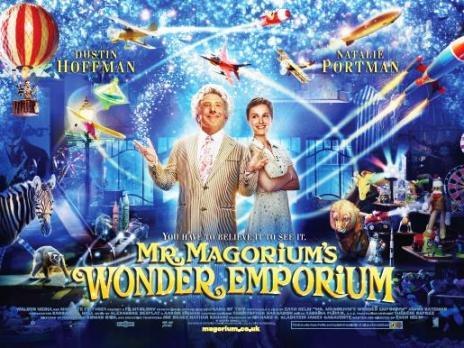 "Mr. Magorium's Wonder Emporium"
Here's an interesting exercise: Get a block of wood, as bland as possible. And believe in it.
The weird thing about it is that the block of wood is you. Anything can happen to it, as long as you believe in it. The block may initially appear lifeless, but it is your faith and work that makes it more than its parts, so to say. And that block can be anything. A piece of clay that you turn into a sculpture, a room that you turn into a living thing, an idea that you turn into a business. All it takes is a little faith.
Well, that is the extent of my learning from this film, which was really about a toy-shop that is alive and a girl, Natalie Portman, who refused to accept it was her destiny to run it. It's entirely not meant for my age but I enjoyed it nevertheless.
That's it from me this week, I'll be spending this Easter with my family. Have a good one and until the next time!
Cooking is ingredients!… it's timing!… it's cleanliness!… it's… … …restraint!
 These are just a few of the tips that Gareth Blackstock, chef at Le Chateaux Anglais, and lead character of the British comedy-series "Chef!," delivers to his staff in a kind and gentle manner… not. Even after re-watching this show 10+ years later, I'm still not sure whether Lenny Henry's portrayal of the angry chef is meant to be a realistic, or rather a satiric look at what goes on in these kitchens. The effect it's had on me, in any case, is one of silent terror when I think of kitchens in 2-star restaurants.
There's no denying that, generally, the world of HoReCa consists of flat hierarchies; there's the boss, either the head-manager and/or the head-chef, followed by some type of administrative class of underlings, and finally those that Gareth Blackstock likes to call
"There's the aristocracy, the upper class, the middle class, working class, dumb animals, waiters, creeping things, head lice, people who eat packet soup, then you.."
If you're thinking of high-tech start-ups in the IT-world, multi-star restaurants are their equivalent in the HoReCa-world. Competitive advantage in technology comes from both products that are differentiated enough from the competition and processes that enable a business to produce these products at a sufficiently low cost and high scale to reap a profit.
In restaurants, this is embodied by the chef, whose training, experience, personality, and, I guess, raw talent, inspire fear in all of those around him, especially the ones that feel his wrath. It is an innovation machine difficult to replicate, comes at a high price and is not for the faint of heart.
Everything else: coming up with a business-plan, talking to investors, setting up the site, buying the materials, hiring the people, getting customers to visit, etc.… seems easy, compared to finding, keeping, and managing a good chef. Because as soon as the chef finds out that he is the one that keeps the ball rolling, he is the vital cog in the machine, he will likely fire you as a boss and replace you with one of those people, generally found under head lice and packet soup.
So there you have it; I don't write about cuisine, same as people generally don't think about starting a business in space-flight. They are both sciences reserved for an elite pioneering-class, one that is fearless and willing to risk the laws of nature in order to succeed.
5 links: the obvious one, brand-logic, happy places, e-toys, neuroscience
0 comments Posted by Unknown at 11:02 AM It's Sunday again, and I have a nice big collection of links today: on running a cheap yet effective start-up; on why brands exist; on creating happy places for yourself and employees; on the business of children; and finally on a whole load of neuroscience. The aesthetically pleasing picture of Marilyn links to a particularly disgusting image of a "healthy" burger—my initial choice of illustration. You have been warned.
Previous link-discussions can be found here.
Link 1: the obvious one - Seriously, unless you actually used this weekend to, eh, have a life, you'll have noticed the firestorm started by Jason Calicanis, continued with Duncan Riley, tempered by Jason Fried, and the final words of wisdom by Micheal Arrington. Crazy, how opinionated these entrepreneurs/bloggers are, right? Yeah, right. A good read if you're (thinking about) running your own business, with like lazy employees and expensive tables.
Link 2: A brief history of brands - well actually a blurb about a book. I like:
"Branding became necessary when large-scale economies started mass-producing commodities such as alcoholic drinks, cosmetics and textiles. Ancient societies not only imposed strict forms of quality control over these commodities, but as today they needed to convey value to the consumer. Wengrow finds that commodities in any complex, large society needs to pass through a "nexus of authenticity.""
Link 3: the architecture of happiness -
"There are three concepts central to the “yoga of the home”…. The first rule is to align your schedule with universal schedules by getting up and going to bed with the sun. “We try to keep lightweight and low furnishings in the north and east — to create an openness — so that we can draw in the healthy early morning sun,” says Cox. Heavier, taller furniture goes in the south and west. Second is bringing nature indoors — plants, natural fibers, no synthetics. “Vastu is the first intentionally green science,” Cox says. And last, vastu asks us to “celebrate who we are and what we love” by surrounding ourselves with things that have meaning. “When someone enters our living room and we’re not in the room yet, we want this guest to get a sense of who we are,” she says. “The room speaks of us.”"I've been thinking about this topic and the general issue of creating happy places for a while. A worthwhile read is also Frank Addante, a serial entrepreneur, on choosing the office-space for his start-up: link 1 and 2.
Link 4: building a toy e-commerce store - since I linked to Lego last time this seemed appropriate. In all seriousness however, I think the subscription-model + children is a cash-cow; kids always want more stuff and have old stuff to get rid off. Applicable not just for toys, but clothing and furniture as well.
Link 5: Some neuroscientific stuff - ignorant shoppers are blissful, though information that stimulates the imagination still works (as do quality-labels as they allow you to charge a premium); body-language works for consumers, in other words an in-store-television-advert or one of those annoyingly friendly taster-people in supermarkets, should cause people to buy more food. A little bird tells me this applies more to the US than the French; 15% of women don't like perfume, which is interesting I think as I'm not a big fan either; and Art-adverts work, enough said. And yes, EurekAlert is my new favourite site.
5 links - sense of smell, false green ads, farming boom, Lego, fun e-shopping
0 comments Posted by Unknown at 10:49 AM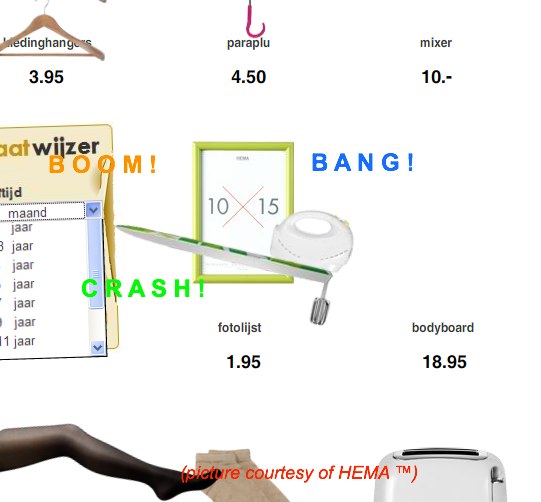 Time for those Sunday-links again. Today, I'll discuss the cocktail that is smell and how some things just don't mix; how green is not all it's cut out to be; a possible shift of power from retail to farming (or not); how lego came to be and where it is going; and how to sell me online shopping.
Previous link-discussions can be found here and my bookmarks here.
Link 1: Starbucks Admits Sensory Mistake - These are the kinds of stories that make me I like the NeuroscienceMarketing-blog. If you follow the science-section of the Economist, you'll know that neuroscience is a big deal anyway. In any case, this story is about how Starbucks designs atmosphere, largely influenced by smells. Apparently, smell of heating egg and cheese sandwiches doesn't mix well with the coffee aroma.
Link 2: False 'Green' Ads Draw Global Scrutiny - Two problems linked to green adverts these days, I think. One is that consumers are growing tired of it. And two is that, as this story shows, just because companies say they are, doesn't mean they are. I like the Norwegian approach to this. They ban green adverts by products that cause more problems, no matter how innovative they are (about hiding it).
Link 3: Farmers Wonder if Boom In Grain Prices Is a Bubble That food-prices are rising is an inescapable fact. But it also presents an interesting shift in the status quo. In the food-chain of the grocery-business, farmers are pretty much at the bottom. Now, even though their own costs are increasing also, they can charge more on top of it and decrease retailers' margins. Time will tell if this is something that will be acceptable for a long time. Certain signals very much suggest to me that farmers may be in the right position to cut out the middle-man and become retailers themselves.
Link 4: The Making of…a LEGO - I'm still a kid at heart, so I love anything to do with games and toys. My parents never bought me much lego as a child, which I regret as I hear it breeds geniuses. In essentially two pages, the article describes how lego came to be, what makes it so perfect, and what the company's strategy is. I was always impressed with the brand-extensions they did with the games, the robots, and the theme-park. A company to follow.
Link 5: Online shopping at Hema.nl - I've linked to this on twitter before, but it brought another smile to my face watching it again. Just when I think that online-shopping has no future, innovative uses of technology surprise me again.
 One of the things I do on this blog is deciding on the potential of industry-segments, ranging from farming to coffee-shops, and from grocery to other types of retail. On Tech IT Easy I've previously expressed my scepticism at media (in which I include text, art, audio, video, and gaming), especially in terms of business-models, which I think that segment lacks.
Equally so, I see fairly little space for it in the physical retail segment, simply because it is so much more convenient to purchase and consume it via digital means. The PC (and other tech-gadgets) have essentially become the hub for all things media, and creating barriers to that experience just leads consumers to pursue more convenient ways of experiencing that media. That search for convenience is something that I've also approached in a previous post on this blog.
Let's look at some media-types and how they are being sold online.
For Video - there's iTunes, consoles, and set-top boxes that are controlled by media-producers. In any case, the power-differentials between producers and intermediaries is very unbalanced and it isn't a nice segment to enter as a retailer. Also, let's not forget the free alternatives: YouTube et. al and piracy.
For Audio - again iTunes, Rhapsody, and Amazon MP3 Store, but also smaller digital store for independent artists, like CD-Baby (which operates through iTunes also). Let us again not forget piracy and the fact that much of music is being produced through digital means and it makes sense to organise distribution that way also.
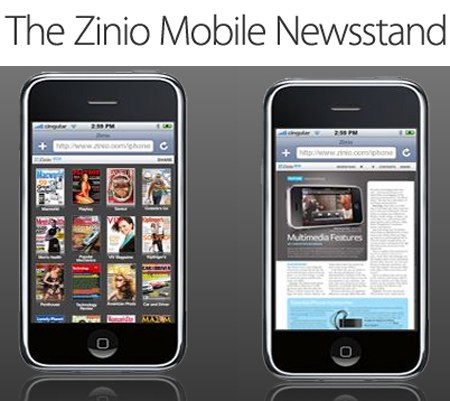
For text - there's again online outlets like Amazon for eBooks (Kindle) and Zinio for magazines. And let's not forget that 99% of text-based media is viewable for free online. Still, admittedly, electronic devices for consumption are not yet able to compete with paper-based methods, at least where price is concerned. Also Audible should not be forgotten as a source for audio-books, recently bought up by Amazon and partially distributed through iTunes again.
For Gaming - I'm not too familiar with the online market for this one. Even so, there's Steam, a digital distribution system by Valve, a platform which they recently opened up for use by other game-publishers. There's also plenty of smaller games being distributed through Xbox-live, the future Playstation Home, and of course the internet.
Finally, Art - here the situation is more complex, while on the other hand being relatively simple. It is complex for artists like my mother, who paints, and conducts business on a personal level by interacting with her customers. On the other hand, there's photography and digital art, arguably the evolution of traditional art, which is easy (for some) to produce digitally and distribute online. I suppose every industry has that friction between the traditional way of doing things and "the new way."
All in all, I don't see media as a big cash-cow for physical retail. I like to think that, because production and distribution becomes cheaper, that its cost will eventually fall to a very low price, allowing for it to be included as an added-value component in the service-proposition of physical retail-outlets (to which I also include restaurants, etc.). I also like to think that creating environments that make the consumption of media a comfortable process (e.g. cinemas) also has some potential.
But my outlook for selling media as a product, something that could easily be sold digitally, remains bleak. Please let me know if there are arguments against my point of view, as I'm here to learn.
"The Disney Way" oh, how I hate thee, as a book, so far (UPDATED!)
0 comments Posted by Unknown at 9:27 AMUPDATE: After skimming through the book, I did manage to find some more informative chapters on how to structure creative enterprises. So, I'll raise my score of the book to 5/10, and will update when there's more to say. I was actually not planning to write anything too bookish this week, having championed their status for more than a few days last week. I just want to say that, ever since starting reading TDW, I found myself growing more and more uncomfortable for a few reasons.
First of all, the credo that the book is trying to sell to me is "Dream, believe, dare, do." Yes, I remembered it without checking the book. DBDD is such a simple system, meant to emulate Walt Disney & Co's way of thinking, that pretty much any idiot can remember it.
And that is how I feel like I'm being treated. Like an idiot, who can't remember more than four words.
The book is split up into parts, representing each of the four "magic words." I started on 'Dream,' expecting to find practical story-boarding tips. I'm not yet done, so maybe at the end, but all I've been reading was about companies that the authors consulted, which had "big problems" and now are "a leader in their industry." There is very little, except for between the lines, which I can use as a case-study for me to think that I can replicate this in my own company.
The method most mentioned, is to create a "Dream Resort" (always capitalised, because it's the authors' business). If you go to a Dream Resort, all your creative barriers will fall away, the magic will happen. Believe it! Well, until I see something that justifies spending 1000s of dollars on consultants, or how I can replicate some methods on my own, I don't believe it.
The only instructions I remember reading so far, was a pseudo-sociological experiment with monkeys. Apparently, if you put 99 monkeys on a beach with sandy fruits, one monkey will work out how to wash his fruit in the sea and make it taste better, and eventually the other monkeys will learn from him. And, I paraphrase: "That's how companies learn too." We are all monkeys!
Somewhat ironic, the authors mention several characteristics that people don't like about how big companies are managed, such as arrogance and not including employees in solving problems. I would like to add treating people condescendingly to that list.
The lack of dreams, you could argue, is a big-company problem, which is another incompatibility-issue with some readers like me. There is no creative barrier, really, what is needed is a framework to build a business around it.
Also, small companies are flatter, there are less structural problems preventing the spread of ideas, it is actually a survival mechanism that everyone takes part in steering/fixing the machine that is a start-up.
Anyway, I decided to give this book until the end of the 'Dreams' chapter. If I don't get clear-cut language by then, I'll skim and throw it away.
And I still can't believe that I'm being advertised to buy services in a book that I already bought. An end-of-book brochure is fine, but so far it's very much over the top.
Reviewer's current grade: 3/10 and I'm being generous.
5 links—retail-saturation, RFID's costs, elements of fun, tricking shoppers, & home-cinemas
0 comments Posted by Unknown at 10:41 AMIt is time for those links again! This time, we'll be discussing the economics of Apple's physical stores, how Walmart is enforcing RFID, how retailers are trying to trick people to buy more expensive things, how people perceive fun in games, and 10 ultra-geeky home-cinemas.
As usual, my bookmarks can be found here, and the previously covered links, here. Enjoy!
Link 1: Why is Apple saturating (US) cities with retail stores? is a question that Choire Sicha asks on Kottke.org, and lead me to this profit & cost breakdown of Apple's retail stores at Seeking Alpha (see pic below). It does appear it's all about the money, though hard it remains to read Apple's mind 100%. In related news, OObject lists all the items needed to build an Apple store.
Link 2: Is RFID economically feasible? I'm planning to dedicate at least 1-2 posts on RFID on this blog in the future, as I've essentially been following its development since the early coverage on Slashdot. This story on InformationWeek discusses the pressure that Walmart, certainly the biggest champion for RFID in the retail-arena, is putting on its suppliers to finally add RFID into their logistics-chain. As far as I remember, the latter have been complaining about the unfair balance of cost that RFID causes, shifting most of them onto suppliers. I assume, however, that these chips and pallets are reusable.
Link 3: What makes games fun? Lightspeed Venture Partners has an interesting blog, which mostly discusses the business and principles behind digital games. I follow it because games are fun, and if you can understand the source-code of fun, you can replicate it elsewhere. In that spirit, then, it links to an interesting white paper trying to map out what exactly goes on in gamers' heads while playing games. Part 1 is also very much worth a read.
Link 4: A buyer's christmas? The New Yorker digs into consumers' buying behaviour. Interesting is, that people use the net most often to find info, not to buy, but can use that info inside stores (we'll still need ubiquitous internet for it to be shoppers' utopia, however). Equally interesting is, that if a store has two microwaves, consumers will usually buy the cheaper one. With three products, however, they will usually by the mid-priced one. There's still room for trickery, I guess…
Link 5: 10 stunning ultra-geeky home cinemas. In the spirit of my previous post on cinemas & luxury, I thought that this link would be fitting. The Star Trek-themed one is a little too geeky for me, but the Titanic one (no. 6) looks awesome. I'm still doubtful about whether it's about the design or about the movie, but I can't deny that people put a lot of work into designing these.
I'm writing today's post mostly as a way to relax me. I've been in a bit of a panic these last few days because my main machine, my trustworthy mac, is giving me kernel panics and I'm in the middle of a project. It's not a nice feeling, and any repairs, I've been informed, are bound to take 10 days. So, blogging to relax, yes, but don't expect regular ones, especially considering this machine can "explode" at any time.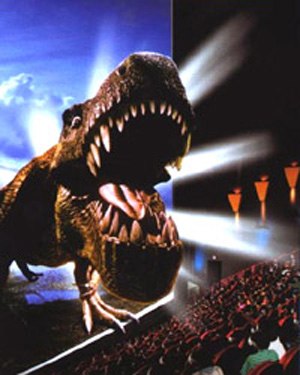 NYTimes recently wrote about a strategy employed by US cinemas to draw in more people. I quote:
"Reserved seating, plush rocking chairs and made-to-order food make Mr. Redford’s Sundance Kabuki theater feel more like a restaurant than a traditional cinema. It also has a 50-foot-high lobby with live bamboo, a glass atrium and reclaimed wood walls. Here, a night at the movies is less about enduring the hordes at the mall and more about feeling pampered."According to the article, big US-chains are building such upscale cinemas to draw people back into the experience.
While I am a big fan of the cinema-experience and actually worked at exactly such a venue, years ago, as a cocktail-mixing barkeeper, I think there are several reasons why such a strategy won't work.
The nature of movie-viewing (1): regardless of how luxurious a place like that is, you'll still have to sit in a dark room and won't actively notice the luxury or people around you, except for before and after the movie. The reason why people like dining in luxury-restaurants is because of the luxury, yes, but also because you share it with a group of people. In cinemas, luxury is not an emotional draw.
The nature of cinemas: cinemas are still very much in a mind-frame of providing experience of the masses. That manifests itself in a McDonalds' mentality of serving guests standardised services, having a lot of seat-rotation, cleaning big rooms (badly) in less than 10 mins, etc. It's a lot of little things, but they add up to a reputation for mediocrity, and people really just come to view the movie and be with their friends.
The nature of movie-viewing (2): YouTube, the internet, modern lifestyles, etc. have created different viewing-patterns, and there is a much greater focus towards viewing media in bursts. I think that the cinema-industry thinks that it is competing with some kind of emulated experience at home, but I don't think that's generally the case. So what are cinemas competing with and should they compete with it?
Luxury is not mass: Cinemas need masses of people coming in, and luxury cinemas actually only aim to address the (imagined!) needs of a few. In my opinion, it is not a customer-focussed strategy, and is for that reason alone bound to fail.
What should cinemas do?
Now, I'm not all against a certain level of luxury. I like comfortable seats as much as the next guy and I'd love a good cocktail every once in a while. But I think standards should be upgraded throughout the cinema, all the way down to the lowest seats, and that everyone should have the option to get a cocktail (if they have the budget).
There's two main selling-points for cinemas, I think, and those are timing and technology. They are still the first to air a film (ignoring piracy), which will hopefully not change. So, for blockbusters, cinemas reign is pretty much guaranteed.
Apart from blockbusters, there's something special about seeing indie movies in cinemas, which I include into timing. I'll never forget watching "Howl's moving castle" in the cinema, it was a magical experience, one that I could never have at home.
As far as technology is concerned, admittedly we are in an age where big screens and high-def visuals and sounds are becoming commoditised, though no one is as yet planning to install a 50 ft. screen in their house, afaik. I do think that cinema-technolgy should be upgraded, all the way to the point of the IMAX-experience.
Admittedly, there are some problems with 3D-tech. It increases the cost of producing a film and won't translate well to home-viewing (I think). But my point is that cinemas should keep differentiating themselves technologically.
People is a third selling-point, though I think that unless you like going with 8+ people to the cinema, you will be able to emulate that at home.
As far as luxury is concerned, again the basics should be present, and cinemas have to make money, but cinemas would become a lot more popular if they kept the price of seats down, increased the quality of service, and charged what they charged for luxuries. The one thing that I can't stress enough is staying a leader in technology (video & audio) as that is truly where the emotional draw for cinemas comes from.
But maybe I'm wrong!? Feel free to let me know in the comments.
 So, I finally finished the book on IKEA, which, sadly, is NOT yet available in English, though there are other choices + I seem to remember reading that it will be released soon.
In any case, a great book, which taught me a lot about the mentality that reigns inside IKEA, how logistics are organised, what determines design, what determines price, how people are managed, and… the most boring/interesting part: how IKEA evades taxes. That last one is really worth a read… they basically designed a complex financial structure, which enables them to offset tax-differences in various countries. As you may know the tax-levels in Sweden, its country of origin, are somewhat insane and have marked the company in a way that the Swedes probably didn't intend.
So what to do next. I'm a strong believer in making things actionable, vs. the passive digestion (& forgetting) of facts, and, in order to make this book useful, I need to do something about it. I previously thought about writing about the way that IKEA expanded internationally, as that sheds some insight into cultural differences of countries and the considerations a business has to make when launching there. It's also relevant IF you care about how the origins of a business determine where and how it will grow. I may still do that, but since it's a lot of work, I'll do it in note-form.
Something will probably come out of it. You can read about my previous coverage of IKEA here.
Next book: The Disney Way
While IKEA taught me about retail (and some extras), I'm hoping to learn more about how to organise entertainment. As I wrote a few days ago, a strong theme in my life is how to tell stories, in whatever form, but there is a whole process behind that and, while I have a rough view of what that is, I'm hoping that the Disney book has some practical tips.
I'll probably supplement this with The Toyota Way at some point, as I have a certain fascination for supply-chain management also.
Yes, yes, I read entirely too much…
FYI, previous book-reviews include:
- eBay's "The Perfect Store"
- McDonalds "Grinding It Out" here and here
- Starbucks' "Pour Your Heart Into It" here and here.
The picture is a mashup of this picture of a scary clown and this other lesser-known picture here.
Hot or Not commercials - Axe's "Chocolate Man" vs. Eristoff Black
0 comments Posted by Unknown at 6:53 PMNothing to do with HotorNot's 20 million sale, which I just heard about today, I'm afraid. No, I watched Juno in the cinema today (great flick!), and saw following two commercials: Axe's "Chocolate Man," which was great, vs. Eristoff Black, which was not.
What I like about this short film is that it does give you a similar feeling to what it's like to walk around with a good scent and feel good about yourself. It's so hard to portray smell on video, I can imagine, and chocolate's just a great vehicle for it. The cinema-crowd's reaction was great also, laughing throughout the film.
*************
Update: apparently this is part of a whole viral campaign by Axe. I just found the matching game: Maneater
*************
In contrast…
I don't know about you, but this film just made me feel nervous. It's a commercial for an alcoholic beverage, ok, but nothing in the film suggested anything positive about the experience of drinking it. Instead you have this paranoid image of someone being locked in a glass sphere, pursued by bloodthirsty animals. Even the scene at the end, where it's a guy who apparently hit a shopping-window, is not reassuring, rather it confirms that this is a drink to be treated with caution. The cinema-crowd was totally not into this commercial either.
That's all from me this weekend. Have a nice one!
My relationship with story-telling - a short autobiography part I
0 comments Posted by Unknown at 1:45 PMI'm in a philosophical mood today, after having spend an hour this morning sorting through the rough drafts for this blog (estimated at around 150), which I categorised as "idea," "rough notes," "feature complete," and "send it already." There were so many of them that I found myself a little overwhelmed to address a single one, a little afraid to miss seeing the forest through the trees, and instead decided to write about a core-principle in my life: story-telling.
I'm very attracted to the concept of telling stories. It's perhaps a little difficult to explain, but certainly related to the reason why I write so much, and also integral to what I want to do with my life.
When I grew up, I was reading all the time. From the back of cereal boxes, to encyclopaedias, to even the bible (which I thought was a great fantasy book). As a kid, I also remember building up cities in my room and garden, made out of toy-parts and characters, and constructing visual stories around what was happening.
I did not watch TV until I was 10, but, around that time, I fell in love with fantasy and sci-fi stories, both in book-form and on TV. I liked the way the story was constructed, and loved to imagine myself being there. I remember having magnificent visions of what I imagined the future of society, cities, and the home to look like.
Around 17, I decided to hold my first teen-party (the last one before that was probably around the ages 8-9). At that time, I was playing around in a band and very much into music-culture. I remember coming up with the party idea, which was essentially a visualisation of a club. It was lucky timing. We were just about to move and I had a huge house to my disposal.
The way I visualised it was to have rock-bands playing live in the living-room, a techno-room with a (borrowed, I think) strobe-light in the basement, and some other theme-related room elsewhere. Important were of course drinks and drugs, as, hey, I was 17. And equally important was the concept of complete freedom, which I think was communicated quite clearly.
A large inspiration was this video by the Prodigy - No Good (start the dance):
The end-result was great: around 50 people showed up, 2-3 bands were playing, and people did some crazy stuff, without getting me in trouble. In the end, I was still the one responsible, and took that seriously, but essentially everyone could do what they wanted. I repeated a similar party a few months later, which revolved around the same principles, with some restrictions, though around twice the amount of people.
That's where I'll end this. Lot's of stuff happened since then and will continue to happen, and I hope to write a second part in maybe 5-10 years from now (maybe sooner) about all the adventures I'll hopefully have, and evolutionary leaps I'll hopefully make.
Core to everything, I think, is vision and freedom. When you create a story, you have a vision of the components and the way they fit together into a dynamic process. At the same time, a story-teller must realise that his/her story is just the start for the listener/viewer/experiencer. It's a synergetic interaction between creator and beholder and the end-result can be both unpredictable and quite beautiful sometimes, a risk that, to me, is entirely worth it.
P.S. Happy Valentines day!
 I have a general philosophy on restrictive business-model: that particular business (or industry) is in pain. Much like when you drive an animal into a corner, it will quickly start bearing its teeth and drawing the line.
I spent today searching for a gym close to me (healthy body = healthy mind), and most of what I met were restrictions and crazy prices, mostly summarised by:
limited opening times (don't people train on weekends?); a fat one-time-only entry-fee; multi-month/year lock-ins; and prices charged per 4 weeks instead of per month.So is the fitness-industry in trouble or is there another reason? I have some theories.
- Low price-elasticity due to the health-boom
- Too much competition - but it's not like barbers, which are on every corner, are trying to lock me into a 1-year contract.
- Too little competition - more likely (see point 4)
- Expensive cost-structure - likely, I imagine it's much higher than for other retail/entertainment-venues.
- Low education entry-barrier, translating into uncreative business models
- Extensive government-restrictions - seriously, what's with the stupid opening-times? High insurance-requirements also likely.
What I want, and sort of found, is the classic model: sweaty seats, instructors who growl at you when asked a stupid question, lots and lots of free weights, and if possible some over-muscular body-building chicks to compare muscle-size with. I'd also like the ability to pay per month, as well as a gym that opens before 8 a.m. (but that apparently is asking for too much).
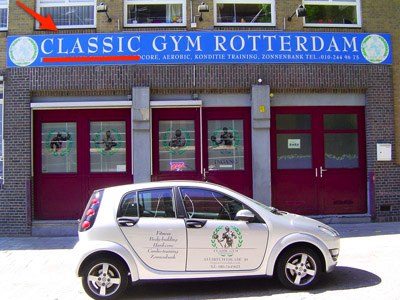
P.S. Finally found something in that sort of fits the bill (see pic). Classic Gym Rotterdam. I'll be joining tomorrow.
 Why am I preoccupied with art? Realistically speaking, apart from collecting links and inspiring quotes, all I have time for these days is doing some drawing. I like to hold discussions with artists, both about their art and the state of their industry. And I like to think that thinking in artistic ways helps me in other areas also, e.g. how to be more creative, how to see patterns, perhaps how to set up a business that people enjoy spending time at.
Of course, it's a lot of fun too…
Following is a list of things, I've learned/thought about art, starting specifically with drawing, and then about more general stuff about art—economics, DRM, innovation, etc.
- Details are great, but the big picture is better - try drawing a christmas-tree and find out
- Ways to decrease focus on detail - get some children's tools: wax colours, paint, big markers, etc.
- Every object's colour is made up of a number of sub-colours, which then result in that glorious mish-mash, called a [insert your favourite classical artist here] painting. E.g. a leaf is green, but really there's yellow and blue in there, maybe a taint of orange and purple.
- White and black are not colours because they ignore the principle above.
- Nature is a great way to learn drawing.
- Shadows are hard.
- Perspective is hard.
- Capturing movement is super-hard.
- Abstract art is hard.
- Everything can be mastered with practice.
- Recognising shape is something you learn from practice.
- Drawing upside-down—i.e. taking a picture and turning it upside down—is also a great way to trick the brain into drawing the shape instead of the mental picture your mind has already created of that shape.
- Remembering shape and reproducing it from memory requires even more practice.
- Keep a clean workspace so that you can start with a fresh mind the next day.
- Reading 'The War of Art' will not make you a better artist. Practice, day-in-day-out will may make you a better artist. The book may help you become a more effective artist however.
Broad strokes:
- Drawing is a right-brained activity, as such it is no surprise that most artists don't like or want to engage in the left-brained activity of making money from it. Guilty as charged.
- Art is surprisingly similar to innovation - both are quite incompatible with economic principles, aka. making a quick buck.
- The democratisation of art through the internet and subsidies has levelled the playing-field. Everyone can be (read: call themselves) an artist now. As such, discovering truly unique art becomes hard.
- As soon as something can become digital, it loses tremendous value. Outlook for the market-place for digital products: bleak.
- As painful as it sounds to all thieves out there, DRM is a necessary measure in making money from art—at least if you're a producer. That, or become a communist and get paid by the government. Recent discussion on DRM on Tech IT Easy.
- Collaboration is another great way to make money from art.
- Just like in innovation, using both methods and creating art/end-products that are hard to replicate, is an important component of success.
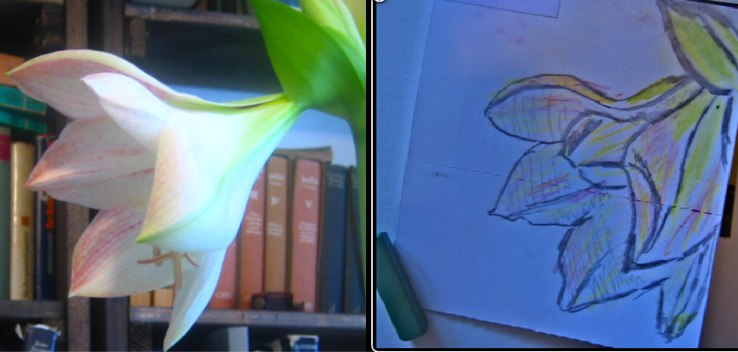
The picture is, incidentally, total crap, and shows how much I still need to learn. Nature is beautiful and oh so hard to replicate on paper.
 Dear all,
My fingers are really itching to get back into blogging and pursuing my passions. I've also lately been thinking that my interest in the communicative arts is perhaps a sign to go into marketing. I wonder how "blogger for 2+ years" looks on a resumé?
Today, I started with writing my conclusions for my thesis, which involves me going through it, and picking up the pieces that I like. That should also lead to a better introduction and executive summary. My next deadline is for this Sunday (or before), after which some more detail-work will need to happen (cutting/editing, checking/formatting references, prettying up some graphics etc.).
Btw. now that I'm actually reading what I wrote, I'm liking what I'm seeing. It'll be hard to cut much.
5 Links
I need to take a break for 30 min., so I'll take a look at if I bookmarked something interesting for y'all. I wish I could write something more in-depth, but it would just be too distracting at the moment.
- St. Petersburg Times (US) has a very interesting write-up about a new "health food restaurant and Hip-Hop-themed video-gaming business," called HipHopSodaShop, that is opening in their 'hood. This would normally be nothing special, except I'm pretty interested in symbiotic businesses, and particularly anything reflecting popular culture. The article includes a number of details related to the legal aspects, the financing, etc. Worth a read. More details can also be found via BuzzFeed.
- Ha! MetaFilter does a write-up about a new bookstore opening in one of my hometowns, Maastricht, where my parents live and where I attended school for 5 years. The bookstore, Selexyz, is actually located in a Dominican church and makes for some interesting pictures. I was hoping to visit it last weekend, but I only got to see some of Maastricht's other architectural gems (the city is booming with development) and two of its museums.
- Yahoo-news publishes a list of 80 things to watch out for in 2008, from a marketeer's perspective. Big things include the Beijing Olympics and the US-elections of course. I also like "De-teching," "Eco-fatigue," "Green weddings," "Hip-hop's Retro Kids," "Intellectual luxury," … and actually 30 more I think.
- PSFK points us to an Economist article about the decline of the shopping mall in the US. Honestly, if I had a choice, I would prefer for my shop to be located in one of the new open city projects in Maastricht or elsewhere, than in a dusty high-riser with artificial light and air. PSFK also writes that "consumerism is thriving in downtown shopping districts and outdoor shopping meccas," rather than in the infamous mall.
- 2 for 1: Starbucks is in trouble. The Starbucks Gossip Blog points us to two stories. One on McDonalds converting its venues to Starbucks-clones (surprise, surprise), another on Howard Schultz taking back the reigns (a Dell manoeuvre?).
Happy reading!
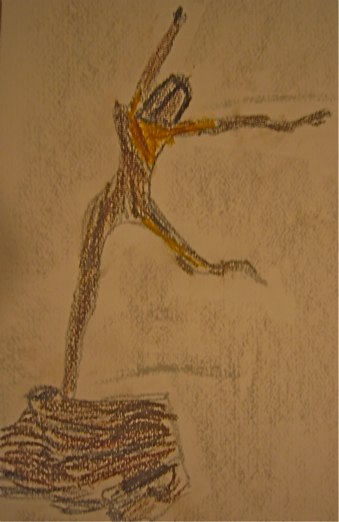
The picture is of course my own… jumping into 2008!

 The
The