 This is going to be a nice and short one. April 2008 can be characterised by three types of posts: general business, food and retail (yay!), and interludes-after-interludes (the latter is just a naturaly consequence of time/creativity-problems, sorry). Previous monthly wrap-ups can be found here.
Let's get started!
General business
I think I started with people-businesses, a topic I find interesting and will likely write more about in the future. Essentially, a people business is one whose value is mostly made up of people, which, I believe, includes most start-ups, but excludes businesses like McDonalds, which has a lot of capital costs. There are a number of challenges related to such businesses, such as measuring/increasing productivity, and finding business models that are compatible.
The next (micro-)topic I discussed, was bootstrapping, which I thought depends on three abilities: low cost-living (duh), time-management skills, and a strong goal-orientation (lots of distractions on the way to enlightenment).
Another micro-topic was on taking a detached view towards business. A lot of business-people and entrepreneurs, serial ones mostly, talk about seeing their business as just another business, rather then a passion, executing the right levers to make it succeed and eventually focussing on the next challenges. You have to be strongly motivated by something though, and I guess, following Ram Charan's logic, the passion is for business itself, which can be an exciting and all-consuming activity. Well, that wasn't exactly what I wrote, but is what I was thinking! ;)
Finally, for general business, I linked to three interesting stories, which I quoted here, but which illustrated the importance of the team, the "test," which shows the level of understanding a leader must have about his business, and the "rule," which is that every action has some sort of reaction elsewhere.
Food & Retail
Let's start with the challenges facing the food-industry, which are currently related to economics and the environment. Economics-wise, everyone is seeing high food-prices due to events going on around the world, including a shortage of oil and an increased demand for farming-goods from India and China. Eventually, an equilibrium will happen, either the demand will subside as production happens locally (unlikely in the short-term), or production will increase. Considering I just heard that dairy prices are falling, I'm betting on the latter. For environmental-costs, we are mainly speaking about the cost of transportation. Food is a very global business, which seems to come at a high price to the environment. No solution is in sight for that yet, I don't believe living locally is as yet sustainable, though there are plenty of proponents for that way of living.
A second topic, I looked at, was beer and the way pubs are funded in the Netherlands, which is often through exclusivity-contracts with breweries. It's an interesting situation, as breweries have been facing the problem of commoditisation for that reason; people order "a beer" instead of a Heineken or a Grolsch (mmh, Grolsch). It seems to be good for the horeca-industry as it suffers from high failure-rates, but at the same time, other countries, like the UK, seem to manage without exclusivity-contracts, at least as far as I know. Requires further research.
A retail-topic was about the differences between Spanish Zara & Swedish H&M, both fashion-businesses, with a different business-structure, but otherwise fairly compatible in attitude, I think. Both have a strong design-branch, focus on cheap, high-quality fashion, and have an extremely high IT-focus, which helps them manage logistics and merchandising at an elevated level. The differences arise with Zara being very vertically integrated, owning producers, supplier, and retailers, most likely because Spain is such a low-wage country traditionally. H&M is not so integrated, probably because of Sweden being such a high-wage country. And while H&M is very strong in terms of marketing, Zara does virtually none of it, but draws high repeat-visits from its customers, due to constantly releasing new fashion-lines (3-5 x more then comparable businesses).
Some lists then, Coke Zero no. 1 in the Netherlands, and incidentally the first food-related topic I wrote about, I think. And a list of the top-horeca-businesses in the Netherlands, mostly hotels, but also some retailers, like Hema, which I like as a business.
Interludes
A lot of interludes this month, as it's my way of recharging creative energy. These posts can be divided into ones posted here, and others posted on Tech IT Easy. Let's start with the first.
The flirt was about some of the variables involving flirting, which I consider useful information, but probably not food 'n' retail. The cookerlude was my attempt to do a regular posting on cooking, but I'm still not sure whether I'll go that direction.
On Tech IT Easy, I wrote a couple of interesting posts last month. Two on blogging, why it isn't for everyone and what competitive advantage means for some. One on copyright, which is a topic I'm pretty interested in and which Fidji Simo continued with her usual insights. And the latest on technology-incubators, which relates to research done for my thesis.
That's about it! Happy to close the door to the last month and already busy thinking about the next one!
 This wrap-up covers material up to April 6th, 2008. I will dedicate another one to this month and then hopefully go back to a monthly schedule. Looking backwards is hard, but I find it useful…
Normally this would be a monthly wrap-up, except I postponed it by quite some time. In this post, I try to look back in order to see how far I've come and bring a general set of themes to what I've covered so far.
Tag: The internet
I spent a considerable amount of time writing about the internet, somewhat influenced by my thesis and that I've been blogging for longer on Tech IT Easy.
One thing I looked at extensively was social networking, because, hey, that's the age we're in. I looked at lifestyle-brands, which require a more contextual approach, and how the internet can act as a platform for business to communicate with customers more richly and bi-directionally. A related topic—social network as competitive advantage—was published on Tech IT Easy. At the same time, I don't completely embrace social networking like Facebook, which I'm bearish on and have, to a degree, sadly been proven right.
I also looked at the role of the internet in terms of physical retail, for which a company, called NearbyNow, is offering an interesting service to both retailers and consumers; they allow consumers to browse and reserve goods through the internet or their mobiles, and give more exposure to retailers. At the same time, my outlook for the physical retail of media is bleak, and I expect all of it to go via the internet soon.
Tags: Logistics & green tech
In terms of logistics, I looked at different methodologies of storing and transporting goods across the globe. Very interesting how each continent/country is getting around its disadvantages (e.g. high labour costs in Europe) and compensating with other factor (e.g. more technology in European warehouses = less labour dependancy).
Also green tech is another "trend," well, I expect it to stay around for quite some time. I outlined five reasons why I think business are and should be going green. The mirror-post on Tech IT Easy spawned some interesting discussions.
Tag: Business strategy
Of course, business strategy is somehow involved in all business-topics, nevertheless I did look at a number of issues specifically. One was on entry-strategies into difficult markets, which is something I can't really describe in a few words, but requires speed, stealth, and brains.
I also commented on new business developments in a number of retail-outlets, and how it is only those that are synergetic with a company's core-focus, and can reap advantages like scale & scope, that end up being worth the effort.
Not to forget, I wrote about IKEA again, first, in note-form, talking about the international moves that the company made and why; and second, a summary of the lessons that I learned from IKEA.
Finally, I looked at the social element, human resources, and how companies use coaching and social operating mechanisms to scale their strategy and passion across the organisation. Ford, again, makes an interesting case study for that.
Tag: Entrepreneurship
As always, and somewhat difficult to separate from the above. I looked at the interdependent components of strategy, and financial, organisational, and product-market strategies are really part of a greater whole, when writing your business-plan.
I also looked at some statistics in franchising, and the lower failure rates are one reason to consider it a worthwhile entry-point into the industry. Still, it's not risk-free; There's clearly a lot of work to do beforehand, in terms of choosing the right franchise with growth-potential, financial risk to fund your business, market-risk, when you launch, and competitive risk, after your up and running. Some of this should be overcome with the help of a franchiser, however. Related to this, I posted an overview of the week of a franchise-owner, which was quite diverse and exciting, as well as a look into the drugstore-industry in the Netherlands.
On a softer level, I believe that entrepreneurship is ultimately an exercise in focus, which goes so much easier when you love what you do, but also an exercise in believing in the impossible, even when "facts" may prove you wrong. Micheal Masterson also had some good tips for starting & running companies, more from an investor's perspective.
Tags: Branding & marketing
Again, I already linked to some related post under the internet-heading; I believe that social networking is a big deal in that area these days. Related to this is also the concept of referential marketing value, as opposed to direct marketing value, which wrote about a little here. Clearly this is a dimension that is fairly complex but which the figures show should not be ignored.
I also criticised cinemas' moves into the luxury-segment as faulty branding, because luxury isn't a big differentiating factor during the movie-viewing experience; technology and timing is.
Tags: Food and retail
I could've probably placed these in any of the above categories, but this is after all the food and retail blog. I still take a dual approach here, looking at food-retail through retailers, and then through actual food-venues, like restaurants. There is a difference, but I'm not sure whether I want to or should discriminate between them.
In terms of supermarkets, I discussed a number of worrying trends going on in that world, namely there's less consumer-spending on food and supermarkets are forced to respond by consolidating and pushing efficiency up on the agenda. But I also find the presence of supermarkets like Marqt encouraging and hope they do well.
Also, I recently summarised some points I got from a book on Ahold. It's an interesting company to follow as it's been around for about a century, and has survived several similar challenges, we are facing today (high fuel-prices, recession, etc.)
I also discussed snack-food, which I find particularly flawed in terms of health and which could use an influx of alternative, yet good-tasting snacks.
And I looked at restaurants, which I find scary, but I remain open to. Starbucks level of vertical integration is also a little worrying. It's a like a beast that, as soon as it had to retrench from the market, it eats up more companies from the supply-side, in order to gain a competitive edge over other coffee-retailers. There's just something that worries me about this move.
Finally, I took notes from a very interesting lecture by John Schneeberger, who offered some interesting insights into the world of vegetarianism, organics, and local produce.
Other
Other topics that I didn't mention here, include my links (where I try to link to interesting stories) and my interludes (where I try to write about more fun and personal stuff).
Thoughts (written at the beginning of April!)
There's two challenges ahead, as far as my blogging goes. Topic-wise, I'm fairly open to both big-company and small-company problems, which may be too broad. I also perhaps don't focus enough on food & retail in particular, though that's because I'm a generalist and am still deciding on my passions.
Presentation-wise, I've been analysing some other people's blogs, e.g. TechCrunch's & Jeremy Fain's early days, to see what these guys did different. TechCrunch used a very mechanical approach, the same template for discussing companies, no colourful language, and a regular pattern of several posts a day. Jeremy also blogged a lot and brought information to the table that he himself came up with or that he got from discussions with people.
I do too little of that, because I don't make enough time for it and am more introverted in my approach. I can't really say whether my approach will change from now on, but I'll try to bring more of my personal experiences into posts. Those appear to get a better response (still working on that).
 I'm still following my tradition of looking back at what I covered and processing it into a blogpost. The general aim is for me to process the stuff I wrote about before, and give a reader some compressed value of an otherwise unforgiving linear medium. Time waits for no-one.
Why did it take so friggin' long?
For Months 1 & 2, I did so on a monthly basis. Later on, I was interrupted for study-related reasons, so hereby a 3 month summary (though only about 6 weeks of real activity).
Now, if month 1 can be categorised as a focus on market research, design, core-values, the value chain, and trends in FnR, and month 2 on human resources, business strategy, branding & marketing, innovation, and finance, months 3-6 aimed at news & trends, operational issues, marketing & branding, entrepreneurship, and strategy. Phew, what a mouthful… this is going to be a long post, so let's get started.
Micro-topics
Following three headings cover, what I call, micro-topics. They delve into specific situations (news & trends) or issues in running a business (operational, branding & marketing).
News & Trends
I noticed a decreased focus on news these months, simply because I didn't want to re-blog other people's stuff, and found conceptual lenses, and micro-topics more interesting. Also, my links often covered some news, as do my continuously updated bookmarks.
Nevertheless, I tried to identified some trends, namely private labels, organics, and SEPA, which I discussed at some greater depth. For Private labels, I looked at what regions and product lines were doing best, and came to the conclusion that there's huge potential in terms of lifestyle-products and offering higher quality goods than manufacturers can, simply because of the savings in marketing. I discussed lifestyle in a number of other posts, but I will go into those later on.
For organics, which has seen a huge upsurge in the last 5 years, I remain bearish, simply because I see it as a very inefficient, resource, and human-intensive process, that, in combination with the high energy-costs and rising food-prices, may not appeal to consumers increasingly shrinking wallets. That said, innovations are usually inefficient at the start, organics fill a certain need, and more automisation in such production-methods may dissolve many of my arguments.
I also looked at SEPA—the single European payment area—which was just launched (and you should be seeing an option to pay via SEPA in your internet-banking site now). Arguably the most boring post, I've ever, ever written (well, there are some contenders), but since I want Europe to be a single market so that businesses can finally benefit from the same economies of scale as the US, China, India, and Brazil, I thought it be important to discuss it.
Microscopically, and just for fun, I also identified some trends in terms of cinematics, beers, and pie, as well as a changing perception of expertise (more on this when I discuss entrepreneurship later on).
Operational
A second focal point was on operations of food & retail-outlets. I'm fascinated by optimising internal processes of businesses, so one of the topics I focussed on was whether it would be possible to use lean Toyota principles in a Food / Retail environment. I think it is, but at the same time, should not act as a replacement for customer-service. Granted, competition is fierce and any cost-savings should be welcomed, but the differentiating factor should be the amount of cherries on top: service-quality, product-quality, etc. I still need to read the book, though, and I definitely have more to learn/write about this subject.
I also looked at real-estate, fairly extensively, though some topics for future exploration remain. Clearly one of the biggest pains for FnR-venues is location, location, location… (it is also an inherent strategic component to large franchises like McDonalds) and I started with looking at structuring search and using checklists. In a second post I looked at the competitive/cooperative context of choosing a location, and in the third post, I looked at a number of costs that are part of the location choice.
Marketing & Branding
M & B is a continuous micro-topic of mine, even though I don't consider myself a marketeer. Two of my favourite topics include "the service paradox - on self-service and customer-rentention," which discusses the strangely liberating effect that no service has on today's individualised customers and positively affects their loyalty in return… talk about an eye-opener, for me at least… and "Lifestyle products - the costs of educating a market," which looks at the significant marketing-costs associated with starting a company in an unmapped market. As for the latter, I'll definitely be writing more about the particularities of lifestyle-products pretty soon.
The other three topics were interludes—hence the reason why I don't consider myself an expert. I wrote about how much of marketing is based on arguments, how arguments are often designed to distract or confuse an audience, how the consumer is overwhelmed with them, and how their value is ultimately decreased drastically. Very abstract… I also proposed that this is exactly why simple products work exactly so well: kill the argument.
Two more interludes include a review of Malcolm Gladwell's books, which both offer great insight into how people think (and how to market products), and I re-blogged "a marketing plan in a nutshell," kindly provided by an MBA-student at MeFi, which should be useful as a general reference.
Macro-topics
Following are topics that are core to what I write about: entrepreneurship and strategy. The first aiming at starting, running, and growing FnR-related companies, and the second at the bigger picture: taking an industry-perspective, how to interact within the context of a value-chain, core-pains, etc. There is also considerable overlap between the links I discuss now and those that came before.
Entrepreneurship
Looking at my eship-posts, I found that I often take a more personal stance at issues, compared to other disciplines. I think that's related to that the human element is stronger in these businesses, something I found out from speaking to many start-ups, incl. ca. 300 start-ups for my thesis.
In "The business of HoReCa - Hotels, Restaurants, Cafes," I discuss the issue of semantics in regards to choosing a vocation, and the perspective of my father, who helps me think about this area a lot. This is somewhat contrasted by my post on my own generalised (vs. specialised) look at the food & retail-industry, in the sense that I care more about the big picture (for now at least). I'll come back to this in the future, I'm sure.
In my post on "lifestyle-products," which I mentioned before, I also try to approach the topic of starting such a business in a second-world country, through a friend's eyes. Similarly, my post on "How being in the right place at the right time translates to starting a business," takes a very personal, and perhaps subjective approach to the issue.
Some micro- and just-for-fun topics include the "10,000-hours-to-be-an-expert rule," in which I identify a trend that's pretty similar to crowdsourcing expertise. On Tech IT Easy, Georgia Psyllidou discusses a similar phenomenon about how people can find work nowadays, and I think I will approach this topic again in the future. Call it semantic, crowdsourcing, open innovation, etc., but the world is changing, it is getting flatter, which has both implications to finding human resources, as well as distributing knowledge. For instance, in a recent article on HBR, the topic of authentic leadership is discussed entirely from the perspective of 1000s of examples. Worth a read and thought-inspiring!
Another fun topic was the Lowest Common Denominator (LCD). I first approached this abstractly, while under thesis-stress, but I find it a useful way of thinking about simplicity of action. What is the simplest, most basic feature that your product needs, that your strategy needs, that your company needs to work? Later on, I explored this again concerning my friend's lifestyle-business.
The strategic lense
Strategy has always been difficult to conceptualise, I felt, because there's strategy to everything—war, running a business, running your life, getting the girl, etc. That's perhaps the reason why I never got around to writing a thesis for it, and chose entrepreneurship instead.
I discussed IKEA a number of times in my blog, and one strategic issue I approached, were the early years of growth for the company. My philosophy concerning business is that, generally, "where you are from and when you are from matters a great deal to where you are going," and the same applies to IKEA. Of course, IKEA went far beyond Scandinavia, and I hope to get around to discussing the later expansions the company went through.
Amazon & Jeff Bezos was another topic, in which I wrote about Amazon's approach to innovation (very customer-focussed) and Bezos' transformation from entrepreneur to CEO (from micro to macro, challenging for many).
Another topic was the growth strategy of Starbucks (wholly-owned), vs. that of Subway's (franchise), which is clearly receiving a lot of flack these last months. In the article, I commented on some of the reasons given by other smart people, about why these strategies differ. Some good economical reasons were given, however, none, I felt, went into the roots of the issue. Two factors affected Starbucks' strategy: the roots of the business and the roots of the founders.
Somewhat related, a few weeks ago, i discussed the intriguing strategy of Metro-Group, which has placed two electronics-chains into the European market, Media Markt vs. Saturn, seeming to everyone as competitors. Turns out they are the equivalent to a franchise-system (though certainly a more complex one than Subway), which I think are meant to saturate the market.
Some just-for-fun topics included another post on the lowest common denominator, which I felt was a good lens through which simple strategies can be designed; two posts (1 & 2) about big pains the food-industry is feeling (and which ties into my post from yesterday; and why fitness studios are employing such restrictive contracts, which I felt was caused by either an inelasticity of demand or because they were in trouble.
Clearly a number of other topics fit within the strategic paradigm, but I'm not going to discuss them here.
Wrapping up
What about those Sounds?
I'm considering dropping the "Sounds" from S+FnR, however, it is still a very strong topic in the back of my mind as I'd like to work in venues where people dance… No, seriously. The way I'm looking at it is that I have to focus on certain basics first, and music & media will eventually pop up. So the title stays as it is.
Final thoughts
The nice thing about blogging is that you can measure your progress. I measure them both by readers, by feedback, and by my own perception. During the first months, I was very much in the dark about this industry, and to a degree, I still am. But I notice that things start making more sense, there is a certain logic to how processes work, why certain business models are chosen, etc. So, mentally, for me, there is a certain growth and I hope I can continue at that rate in the future.
I'm still on a certain trajectory in my mind, regarding the amount of secondary and primary activities I have to do to reach new levels. On the latter front, I definitely have a much better idea of where I want to go, after having blogged/thought/discussed about these topics for so many months.
That is all! I can enjoy my weekend, enjoy yours, and until next week.
 It's time for another monthly summary (a few days late). This time, rather than the rather unattractive list-view which I used for my month 1-summary, I'm going to try turning the past month's posts into a little story. As I wrote, this blog is my way of learning about this industry, so let's take a look at what I've covered so far.
The Human element
I started the first post of month 2 with one related to self-development, and I kept that thread going for a while. This post was on the the way that leadership has evolved throughout society, from an individualistic to a social kind of leading. A lot of developments today, in business, politics, or other arenas, are so complex, that a form of collaboration is more constructive than tyrannical leadership. This is perhaps made clearest in in the example of Ikea and eBay, who—often by necessity—used collaborative methods to develop and introduce new features and innovations.
Again related to self-development, I also looked at particular careers in retail (with a nice chart) and in knowledge-based firms. Apart from simply researching the functions out there, my conclusions were that different roles require different talents, and that a manager/founder/entrepreneur should take care to surround himself with a diverse kinds of people. A similar point was made in a post on doing what you do best. Again, in the eBay-post, I discussed professionalising your firm quickly, by bringing in talent that can help in growing the business.
The strategic lens
A second big thread last month was business strategy. I started with the coffee-business, mentioning some examples like Coca-Cola, who is expanding into canned coffee, and Leonidas, a chocolatier, who is starting coffee-shops. Later, in two follow-up posts (1 and 2), I drew the conclusion that the coffee-arena is pretty crowded and that I wasn't sure if that was the best area to start a business in.
I also looked at the area of value chains and Porter's five forces, using examples like Ikea, Apple, and Amazon, and before that China and the issue of meeting it's exploding beef-demand. Generally, and the same applies to coffee, I think it's useful to take a horizontal and vertical view at how the industry is organised and find opportunities that way. In the case of China, which imposes some barriers to beef-imports, the answer was to import methodologies and grow beef on Chinese land. Other examples are mentioned in my five-forces post.
Another big topic is climate-change and it again helps to analyse this in terms of the value-chain, i.e. looking at all the internal and external activities related to your company and related to bringing value towards customers. And optimising those to take the cost of climate-change into account, which can later be turned into a significant competitive advantage over your competitors.
And I looked at some examples of Franchising in Germany, noting that retail is clearly leading in that field, and that a big challenge is to transmit tacit knowledge down your (largely decentralised) organisation.
Branding & marketing
Another large topic this month was the issue of customers, and how you market to them. IBM presented a nice white paper, of which I discussed the Well Curve as a possible methodology to understand the customer decision process, which was a second post on this topic.
I also looked at the way some business interact with customers, including T-Mobile and Harvard Business Review, and observed that conversational marketing is definitely a way to increase price-elasticity.
I have not looked much at food-business so far, but I did manage to discuss two restaurants: a pancake-place, where I discussed methods on how to make me remember its damn name, and a restaurant in Germany, which I thought received excellent advice in a show called "Rach - the restaurant tester," in regards to geographic marketing and building a brand.
Finally, even though my forte is not advertising, I came up with a—possibly stupid, but fun—idea on how to advertise a new concept coming to a town near you.
Innovation
Somewhat of a micro-topic, I looked at the way that music-media and money evolved and how that illustrated that customers love convenience, as well as how the Ford SYN-US was developed from start to finish. The latter is very interesting for thinking about what it takes to come up with new innovations.
Finance
Another micro-topic, which I will have to spend more time on in the future. I approached this in two posts. In the first, "other people's money," I reflected on some of the different types of investors there are and how some can add considerable value to growing your business. Also, in the eBay post, I looked at why it was so important for eBay to involve venture capitalists, even though it didn't need the money. The right kind of investor for your business will help you professionalise your business, by helping you find more talent, setting targets to meet, pressuring you to grow, and (hopefully) much more, all besides investing in your business, and taking shares.
Final thoughts
So, pretty diverse stuff I think, and while I could be writing more about food and retail—which will happen—I'm happy to have written and learned about all of these interesting topics.
For the future, I hope to look more at franchising, in-store activities, and particularly at supply chain topics, such as lean manufacturing, logistics, and anything dealing with the supplier-perspective. My future reading-list includes: The Disney Way, The Great Good Place, and The Toyota Way, as well as countless articles, pdf's, blogs, HBR-magazines, and so much more.
Well, here we are. Another month flew by! I enjoyed writing this post, and hope you enjoyed reading it too! For past coverage, you can check my slightly less aesthetically-presented month 1 summary. For more in the area of food and retail, I do encourage people to check my blog-roll on the right, and my bookmarks, updated 24/7.
The picture is an exercise of drawing a (my) hand in 5 min. or less.
 So it's been nearly 30 days since I started this weblog, and not much longer since I decided to endeavour on the journey of learning about the world of sound + food and retail, and eventually opening a business there. The posting-rhythm on this blog has been going relatively well, I pretty much always have ideas on what to write about and, right now, already have material for the next 20 days (1 month of blogging), which is crazy!
I want to make it a monthly tradition to recap, both for my own benefit, because my topics tend to be very diverse; and for the benefit of the few readers that are passing by, because I think that blogs navigate terribly.
I will start with a recap of this blog, and then go through what I'm currently thinking about, and what the future will bring, both on- and off-line.
Previously, on Sounds + Food 'N' Retail...
So far, I've tried to approach the fields from different angles and relating pretty much any material I could find to it. User-response has not been great and the cause is probably that I need more focus, but let me attempt to bring together what I've thought about so far.
There are several issues, I felt I needed to focus on. One were my own vision and ideas about the business I would like to start, and initial thoughts were phrased in my posts on:
- My vision and inspirations part 1 and 2;
- Music venue scenarios.
- P&G's approach to shopper-marketing;
- NBC's disassociated relationship with Apple's iTunes and customers in general;
- Starbucks and how it works with 3rd parties to create a better space;
- Platforms - how Facebook does it.
Tschibo and LaPlace; NBC; McDonalds; Starbucks, as well as the country of China and its explosive growth.
Coming up, in Sound + Food 'N' Retail...
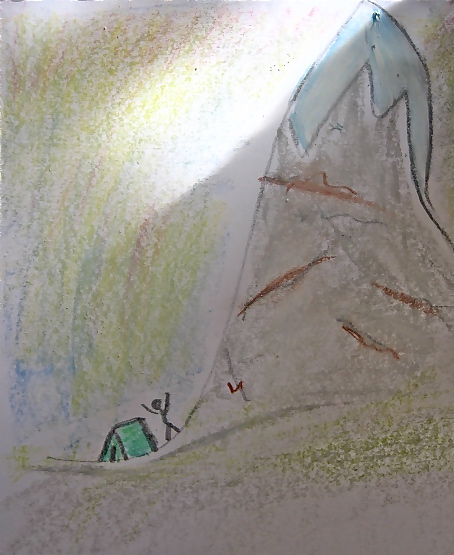 So, so, so much! If this enterprise were climbing Mount Everest, I would say that I'm still planting my tent. So far, I have looked at a number of topics and formed some understanding of the principles of people-organisations, as well as some understanding of my own values towards running a business. That will continue for some time.
Generally, for this blog, I've decided on some regular features that I want to hold in the future, including:
- News from the hive - where I discuss stories of note about retail and/or food;
- Media-interludes - which really is just an excercise in taste;
- Strategic discussions - like the HBR-discussions, where I discuss issues of how to structure business-activities;
- Personal development - where I discuss methods of improving both yourself and your staff;
- Personal vision - where I discuss my own plans in the industry (much of this is also engrained in the material that I write about);
- Inspirations - where I highlight people and businesses that I admire and discuss their sites / books / work etc.
I have to admit that, at this stage, anything can change. I am looking for a relevant job, and have a number of considerations regarding this, which I will write about in the near future. I think that being in the right place at the right time can accelerate a lot of things, alternatively, I may love my job so much that I could decide to stay for a while longer. I'm also composing a list about what people I want to talk to and what places I need to visit. One event is still on my agenda, visiting a workshop for entrepreneurs in this field, next month in Amsterdam. I hope to meet a lot of interesting people there.
My passion for this field has been with me since I shopped for food with my parents as a teenager; or went on holiday, or ate at restaurants and danced at clubs. It is part of me, so this blog, in whatever shape it may develop, will continue for a long time to come.

 The
The 


